

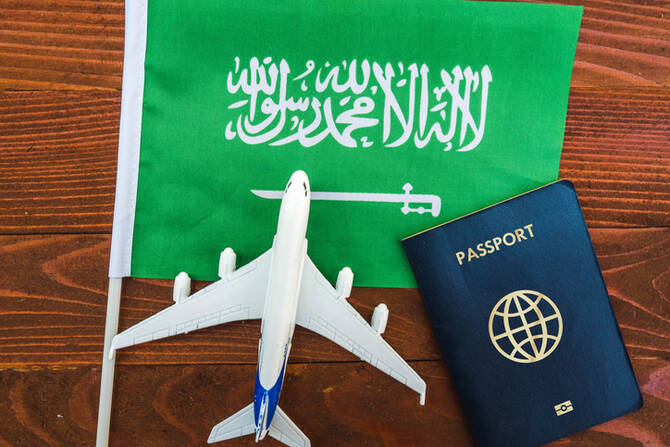

RIYADH: Increased technology integration and greater connectivity over the next five years will see Saudi Arabia cement its position as a global aviation hub, experts have told Arab News.
In a comprehensive assessment of the Kingdom’s air sector, analysts and industry insiders have set out how investment in infrastructure, the roll out of new airlines, and a focus on sustainability will see Saudi Arabia reach its Vision 2030 goals.
The Kingdom is targeting handling 330 million passengers annually across 250 destinations by the end of the decade, as well as transporting 4.5 million tonnes of cargo.
The industry laid the groundwork for this growth in 2024, achieving record-breaking results with the 94 million passengers transported representing a 15 percent year-on-year increase, alongside a 10 percent rise in flight activity, and a 52 percent boost in air cargo, to reach nearly 1 million tonnes.
The International Air Transport Association’s Regional Vice President for Africa and the Middle East, Kamil Al-Awadhi told Arab News that the Kingdom is preparing for the aviation sector to play an even bigger role in its future.
“Over the next five years, we expect continued development in digitalization and connectivity, and for Saudi Arabia to be in an even stronger position as a global hub, driving economic and social growth for the Kingdom,” he said.
Al-Awadhi also emphasized that the nation’s regulatory reforms and commitment to sustainability will be key factors in attracting international airline partnerships and investment.
He added: “GACA’s (the General Authority of Civil Aviation) revision of its charging scheme, to make Saudi airports more competitive in the region, is a positive step, now and for the future. As is its establishment of an independent economic regulatory framework.”
The top official noted that Saudi Arabia is the first country in the Middle East and North Africa to do this, and encouraged others to follow.
Riyadh Air — a portal to the Kingdom
A key development in the sector is the highly anticipated debut of Riyadh Air, Saudi Arabia’s new full-service airline, set to launch in 2025.
The company has made significant strides in preparation for its release, including major aircraft acquisitions, strategic alliances, and technological investments.
Mark Bothorn, principal of innovation practice at Arthur D. Little Middle East, highlighted that the launch of Riyadh Air is a “watershed moment for Saudi Arabia’s aviation sector — an event of this scale and significance happens perhaps once a decade.”
He added: “As a full-service national flag carrier, Riyadh Air will not only enhance domestic connectivity but also position the Kingdom’s capital as a major global aviation hub.”
Bothorn further anticipated that the new national carrier would serve as an ambassador for Saudi Arabia, embodying the nation’s vision through cutting-edge design, unparalleled guest experience, and world-class connectivity. “The way the world perceives Riyadh will, in many ways, be shaped by the experiences this airline delivers,” he added.

Mark Bothorn, principal of innovation practice at Arthur D. Little Middle East. Supplied
The airline has ordered 60 Airbus A321neo jets, with plans for additional wide-body aircraft this year. It has secured agreements with Singapore Airlines, Air China, and Delta Air Lines to enhance interline connectivity, codeshare operations, and frequent flyer benefits.
Riyadh Air is collaborating with Artefact to develop an advanced data analytics platform that aims to offer hyper-personalized services and seamless digital-first experiences. Its initial routes will connect Saudi Arabia to major cities in Europe, North America, and Asia, enhancing its international connectivity.

Riyadh Air plans to connect with more than 100 cities by 2030. Shutterstock
The Kingdom’s existing airlines are also undergoing significant transformations to cater to the growing demand and enhance international reach.
Saudia has placed a historic $19 billion order for 105 Airbus A320neo aircraft to expand its fleet, set for delivery starting in 2026.
Additionally, the airline is enhancing its maintenance and repair capabilities through a partnership with Air France-KLM. Flyadeal, Saudia’s budget airline, aims to double its fleet to 100 aircraft by 2030, offering affordable travel options across domestic and regional routes.
Flynas, the region’s top low-cost airline, secured a 280-aircraft deal, including Airbus A320neo and A330neo models, to support its aggressive expansion strategy. The airline also introduced new routes connecting Saudi Arabia to Africa and Europe.
Bothorn commented on the impact of heightened market contenders, saying: “Increased competition is always a catalyst for innovation and improvement, and in Saudi Arabia’s aviation sector, it will lead to two transformative outcomes.”
First, enhanced connectivity will strengthen Riyadh’s position as a global business hub by providing seamless access to international markets through more flights and improved routing.
Second, Riyadh Air, unburdened by legacy systems, has the potential to redefine air travel, setting new benchmarks in passenger experience and efficiency, according to Bothorn.
Airport infrastructure soars
To handle the volume that new airlines will be attracting, Saudi Arabia is investing heavily in airport infrastructure.
King Salman International Airport in Riyadh is set to become one of the world’s largest airports, with ongoing developments led by global firms including Foster & Partners and Jacobs Engineering. The airport will increase its capacity to accommodate 120 million passengers by 2030.
King Khalid International Airport’s expansion includes upgrades to Terminals 1 and 2, increasing capacity to 14 million passengers annually. Saudia’s deal with German aerospace company Lilium NV will introduce 50 electric vertical takeoff and landing jets, making it the first airline in the region to invest in sustainable air travel.
Bothorn emphasized the impact of airport infrastructure advancements. “For many travelers, the airport experience is often the most stressful part of a journey — navigating terminals, dealing with security bottlenecks, and enduring long waits.”
He added: “A seamless integration between the airport and airlines can dramatically transform this, replacing frustration with efficiency and even moments of delight.”
Bothorn envisioned airports that proactively anticipate passenger needs, with real-time updates enabling travelers to relax in lounges or dine rather than wait at gates.

An impression of how King Salman International Airport will look when construction is completed. File
Investment turbines spin
Saudi Arabia’s business aviation sector is thriving, driven by an influx of high-net-worth individuals and economic expansion. The sector, valued at $1.2 billion in 2023, is expected to grow at an annual rate of 8.88 percent from 2025 to 2029.
GACA is further boosting this sector by removing restrictions on foreign on-demand charter flights, allowing international operators to enter the domestic private aviation market starting in May.
Infrastructure and transportation developments outlined in the 2025 Saudi budget report reinforce these aviation ambitions. The gross domestic product of the transportation and logistics sector grew by 6.4 percent in the first half of 2024.
Total investment contracts signed in this sector amounted to over SR200 billion ($53.3 billion). Saudi Arabia has also strengthened its global presence by securing key positions in international aviation organizations, including hosting the UNCTAD Global Supply Chain Forum in 2026 and chairing the Executive Council of the Arab Civil Aviation Organization.
To enhance aviation services, the Kingdom has looked to implement modern and eco-friendly transportation initiatives during the Hajj season, including self-driving taxis, smart delivery vehicles, and increased aircraft seat capacity for pilgrims. Performance-based operations and maintenance contracts have been executed to enhance asset management efficiency.
Plans for 2025 include SR42 billion allocated for the infrastructure and transportation sector, which will witness the launch of several travel lounges across international airports, licensing new national air carriers, and expanding public bus networks to improve intercity and regional connectivity.
Al-Awadhi of IATA further elaborated on the nation’s role in shaping global aviation policies. “Many countries in the region look to Saudi Arabia for developing their aviation sectors, so the Kingdom plays an important role in shaping regional policies.”
Recent work revamping economic regulation related to consumer protection, safety and security has been followed by other countries in the region, according to the top official.
“We’re stronger as an industry when standards are aligned, not just regionally but globally,” he added.
Private jets and Saudi Arabia’s aviation roadmap
Saudi Arabia has made developing the private aviation market a key part of its roadmap for the sector, with the charter and corporate jet segments being supported by infrastructure upgrades such as six new general aviation airports.
The sector’s growth aligns with Vision 2030’s diversification efforts, particularly in tourism and entertainment, with destinations like AlUla and the Red Sea International Airport, capable of handling 1 million tourists annually, driving demand.
During 2024’s Future Aviation Forum, GACA unveiled a roadmap aimed at increasing the general aviation sector’s contribution to GDP, targeting a tenfold growth to reach $2 billion by 2030. The plan encompassed the business aircraft sector, including private charter flights and corporate aviation.
Sustainability is another focus, with GACA’s plan targeting net-zero emissions by 2060 through initiatives such as sustainable aviation fuel and AI-driven efficiency optimizations. However, challenges, including limited sustainable aviation fuel supply, remain.

The International Air Transport Association’s Regional Vice President for Africa and the Middle East Kamil Al-Awadhi. Supplied
Sustainable skies ahead
IATA’s Al-Awadhi highlighted the recent deal between Red Sea Global and daa International to introduce sustainable aviation fuel at Red Sea International Airport as “a positive step for Saudi Arabia and the region” when it comes to developing a more ecologically friendly sector.
The 35 percent SAF blend, supplied by Arabian Petroleum Supply Co., reduces aircraft emissions by up to 35 percent per flight, aligning with RSG’s broader sustainability efforts, including 400 megawatt-peak of solar installations and plans to plant 50 million mangroves by 2030.
The airport, operational from 2023 and with international flights beginning in 2024, serves the growing Red Sea destination, set to feature 50 resorts by 2030.
The next five years will bring transformative benefits for travelers flying to and from Saudi Arabia. Expanded airline networks will improve connectivity, reduce layovers, and increase travel convenience.
The rise of low-cost carriers like flyadeal and flynas means more budget-friendly flights for domestic and international routes. AI-driven services, biometric security checks, and world-class airport infrastructure will streamline travel, making it more efficient and comfortable.
“Expect nothing short of a revolution in the way people travel,” Bothorn said. He explained that long queues at security and immigration, endless gate waits, and the anxiety of either rushing through the airport or arriving far too early “will become relics of the past.” He projected air travel to become more intuitive and enjoyable.
Al-Awadhi added that Saudi Arabia is investing heavily in digital processing of passengers and integrating latest technologies at airports.
“We can certainly expect better passenger experience and customer service,” he said, adding: “Airlines are also updating their fleets so travelers will be flying on the latest aircrafts, enjoying what new technologies have to offer. Improved connectivity will provide travelers with more choices, enhancing the overall customer experience.”
Investments in eVTOL aircraft and eco-friendly practices signal a shift toward greener aviation. Saudi Arabia is undergoing a historic transformation in its aviation sector, with massive investments, strategic expansions, and cutting-edge innovations that will redefine the travel experience.
By 2030, the Kingdom aims to be a premier global aviation hub, offering world-class connectivity, seamless air travel, and state-of-the-art airport facilities.


