

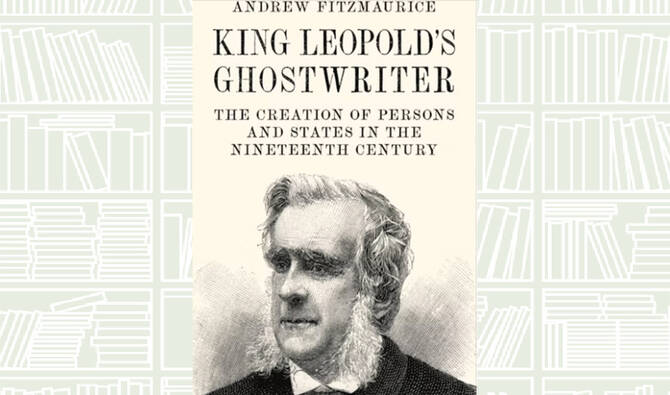
What We Are Reading Today: ‘King Leopold’s Ghostwriter’

Short Url
Updated 08 May 2025
Follow

What We Are Reading Today: ‘King Leopold’s Ghostwriter’

Author: Andrew Fitzmaurice

Eminent jurist, Oxford professor, advocate to the Archbishop of Canterbury, Travers Twiss (1809–1897) was a model establishment figure in Victorian Britain, and a close collaborator of Prince Metternich, the architect of the Concert of Europe.

Yet Twiss’s life was defined by two events that threatened to undermine the order that he had so stoutly defended: a notorious social scandal and the creation of the Congo Free State.

In “King Leopold’s Ghostwriter,” Andrew Fitzmaurice tells the incredible story of a man who, driven by personal events that transformed him from a reactionary to a reformer, rewrote and liberalized international law—yet did so in service of the most brutal regime of the colonial era.

In an elaborate deception, Twiss and Pharaïlde van Lynseele, a Belgian prostitute, sought to reinvent her as a woman of suitably noble birth to be his wife. Their subterfuge collapsed when another former client publicly denounced van Lynseele.


What We Are Reading Today: Michelangelo and Titian

Photo/Supplied
Updated 06 February 2026
Follow

What We Are Reading Today: Michelangelo and Titian

Author: William E. Wallace

In 1529, Michelangelo was in Venice when he first met Titian, Venice’s famed painter of princes, gods, and goddesses. Coming face-to-face with Titian’s drama-infused, richly colored works, the creator of David and the Sistine Chapel ceiling realized he had met a worthy opponent. Twenty-five years later, Titian came to Rome to paint the pope, and the two met again. Painting in the Vatican, Titian experienced the full power of Michelangelo’s work and vowed to surpass the achievements of his older contemporary.

Michelangelo and Titian is the untold story of history’s greatest artistic rivalry, a competition between two monumental figures more admiring of one another than either would ever admit. William Wallace brings the world of the 16th century to life, and in particular its culture of gossip and intrigue.

Wallace challenges the established narrative of this relationship as mostly one-sided, with the younger artist in competition with the reigning master.