

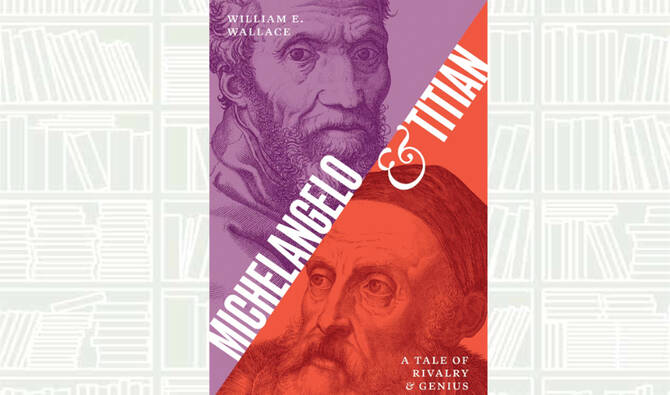
What We Are Reading Today: Michelangelo and Titian

Photo/Supplied
Short Url
Updated 06 February 2026
Follow

What We Are Reading Today: Michelangelo and Titian

Author: William E. Wallace

In 1529, Michelangelo was in Venice when he first met Titian, Venice’s famed painter of princes, gods, and goddesses. Coming face-to-face with Titian’s drama-infused, richly colored works, the creator of David and the Sistine Chapel ceiling realized he had met a worthy opponent. Twenty-five years later, Titian came to Rome to paint the pope, and the two met again. Painting in the Vatican, Titian experienced the full power of Michelangelo’s work and vowed to surpass the achievements of his older contemporary.

Michelangelo and Titian is the untold story of history’s greatest artistic rivalry, a competition between two monumental figures more admiring of one another than either would ever admit. William Wallace brings the world of the 16th century to life, and in particular its culture of gossip and intrigue.

Wallace challenges the established narrative of this relationship as mostly one-sided, with the younger artist in competition with the reigning master.


What We Are Reading Today: The Power of Hope by Carol Graham

Updated 25 February 2026
Follow

What We Are Reading Today: The Power of Hope by Carol Graham

In a society marked by extreme inequality of income and opportunity, why should economists care about how people feel? The truth is that feelings of well-being are critical metrics that predict future life outcomes.

In this timely and innovative account, economist Carol Graham argues for the importance of hope—little studied in economics at present—as an independent dimension of well-being.

Given America’s current mental health crisis, thrown into stark relief by COVID, hope may be the most important measure of well-being, and researchers are tracking trends in hope as a key factor in understanding the rising numbers of “deaths of despair” and premature mortality.

Graham, an authority on the study of well-being, points to empirical evidence demonstrating that hope can improve people’s life outcomes and that despair can destroy them. These findings, she argues, merit deeper exploration.