

YouTube sets sights on enhancing Saudi user experience with shift from smartphones to TV

1 / 2
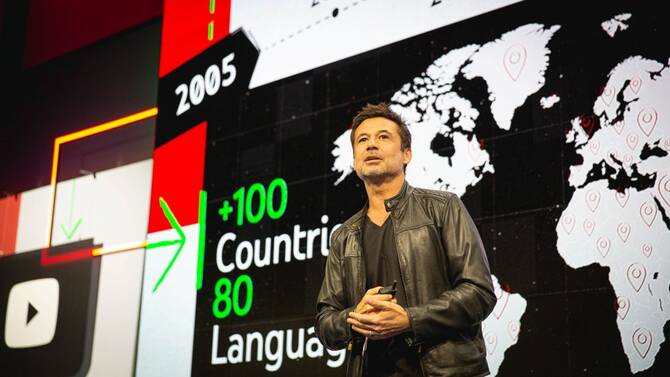
Pedro Pina, vice president of YouTube in Europe, the Middle East and Africa. (YouTube)
2 / 2
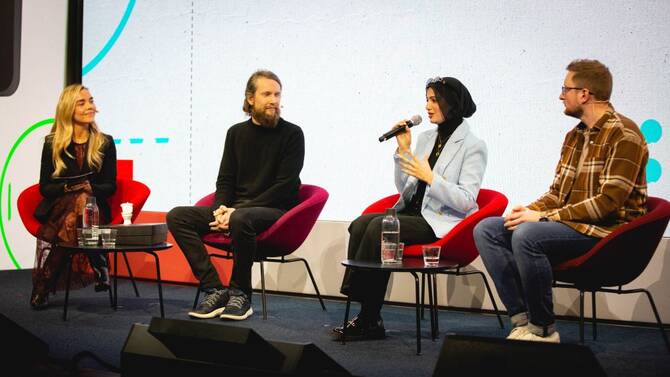
During a two-day press gathering to mark YouTube’s anniversary, hosted in Zurich, the platform’s executives gathered to reflect on its growth since its inception in 2005. (YouTube)
Short Url
Updated 06 May 2025
Follow

YouTube sets sights on enhancing Saudi user experience with shift from smartphones to TV

  • Pedro Pina took reporters back in time with a video of early meetings between the YouTube co-founders

ZURICH/RIYADH: YouTube is setting its sights on Saudi Arabia, aiming to shift video consumption from smartphones to television and leveraging the Kingdom’s affinity for the platform. 

As it celebrates its 20th anniversary, the platform envisions a new era for the region, positioning YouTubers like Noor Stars as the next Hollywood stars. Additionally, YouTube is exploring artificial intelligence-enhanced experiences, including dubbing and other innovative features, to engage users on the big screen. 

Pedro Pina, vice president of YouTube in Europe, the Middle East and Africa, told Arab News: “Whether you are talking about Egypt or Saudi Arabia, we want to be the zeitgeist of culture; we want to be the future of TV. 

“As these countries pick up steam in terms of penetration in connectivity, it will happen.” 

According to a study released by YouTube’s internal data, the platform reaches more than 12 million people in Saudi Arabia, over 2.5 million in the UAE, and 600,000 in Qatar over the age of 18 via connected TV.  

Saudi Arabia has developed a significant affinity for YouTube, with 95.8 percent of the population using the platform. As YouTube looks to shift viewing from smartphones to television, it aims to enhance the way content is experienced by audiences in Saudi Arabia. 

TV is now the primary device for YouTube viewing in the US, and viewers in the Middle East are shifting their viewing preferences from the smartphone to the TV. 

During a two-day press gathering to mark YouTube’s anniversary, hosted in Zurich, the platform’s executives gathered to reflect on its growth since its inception in 2005, while highlighting future features and the vision for the region. 

Executives who spoke about the evolution and progression of YouTube included Pina; Amjad Hanif, vice president of product management for YouTube creator products; Roya Zeitoune, head of YouTube’s culture and trends for Europe, the Middle East, and Africa; and Geoff van der Meer, vice president of engineering. 

Pina took reporters back in time with a video of early meetings between the YouTube co-founders, showing them discussing the future of the platform. 

He highlighted that between the co-founders, “there were a lot of conversations about where the site was going to be … and what they were going to do about the ability of uploading videos.” 

As YouTube looks to the future, it has four areas of focus: remaining the epicenter of culture, creators becoming the startups of Hollywood, YouTube becoming the new television, and AI being implemented to enhance the experience for viewers and creators. 

“Creators are continuing to be the new startups. Noor Stars is one of the creators who is incredibly successful in the region,” Pina said, adding that she represents one of the success stories in YouTube’s mission: “Give everyone a voice and show them the world. This has been our goal since we began.”

Pina highlighted the strong engagement YouTube receives from viewers across the Middle East, citing the region’s diverse cultures and varied realities. 

When asked what new features can be expected in the region, Pina said: “The solutions will look and feel different in each country (in the Middle East) because they are in different levels of development. 

“For example, the penetration of connected TVs is different in one type of country from another, and therefore the future of TV viewing for creators will also feel different from other regions.”

Among the topics executives discussed was podcasting. With podcasting becoming increasingly mainstream, Pina highlighted YouTube’s newly released statistic: Over 1 billion people interact with podcast content on YouTube each month, and those viewers are watching over 400 million hours of podcasts monthly on their TVs. 

The rise of podcasting as a mainstream media format is not unexpected. As of now, the most viewed podcast episode on YouTube comes from Saudi Arabia’s Thmanyah, a sister publication of Arab News under SRMG, with 140 million views. 

Another topic discussed was the YouTube Partner Program, which allows creators to have sustainable revenue and build a business while pursuing their passions through content creation. 

According to YouTube’s internal data, in Saudi Arabia, the number of YouTube channels making seven figures or more in Saudi riyals is up 40 percent year on year. And in the UAE, the number of YouTube channels making seven figures or more in SR is up 15 percent year on year.

Hanif said that there are currently 3 million YouTubers in the partner program, and more than half a million of them started their channel over a decade ago. 

Hanif added: “That speaks to the sustainability and the thoughtfulness we put into the program to make sure they are able to build a business this year, and YPP gives them the opportunity to continue to build and expand that business.” 

The first YouTube video was uploaded on April 23, 2005, by Jawed Karim, one of the three co-founders of the platform. The video was titled “Me at the Zoo.” Since then, YouTube has grown exponentially, with over 20 billion videos uploaded as of April 2025. 


From injury to influence: Khaled Olyan — the new voice of Arab football

Updated 30 January 2026
Follow

From injury to influence: Khaled Olyan — the new voice of Arab football

  • The Saudi social media star — TikTok’s Arab Creator of the Year — recounts how a setback ended his playing ambitions and pushed him to redirect his passion 
  • Known for memes and commentary that blend football, travel, culture and everyday life, Olyan is FIFA-accredited as a sport informant and covered AFCON 2025 in Morocco

LONDON: A broken dream launched Khaled Olyan’s unexpected rise as a Saudi social media star. Passion and perseverance took him from shattered ambitions to the Africa Cup of Nations 2025 in Morocco, where he surfed the hype while representing Arab culture.

“The journey began with a child who dreamed of becoming a football player to fulfill his own dreams and those of his family and community. After an injury ended that path, I didn’t break, I redirected my passion toward football media,” he said.

In an interview with Arab News, shortly after being crowned TikTok’s Arab Content Creator of the Year, Olyan — who has 13.2 million followers on that platform and 5 million on Instagram — credited his rise to “pure passion and honest content,” and said he had learned over time that “consistency matters more than fast virality.”

He added: “The turning point came when I realized that content can genuinely impact people, not just generate numbers or views. (Then I) stepped outside the traditional sports-content framework and linked football to culture, people, and place. It wasn’t a guaranteed path, but it shaped my identity today as a creator with a clear message and purpose.”

Olyan made history as the first regional creator to be accredited by FIFA as a ‘sport informant,’ a milestone that, he said, has given “local content global credibility and reach.”

Most recently, he was in Morocco to document AFCON, where he highlighted both the host country’s hospitality and the electric atmosphere in the grounds.

“It felt like a responsibility before it was an achievement,” he said. “I felt that my role went beyond coverage to building cultural bridges between people.”


A post shared by KHALID ALOLAYAN (@olyan15k)

Known for his memes and commentaries blending football, travel, culture and everyday life with feel-good humor, fans hail his “unmatched enthusiasm” and refer to him as “the voice of Saudi football fans.”

“Content today is no longer just entertainment,” he said. “It has become documentation of moments and an influence on collective awareness, especially in sports and culture across the Arab world. That (means there is) a much greater responsibility on everything I create.”

Saudi Arabia’s content-creator ecosystem has evolved dramatically in recent years, driven by a wider national transformation that has reshaped almost all aspects of public life, including sports and entertainment.

“The transformation has been rapid and significant, opening unprecedented opportunities for creators,” Olyan said. As the country moves “quickly toward global leadership in sports,” he added, it has also raised ambitions and created new routes for people to turn dreams into reality.

Across the region, the creator economy is booming, powered by a young audience, government investment and platforms such as TikTok. In 2025, the GCC alone was home to 263,000 social media influencers — a 75-percent increase in just two years according to data from Qoruz, an influencer-marketing intelligence platform.

Globally, fashion and entertainment dominate the influencer industry, but the GCC market has followed a slightly different trajectory. Lifestyle and travel also lead the charts, reflecting both regional affluence and a cultural emphasis on luxury, aesthetics, and experience-led content.

href="https://www.tiktok.com/tag/%D8%AE%D8%A7%D9%84%D8%AF_%D8%A7%D9%84%D8%B9%D9%84%D9%8A%D8%A7%D9%86?refer=embed">#خالد_العليان #المغرب #كاس_امم_افريقيا #هدايا #سحوبات ♬ original sound - KHALID ALOLYAN

While sport is not a major category, the research underscores what makes the GCC ecosystem distinctive: high digital penetration, brand-conscious audiences, and multilingual, multi-ethnic creators, with campaign planning often shaped by strategic decisions about language and identity.

Olyan said he sees many regional influencers following the same path as him — though not necessarily through sport. “I believe we are contributing to clearer roadmaps for anyone aiming for success through creative, values-driven content rooted in strong human principles,” he added. “Opportunities are abundant, but the real challenge lies in consistency and maintaining quality amid pressure and high expectations.”

For Olyan, Arab culture is not an add-on to, but the backbone of, his storytelling. He frames the region’s passion for football alongside questions of Arab identity, delivering it in an entertaining format that can travel beyond the usual language barriers.

“What makes sport special is that it’s a universal language. Many non-Arab audiences already follow my content daily, supported by AI tools. Arabic is my language and a core part of my identity, and I won’t change it. Instead, I’ll rely on smart translation tools and solutions to reach wider audiences.”

Olyan also noted that the region has long been framed through the narratives of people from elsewhere, often in ways that highlight only its darker corners.

“The Arab world is full of inspiring stories and a rich culture that deserves to be told through the eyes of its people, not only from the outside,” he said, adding that he hopes viewers value his videos for “changing their perspective and helped them see the truth more clearly.”

Olyan was crowned TikTok Arab Content Creator of the Year 2026 at a ceremony held in partnership with the 1 Billion Followers Summit in Dubai.

He said the recognition was a result of more than just a run of viral moments, explaining that it came about “through structured, institutional work, team development, and linking content to long-term goals. Sustainability comes from creating moments and building value, not relying on trends or short-lived hype.”

Underscoring the double-edged nature of social media, Olyan argued that attention alone is not the point. “Real impact happens when content is used to educate and inspire people, not just capture their attention.”

He also expressed skepticism about banning under-16s from social media. Regulation matters, he said, but “awareness, smart supervision, and teaching safe usage matter more than complete bans.”

Creators, he added, are not immune to the platforms’ darker side. Psychological pressure, mental exhaustion, and long periods away from family due to frequent travel are part of the job. “I manage it through time organization, temporary breaks, and returning with renewed passion,” he explained.


href="https://www.tiktok.com/tag/%D8%AE%D8%A7%D9%84%D8%AF_%D8%A7%D9%84%D8%B9%D9%84%D9%8A%D8%A7%D9%86?refer=embed">#خالد_العليان #كاس_العرب #السعودية #المغرب ♬ original sound - KHALID ALOLYAN

Olyan is also the founder of the O15 Football Academy, a project rooted in his childhood dream and one he sees as part of a broader sporting movement gaining traction in the Kingdom. For him, the academy is not just about competition, but about giving children a supportive environment where sport becomes a formative social practice.

“As a child, I wished such an academy existed for me and my friends,” he said. “Many talents were playing in local neighborhoods without professional guidance or support, causing real potential to be lost due to the absence of proper training environments, follow-up, and opportunities. The environment was often challenging and unmotivating.”

His academy aims to identify talent early, develop it “scientifically,” and prepare players to compete at club and national levels, but Olyan added that even those who do not pursue the sport professionally can also benefit “educationally, culturally, and socially.” 

Football, he said, is “a form of soft power that, by God’s will, can positively impact many aspects of life.”

Whether creating content or helping others pursue their sporting dreams, Olyan said his guiding principle comes from a line by the late Saudi politician and poet Ghazi Al-Qusaibi — a reminder that what you hope for in small measure can arrive, unexpectedly, in abundance: “You wish for a drop of good news, but God wishes to help you with rain.”