Flynas to float 30% stake in Saudi IPO after record profit 

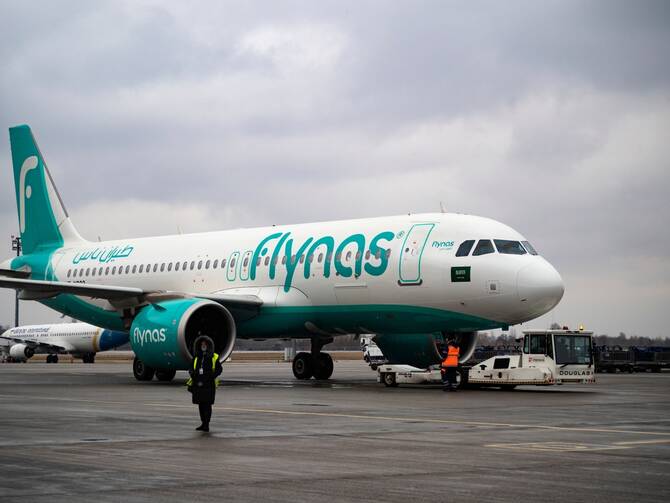
Flynas holds a 23 percent share of Saudi Arabia’s domestic aviation market. Shutterstock
Short Url
Updated 06 May 2025
Follow

Flynas to float 30% stake in Saudi IPO after record profit 

RIYADH: Saudi low-cost carrier flynas plans to float 30 percent of its share capital in an initial public offering on the Kingdom’s main stock market, becoming the country’s first airline to list on Tadawul.

The IPO, approved by the Capital Market Authority, will involve 51.26 million shares, including both newly issued shares and those offered by existing shareholders. Book-building for institutional investors is set to begin on May 12, with retail subscriptions to follow at the end of the month, the company said in a release. 

Flynas will also become the first Gulf airline to go public in nearly two decades, reflecting renewed investor interest in the region’s fast-growing aviation sector and ongoing market liberalization. 

The move comes amid a buoyant IPO environment in the Middle East and North Africa, where regional markets saw a surge in listings and capital-raising activity in early 2025. According to an EY report, 14 IPOs raised $2.4 billion in the first quarter — marking a 106 percent increase in proceeds compared to the same period in 2024. 

Bander Al-Mohanna, CEO and managing director of flynas, said: “This strategic move will propel us toward becoming the leading low-cost carrier in the MENA region for short and medium-haul markets by 2030. Through this IPO, we are offering investors access to a unique and valuable asset in the rapidly growing KSA and GCC aviation sector.” 

The company said the retail subscriptions for flynas shares will run from May 28 to June 1, following institutional book-building. Share allocation and refunds are scheduled for early June, with trading expected to commence after formal listing procedures are complete. 

Flynas, which launched in 2007, holds a 23 percent share of Saudi Arabia’s domestic aviation market and operates one of the youngest fleets in the region, with an average aircraft age of 3.2 years. The airline reported an on-time performance rate of 88 percent in 2024. 

The carrier plans to use proceeds from the IPO to expand its fleet — including a major order for 225 Airbus aircraft — enhance services for Hajj and Umrah travelers, and invest in cargo operations. 

“With an all-Airbus fleet and a significant orderbook, we are poised to meet the increasing air travel demand within, to, and from the Kingdom, supported by our strategic bases in the Kingdom’s busiest international airports,” said Al-Mohanna. 

The offering comes on the back of record financial results in 2024, with flynas reporting revenue of SR7.56 billion ($2.02 billion), a 19 percent year-on-year increase, while earnings before interest, taxes, depreciation, and amortization rose 31 percent to SR2.18 billion. 

Net profit reached SR434 million, up 8 percent from the previous year. The airline’s operational efficiency and expanding network contributed to these results, with passenger numbers growing by 31 percent to 14.7 million in 2024. 

The airline is a key beneficiary of Saudi Arabia’s Vision 2030, which aims to transform the Kingdom into a global aviation and tourism hub. Targets include 330 million passengers and 120 million visitors by 2030. 

“As a leading pan-regional LCC, we are well-positioned to benefit from the robust demand driven by Saudi Arabia’s aviation and tourism strategy, as well as the strong growth in passenger traffic across the GCC and MENA markets,” Al-Mohanna added. 


Reforms target sustained growth in Saudi real estate sector, says Al-Hogail

Updated 26 January 2026
Follow

Reforms target sustained growth in Saudi real estate sector, says Al-Hogail

RIYADH: The Real Estate Future Forum opened its doors for its first day at the Four Seasons Riyadh, with prominent global and local figures coming together to engage with one of the Kingdom’s most prospering sectors.

With new regulations, laws, and investments underway, 2026 is expected to be a year of momentous progress for the real estate sector in the Kingdom.

The forum opened with a video highlighting the sector’s progress in the Kingdom, during which an emphasis was placed on the forum’s ability to create global reach, representation, as well as agreements worth a cumulative $50 billion

With the Kingdom now opening up real estate ownership to foreigners, this year’s Real Estate Future Forum is placing a great deal of importance on this new milestone and its desired outcomes and impact on the market. 

Aside from this year’s forum’s unique discussions surrounding those developments, it will also be the first of its kind to launch the Real Estate Excellence Award and announce its finalist during the three-day summit.

Minister of Municipalities and Housing and Chairman of the Real Estate General Authority Majed Al-Hogail took to stage to address the diverse audience on the real estate market’s achievements thus far and its milestones to come.

Of those important milestones, he underscored “real estate balance” as a key pillar of the sector’s decisions to implement regulatory tools “with the aim of constant growth which can maintain the vitality of this sector.” He pointed to examples of those regulatory measures, such as the White Land Tax.

On 2025’s progress, the minister highlighted the jump in Saudi family home ownership, which went from 47 percent in 2016 to 66 percent in 2025, keeping the Kingdom’s Vision 2030 goal of 70 percent by the end of the decade on track.

He said the opening of the real estate market to foreigners is an indicator of the sector’s maturity under the leadership of Crown Prince Mohammed bin Salman. He said his ministry plans to build over 300,000 housing units in Riyadh over the next three years.

Speaking to Arab News,  Al-Hogail elaborated on these achievements, stating: “Today, demand, especially local demand, has grown significantly. The mortgage market has reached record levels, exceeding SR900 billion ($240 billion) in mortgage financing, we are now seeing SRC (Saudi Real Estate Refinance Co.) injecting both local and foreign liquidity on a large scale, reaching more than SR54 billion”

Al-Hogail described Makkah and Madinah as unique and special points in the Kingdom’s real estate market as he spoke of the sector’s attractiveness.

 “Today, the Kingdom of Saudi Arabia has become, in international investment indices, one that takes a good share of the Middle East, and based on this, many real estate investment portfolios have begun to come in,” he said. 

Al-Ahsa Gov. Prince Saud bin Talal bin Badr Al-Saud told Arab News the Kingdom’s ability to balance both heritage sites with real estate is one of its strengths.

He said: “Actually the real estate market supports the whole infrastructure … the whole ecosystem goes back together in the foundation of the real estate; if we have the right infrastructure we can leverage more on tourism plus we can leverage more on the quality of life … we’re looking at 2030, this is the vision … to have the right infrastructure the time for more investors to come in real estate, entertainment, plus tourism and culture.”