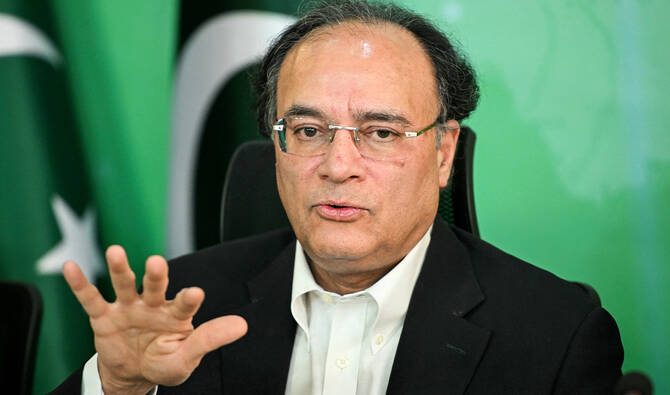
KARACHI: Pakistan’s finance chief and prime minister’s aide on privatization on Tuesday arrived in London on a mission to unlock new investment channels, the Pakistani finance and privatization ministries said, amid the country’s push to drive sustainable economic progress.
Pakistan is striving to draw overseas investment amid a gradually healing macroeconomic environment after a prolonged downturn that forced Islamabad to seek external financing from friendly nations and multiple loan programs with the International Monetary Fund (IMF). In recent months, the Pakistani government has pursued aggressive economic diplomacy in recent years, signing several agreements and memoranda of understanding with countries in Central Asia and the Middle East.
During the visit, the Pakistani delegation, comprising Finance Minister Muhammad Aurangzeb and PM’s aide Muhammad Ali, will hold crucial meetings with executives from renowned firms, including TTB Partners, STJ Partners, Deutsche Bank, Berenberg Bank, and Amundi Fund Group, to spotlight Pakistan’s privatization roadmap and its growing potential as a hub for strategic, long-term investment.
“Accompanied by the finance minister, the visit marks a strategic push to deepen Pakistan’s ties with top-tier global investors and financial institutions. A centerpiece of the visit will be Mr. Muhammad Ali’s participation in Pakistan Investors Day, hosted by [US-based investment bank] Jefferies on May 8,” the Pakistani privatization ministry said.
“This exclusive event offers a powerful platform to showcase Pakistan’s robust investment landscape, ongoing economic reforms, and the government’s unwavering commitment to transparency and investor confidence.”
The officials aim to project the South Asian country as a compelling destination for global capital, with an ambitious reform agenda and a firm focus on private sector-led development.
During the three-day visit, Finance Minister Aurangzeb will meet British officials, investors, financial institutions, investment banks, business firms and organizations. He will attend multiple investment forums and seminars where he will outline Pakistan’s economic trajectory, according to his ministry.
In addition to meetings with private sector leaders, Aurangzeb will visit the UK Treasury Department for talks with Financial Secretary Lord Livermore and senior officials. He will also meet Hamish Nickells-Falconer, the UK’s Parliamentary Under-Secretary of State for the Middle East, Afghanistan and Pakistan at the Foreign, Commonwealth & Development Office (FCDO).
During the trip, he is expected to hold a series of question-and-answer sessions with selected representatives from international and British media outlets.
“This visit reflects Pakistan’s forward-looking vision,” Ali was quoted as saying by the privatization ministry. “We are here to build trust, forge partnerships, and demonstrate that Pakistan is open for business— with a clear agenda for growth, stability, and opportunity.”


![]()

Top Pakistani officials arrive in London on ‘mission’ to unlock new investment channels
Short Url
https://arab.news/6g5q8
Top Pakistani officials arrive in London on ‘mission’ to unlock new investment channels
- The development comes amid Islamabad’s push to drive sustainable economic progress after a meltdown forced it to seek external financing
- The finance chief, PM’s aide will spotlight Pakistan’s privatization roadmap and its growing potential as a hub for long-term investment
Latest updates


© 2026 SAUDI RESEARCH & PUBLISHING COMPANY, All Rights Reserved And subject to Terms of Use Agreement.