

‘We don’t care’: Weddings go on in Pakistan’s Kashmir border 

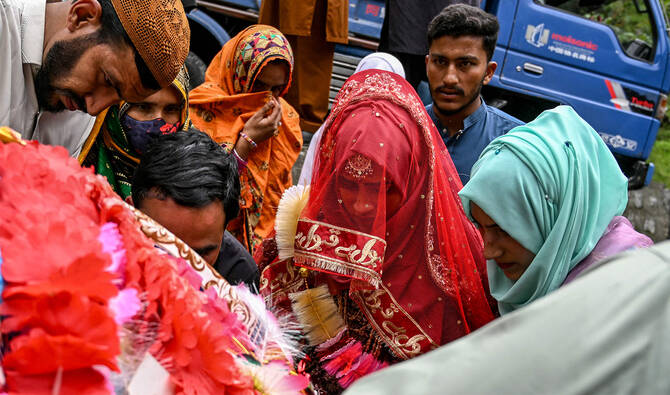
Kashmiri bride Rabia Bibi (C) prepares to sit in a Doli, a traditional hand cart used to carry brides at weddings, as she leaves for the groom's house in Ashkot village on the Line of Control (LoC) in Neelum Valley, district of Pakistan's Kashmir, on May 3, 2025, following the ongoing border tensions between India and Pakistan after the Kashmir tourist attack. (Photo by Farooq NAEEM / AFP)
Short Url
Updated 04 May 2025
Follow

‘We don’t care’: Weddings go on in Pakistan’s Kashmir border 

  • Tensions between India, Pakistan soared after New Delhi accused Islamabad of backing Apr. 22 attack in Kashmir
  • Ordinary Kashmiris living on both sides of divided region are often the first victims caught in the conflict’s crossfire

Neelum Valley, Pakistan: Rabia Bibi, a glittering red dupatta pulled over her eyes, wasn’t about to let the threat of war with India stop her wedding in a remote valley in Pakistan-administered Kashmir.

“In our childhood the situation was also like this but we are not afraid. Nor will we be,” the 18-year-old told AFP after being carried in a flower-garlanded “doli” carriage.

“We want peace, so our life does not get affected,” said the bride, radiant in gold bangles, bejeweled bridal headpiece and richly embroidered scarlet robe.


Relatives carry the bride, Rabia Bibi, in a Doli, a traditional hand cart used to carry brides at weddings, as they leave for the groom's house in Ashkot village on the Line of Control (LoC) in Neelum Valley, district of Pakistan's Kashmir, on May 3, 2025, following the ongoing border tensions between India and Pakistan after the Kashmir tourist attack. (Photo by Farooq NAEEM / AFP)

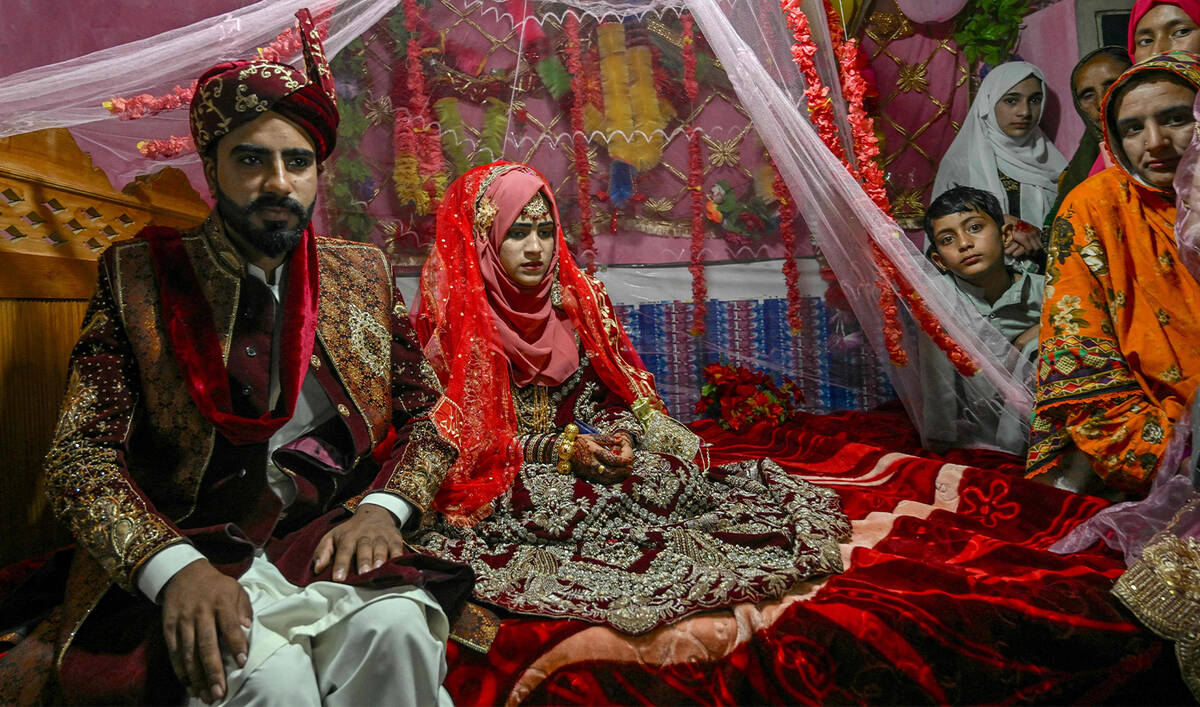
At the ceremony — preceded by the sacrifice of a chicken — groom Chaudhry Junaid, no less resplendent in his elaborate sherwani coat and red-and-gold turban, was also defiant.

“People are anxious and worried, but even so, we haven’t canceled any traditional ceremonies,” the 23-year-old chef said.


The Neelum River and settlements along the Line of Control (LoC) between India (L) and Pakistan are pictured on May 3, 2025, from the Neelum Valley, a district in Pakistan's Kashmir. (AFP)

Tensions between the nuclear-armed arch-rivals have soared since India accused Pakistan of backing a shooting that killed 26 civilians on the Indian side of disputed Kashmir on April 22.

Indian Prime Minister Narendra Modi has given his military “full operational freedom” to respond to the attack.

The two sides have traded gunfire for more than a week on the heavily militarised border and Pakistan on Saturday conducted a “training launch” of a missile to prove its “operational readiness.”
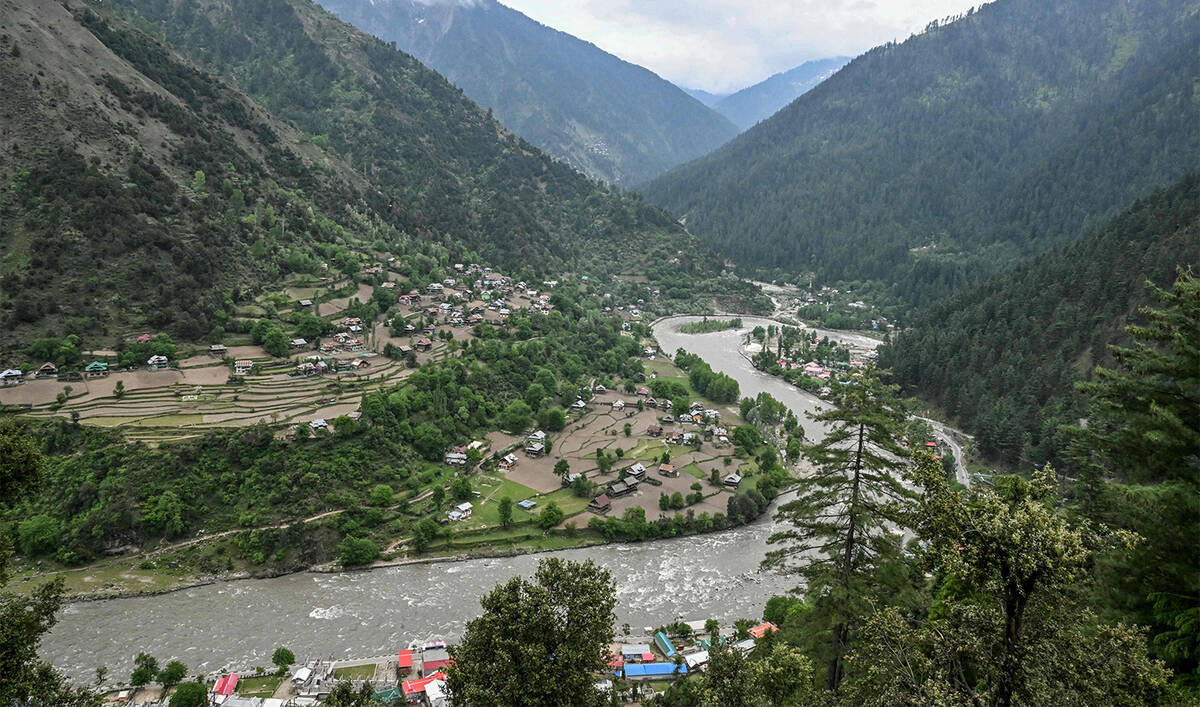


The Neelum River and settlements along the Line of Control (LoC) between India (L) and Pakistan are pictured on May 3, 2025, from the Neelum Valley, a district in Pakistan's Kashmir. (AFP)

Islamabad last week warned they had “credible intelligence” that India was planning imminent strikes.

International pressure has been piled on both New Delhi and Islamabad to de-escalate.

On the Pakistani side, emergency drills have been carried out in playing fields, residents have been told to stock up on food and medicine, and religious schools have shut.
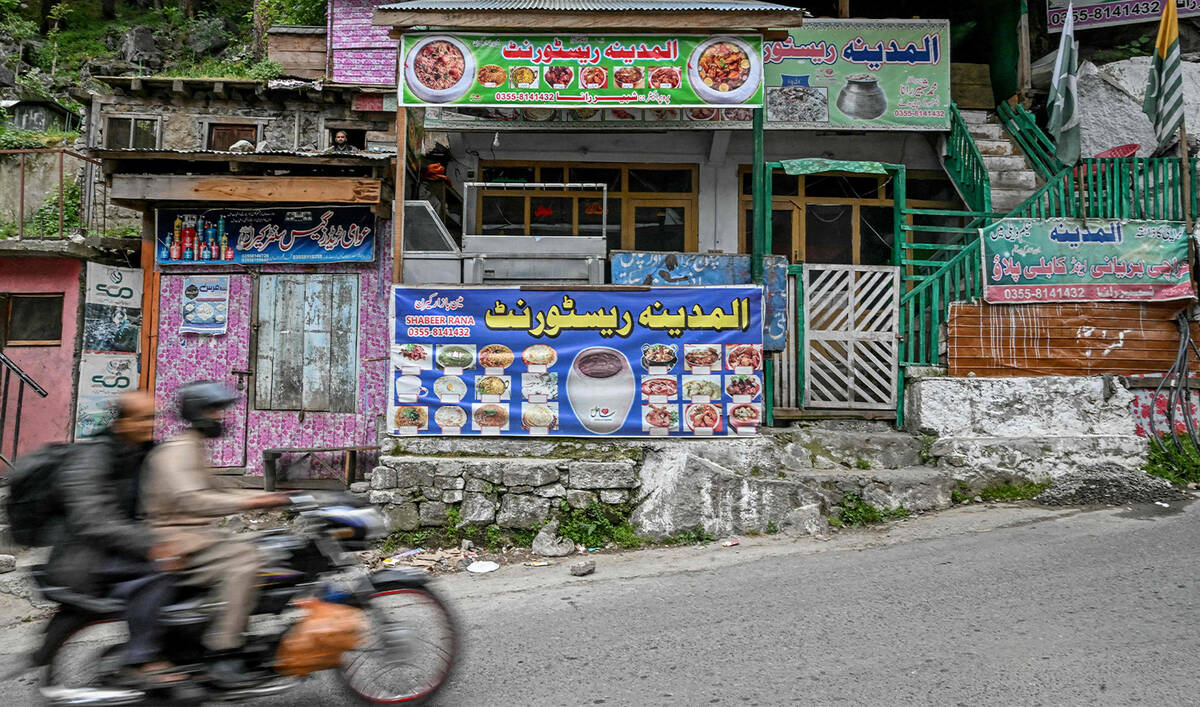


A motorist rides past deserted tourist hotels and eateries in Keran village on the Line of Control (LoC) in Neelum Valley, a district of Pakistan's Kashmir, on May 3, 2025. (AFP)

In Indian-run Kashmir, a vast manhunt seeking the gunmen continues across the territory, while those living along the frontier are moving further away — or cleaning out bunkers fearing conflict.

India and Pakistan, which both claim Kashmir in full, have fought several wars over the Himalayan territory since the end of British rule in 1947.

Ordinary Kashmiris living on both sides of the divided Muslim-majority region are often the first victims caught in the crossfire.

In a checkpoint-free corner of the picturesque Neelum Valley, a tourist epicenter that was shut down last week, Indian territory is the other side of the river that winds through the mountainous region.

Residents told AFP they had been urged by the Pakistani authorities to remain vigilant because of the threat of a possible military confrontation.

In another village, mechanical engineer Shoaib Akhtar was also getting married.

“This is the happiest occasion of our lives, and we won’t let anything ruin it,” said Akhtar, the 25-year-old groom surrounded by family.

“Right now, I’m getting married and that’s what matters most. If war comes, we’ll deal with it when it happens,” he added.
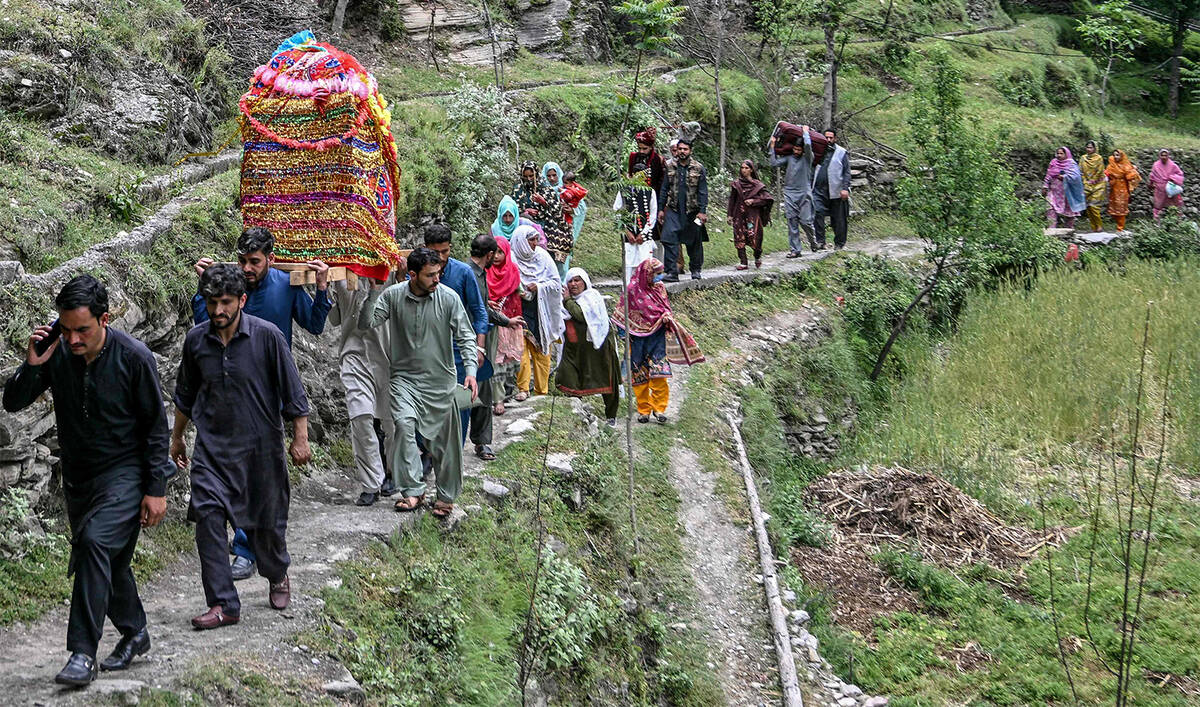


Relatives carry the bride, Rabia Bibi, in a Doli, a traditional hand cart used to carry brides at weddings, as they leave for the groom's house in Ashkot village on the Line of Control (LoC) in Neelum Valley, district of Pakistan's Kashmir, on May 3, 2025. (AFP)

“We are happy, and if India has some issues, we don’t care,” Bibi said.

“We stand firm and will fight for our interests and our nation.”


Pakistan opposition to continue protest over ex-PM Khan’s health amid conflicting reports

Updated 16 February 2026
Follow

Pakistan opposition to continue protest over ex-PM Khan’s health amid conflicting reports

  • Pakistan’s government insists that the ex-premier’s eye condition has improved
  • Khan’s personal doctor says briefed on his condition but cannot confirm veracity

ISLAMABAD: Pakistan’s opposition alliance on Monday vowed to continue their protest sit-in at parliament and demanded “clarity” over the health of jailed former prime minister Imran Khan, following conflicting medical reports about his eye condition.

The 73-year-old former cricket star-turned-politician has been held at the high-security Adiala prison in Rawalpindi since 2023. Concerns arose about his health last week when a court-appointed lawyer, Barrister Salman Safdar, was asked to visit Khan at the jail to assess his living conditions. Safdar reported that Khan had suffered “severe vision loss” in his right eye due to central retinal vein occlusion (CRVO), leaving him with just 15 percent sight in the affected eye.

On Sunday, a team of doctors from various hospitals visited the prison to examine Khan’s eye condition, according to the Adiala jail superintendent, who later submitted his report in the court. On Monday, a Supreme Court bench led by Chief Justice Yahya Afridi observed that based on reports from the prison authorities and the amicus curiae, Khan’s “living conditions in jail do not presently exhibit any perverse aspects.” It noted that Khan had “generally expressed satisfaction with the prevailing conditions of his confinement” and had not sought facilities beyond the existing level of care.

Having carefully perused both reports in detail, the bench observed that their general contents and the overall picture emerging therefrom are largely consistent. The opposition alliance, which continued to stage its sit-in for a fourth consecutive day on Monday, held a meeting at the parliament building on Monday evening to deliberate on the emerging situation and discuss their future course of action.

“The sit-in will continue till there is clarity on the matter of [Khan's] health,”  Sher Ali Arbab, a lawmaker from Khan's Pakistan Tehreek-e-Insaf (PTI) party who has been participating in the sit-in, told Arab News, adding that PTI Chairman Gohar Ali Khan and Opposition Leader in Senate Raja Nasir Abbas had briefed them about their meeting with doctors who had visited Khan on Sunday.

Speaking to reporters outside parliament, Gohar said the doctors had informed them that Khan’s condition had improved.

“They said, 'There has been a significant and satisfactory improvement.' With that satisfactory improvement, we also felt satisfied,” he said, noting that the macular thickness in Khan’s eye had reportedly dropped from 550 to 300 microns, a sign of subsiding swelling.

Gohar said the party did not want to politicize Khan’s health.

“We are not doctors, nor is this our field,” he said, noting that Khan’s personal physician in Lahore, Dr. Aasim Yusuf, and his eye specialist Dr. Khurram Mirza had also sought input from the Islamabad-based medical team.

“Our doctors also expressed satisfaction over the report.”

CONFLICTING ACCOUNTS

Despite Gohar’s cautious optimism, Khan’s personal physician, Dr. Yusuf, issued a video message on Monday, saying he could neither “confirm nor deny the veracity” of the government’s claims.

“Because I have not seen him myself and have not been able to participate in his care... I’m unable to confirm what we have been told,” Yusuf said.

He appealed to authorities to grant him or fellow physician, Dr. Faisal Sultan, immediate access to Khan, arguing that the ex-premier should be moved to Shifa International Hospital in Islamabad for specialist care.

Speaking to Arab News, PTI’s central information secretary Sheikh Waqas Akram said Khan’s sister and their cousin, Dr. Nausherwan Burki, will speak to media on Tuesday to express their views about the situation.

The government insists that Khan’s condition has improved.

“His eye [condition] has improved and is better than before,” State Minister Talal Chaudhry told the media in a brief interaction on Monday.

“The Supreme Court of Pakistan is involved, and doctors are involved. What medicine he receives, whether he needs to be hospitalized or sent home, these decisions are made by doctors. Neither lawyers nor any political party will decide this.”