BUCHAREST, Romania: Romanians are casting ballots Sunday in a critical presidential election redo after last year’s annulled vote plunged the European Union and NATO member country into its worst political crisis in decades.
Eleven candidates are vying for the presidency and a May 18 runoff is expected. Polls opened at 7 a.m. (0400 GMT) and will close at 9 p.m. (1800 GMT). Romanians abroad have been able to vote since Friday.
Romania’s political landscape was shaken last year when a top court voided the previous election in which the far-right outsider Calin Georgescu topped first-round, following allegations of electoral violations and Russian interference, which Moscow has denied.
Like many countries in the EU, anti-establishment sentiment is running high in Romania, fueled by high inflation and cost of living, a large budget deficit and a sluggish economy. Observers say the malaise has bolstered support for nationalist and far-right figures like Georgescu, who is under investigation and barred from the rerun.
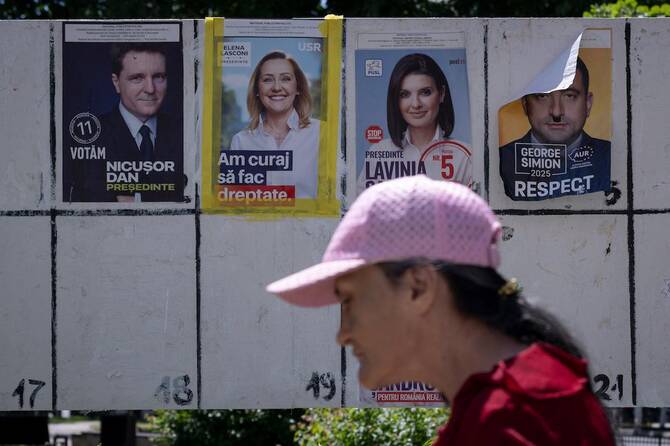
While data from local surveys should be taken with caution, a median of polls suggests that hard-right nationalist George Simion will enter the runoff, likely pitting him against Bucharest Mayor Nicusor Dan, or the governing coalition’s candidate, Crin Antonescu.
Dan, a 55-year-old mathematician and former anti-corruption activist who founded the Save Romania Union party (USR) in 2016, is running on a pro-EU “Honest Romania” ticket. He says Romania needs a president “who has the will and the ability to reform the system.”
Veteran centrist Antonescu, 65, has campaigned on retaining Romania’s pro-Western orientation, while Victor Ponta, a former prime minister between 2012 and 2015, has also pushed a MAGA-style “Romania First” campaign and boasts of having close ties to the Trump administration.
Another hopeful, Elena Lasconi, came second in last year’s first round ballot and is participating in the rerun. She has positioned herself as a staunchly pro-Western, anti-system candidate, railing against what she describes as a corrupt political class.
Distrust in the authorities remains widespread, especially for those who voted for Georgescu, a sizeable electorate that Simion has sought to tap into.
“The anti-establishment sentiment is not like an anarchic movement, but is against the people who destroyed this country,” Simion, who came fourth in last year’s race and later backed Georgescu, told The Associated Press. “We are not a democratic state anymore.”
Simion said that his hard-right nationalist Alliance for the Unity of Romanians party is “perfectly aligned with the MAGA movement,” capitalizing on a growing wave of populism in Europe after US President Donald Trump’s political comeback. AUR rose to prominence in a 2020 parliamentary election, proclaims to stand for “family, nation, faith, and freedom,” and has since doubled its support.
The election redo is a crossroads moment for Romania as it seeks to restore its democracy and retain its geopolitical alliances, which have become strained since the canceled election fiasco.
The decision to annul the election and the ban on Georgescu’s candidacy drew criticism from US Vice President JD Vance, Elon Musk and Russia, which publicly supported his candidacy in the rerun.
The presidential role carries a five-year term and significant decision-making powers in national security and foreign policy.

Romanians vote in a presidential redo after voided election sparked deep political crisis
Short Url
https://arab.news/r6tns
Romanians vote in a presidential redo after voided election sparked deep political crisis
- The election redo is a crossroads moment for Romania as it seeks to restore its democracy and retain its geopolitical alliances
- The decision to annul the election and the ban on Georgescu’s candidacy drew criticism from US Vice President JD Vance, Elon Musk and Russia, which publicly supported his candidacy in the rerun
Uganda army denies seizing opposition leader as vote result looms
KAMPALA: Uganda’s army denied claims on Saturday that opposition leader Bobi Wine had been abducted from his home, as counting continued in an election marred by reports of at least 10 deaths amid an Internet blackout.
President Yoweri Museveni, 81, looked set to be declared winner and extend his 40-year rule later on Saturday, with a commanding lead against Wine, a former singer turned politician.
Wine said Friday that he was under house arrest, and his party later wrote on X that he had been “forcibly taken” by an army helicopter from his compound.
The army denied that claim.
“The rumors of his so-called arrest are baseless and unfounded,” army spokesman Chris Magezi told AFP.
“They are designed to incite his supporters into acts of violence,” he added.
AFP journalists said the situation was calm outside Wine’s residence early Saturday, but they were unable to contact members of the party due to continued communications interruptions.
A nearby stall-owner, 29-year-old Prince Jerard, said he heard a drone and helicopter at the home the previous night, with a heavy security presence.
“Many people have left (the area),” he said. “We have a lot of fear.”
With more than 80 percent of votes counted on Friday, Museveni was leading on 73.7 percent to Wine’s 22.7, the Electoral Commission said.
Final results were due around 1300 GMT on Saturday.
Wine, 43, whose real name is Robert Kyagulanyi, has emerged as the main challenger to Museveni in recent years, styling himself the “ghetto president” after the slum areas where he grew up in the capital, Kampala.
He has accused the government of “massive ballot stuffing” and attacking several of his party officials under cover of the Internet blackout, which was imposed ahead of Thursday’s polls and remained in place on Saturday.
His claims could not be independently verified, but the United Nations rights office said last week that the elections were taking place in an environment marked by “widespread repression and intimidation” against the opposition.
- Reports of violence -
Analysts have long viewed the election as a formality.
Museveni, a former guerrilla fighter who seized power in 1986, has total control over the state and security apparatus, and has ruthlessly crushed any challenger during his rule.
Election day was marred by significant technical problems after biometric machines — used to confirm voters’ identities — malfunctioned and ballot papers were undelivered for several hours in many areas.
There were reports of violence against the opposition in other parts of the country.
Muwanga Kivumbi, member of parliament for Wine’s party in the Butambala area of central Uganda, told AFP’s Nairobi office by phone that security forces had killed 10 of his campaign agents after storming his home.
President Yoweri Museveni, 81, looked set to be declared winner and extend his 40-year rule later on Saturday, with a commanding lead against Wine, a former singer turned politician.
Wine said Friday that he was under house arrest, and his party later wrote on X that he had been “forcibly taken” by an army helicopter from his compound.
The army denied that claim.
“The rumors of his so-called arrest are baseless and unfounded,” army spokesman Chris Magezi told AFP.
“They are designed to incite his supporters into acts of violence,” he added.
AFP journalists said the situation was calm outside Wine’s residence early Saturday, but they were unable to contact members of the party due to continued communications interruptions.
A nearby stall-owner, 29-year-old Prince Jerard, said he heard a drone and helicopter at the home the previous night, with a heavy security presence.
“Many people have left (the area),” he said. “We have a lot of fear.”
With more than 80 percent of votes counted on Friday, Museveni was leading on 73.7 percent to Wine’s 22.7, the Electoral Commission said.
Final results were due around 1300 GMT on Saturday.
Wine, 43, whose real name is Robert Kyagulanyi, has emerged as the main challenger to Museveni in recent years, styling himself the “ghetto president” after the slum areas where he grew up in the capital, Kampala.
He has accused the government of “massive ballot stuffing” and attacking several of his party officials under cover of the Internet blackout, which was imposed ahead of Thursday’s polls and remained in place on Saturday.
His claims could not be independently verified, but the United Nations rights office said last week that the elections were taking place in an environment marked by “widespread repression and intimidation” against the opposition.
- Reports of violence -
Analysts have long viewed the election as a formality.
Museveni, a former guerrilla fighter who seized power in 1986, has total control over the state and security apparatus, and has ruthlessly crushed any challenger during his rule.
Election day was marred by significant technical problems after biometric machines — used to confirm voters’ identities — malfunctioned and ballot papers were undelivered for several hours in many areas.
There were reports of violence against the opposition in other parts of the country.
Muwanga Kivumbi, member of parliament for Wine’s party in the Butambala area of central Uganda, told AFP’s Nairobi office by phone that security forces had killed 10 of his campaign agents after storming his home.
© 2026 SAUDI RESEARCH & PUBLISHING COMPANY, All Rights Reserved And subject to Terms of Use Agreement.


