- ‘The Path’ is a group show that curator Marwan Tayara says is ‘about healing’
DAMASCUS: In a city battered by years of conflict, a quiet revolution was unfolding earlier this month inside an unfinished concrete shell.
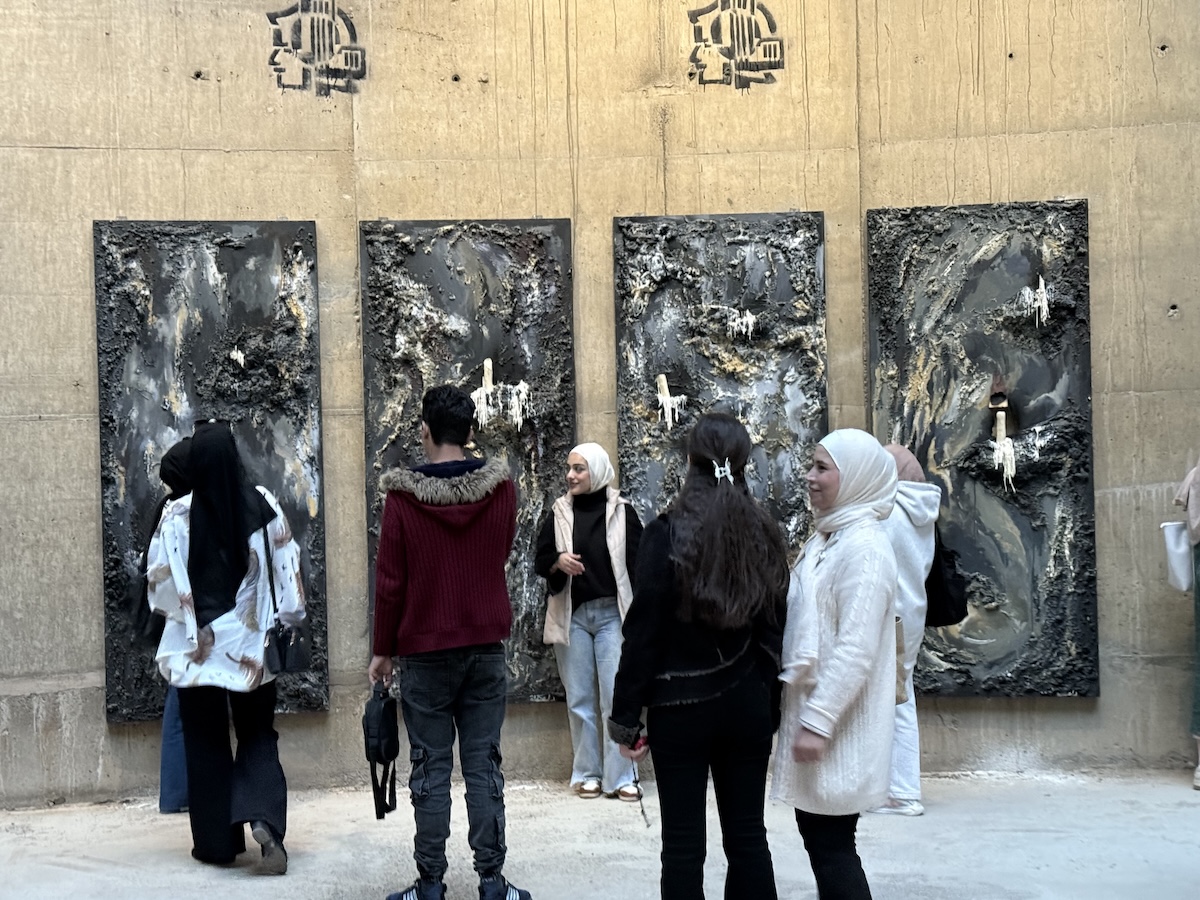
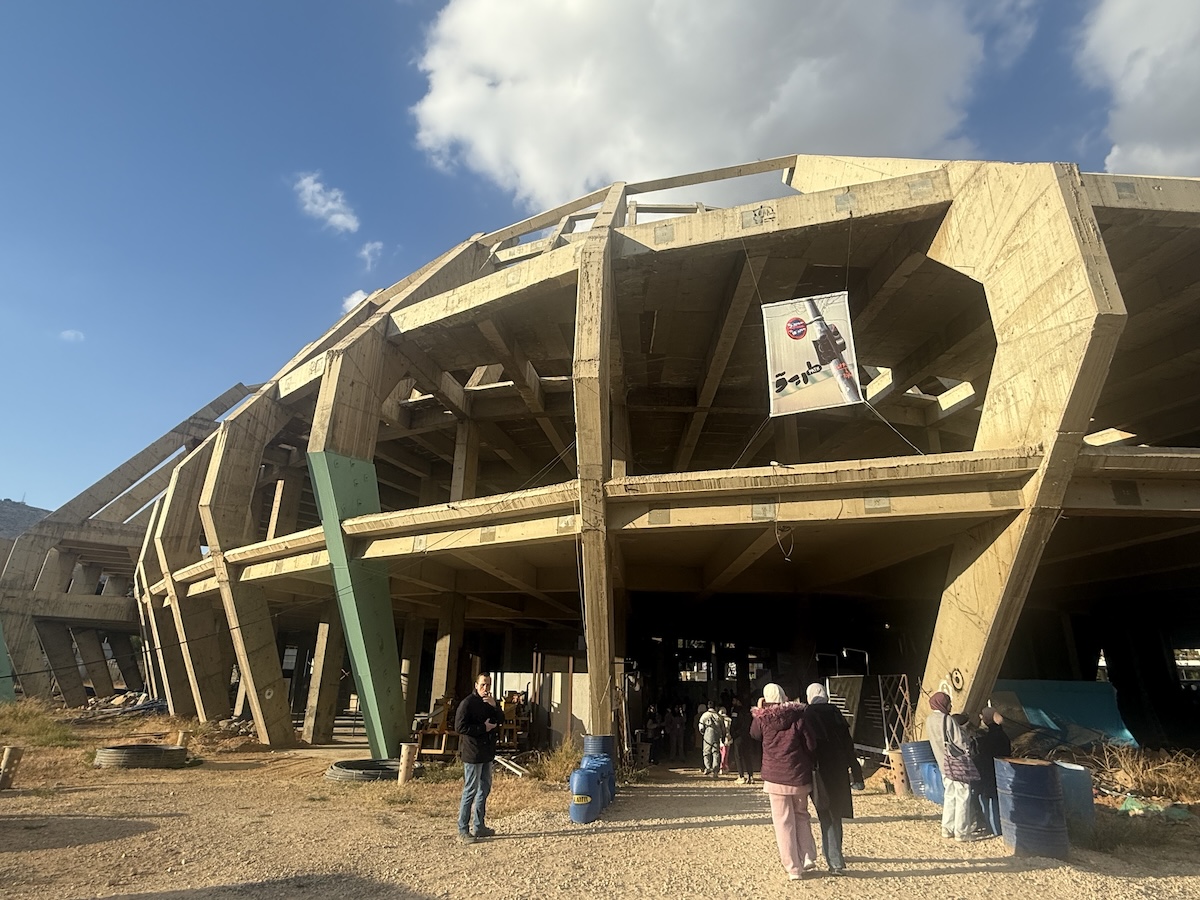
“The Path,” a two-week exhibition curated by the Madad Art Foundation and staged in the once-abandoned skeletal Massar Rose Building in Damascus, confronted Syria’s pain, but, curator Marwan Tayara stressed: “This is not about politics. It’s about healing.”
Tayara — who co-founded Madad alongside the late Buthayna Ali, a fine arts professor whose vision of a show on forgiveness inspired “The Path” — continued: “For us, the artist is a patriot. The bakery feeds the body, and art feeds the soul. The soldier fights for his country, and so does the artist — but with ideas, with beauty.”
Ali, who died in September, had envisioned a show that would offer something softer than some of Madad’s previous exhibitions around topics including war and disaster. “She wanted to make an exhibition about forgiveness but never had the chance,” artist Rala Tarabishi told Arab News. “We decided to do it as a gift for her — and for Syria.”
Even the venue was part of the show’s message. “This is a construction site,” said Tayara. “It’s symbolic. Syria is unfinished. But we’re building. Art has to be part of that process — not just rebuilding walls, but rebuilding identity.”
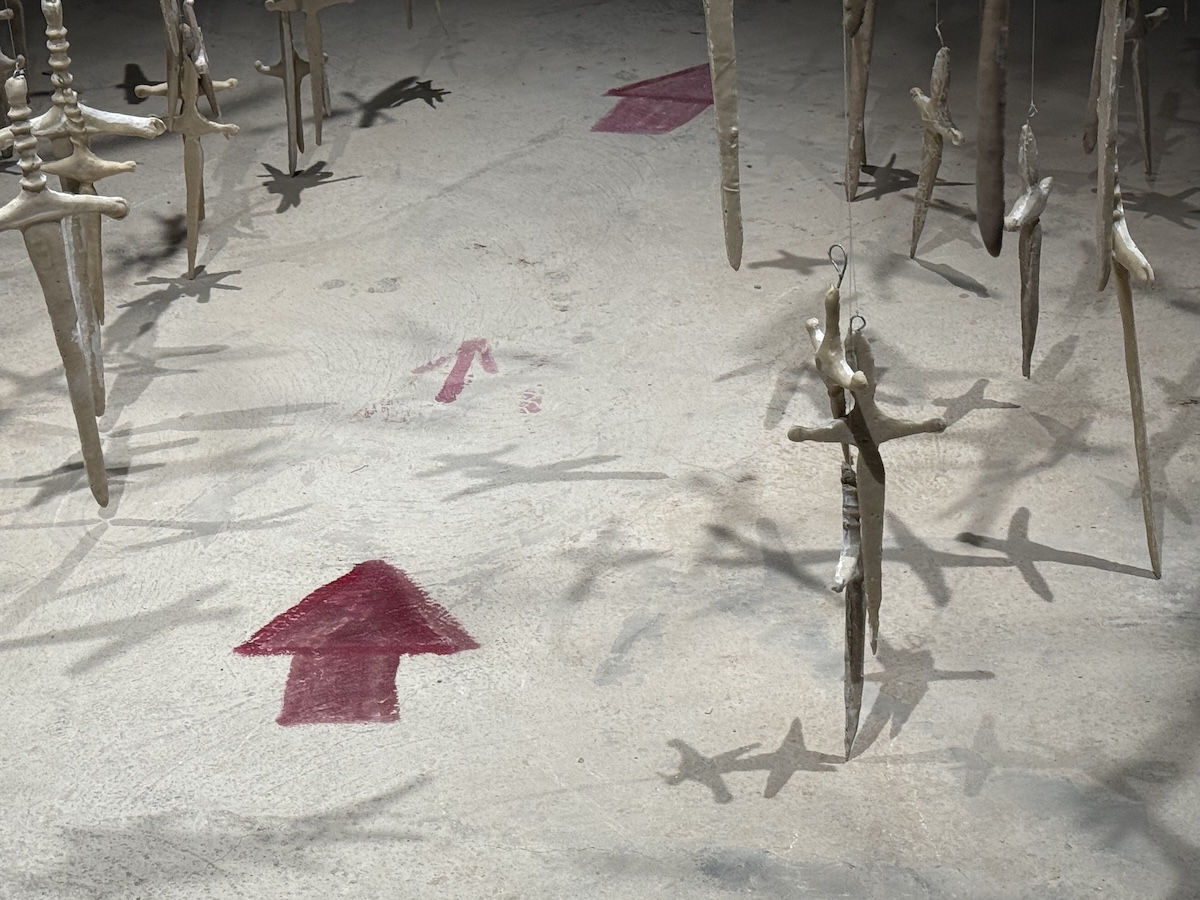
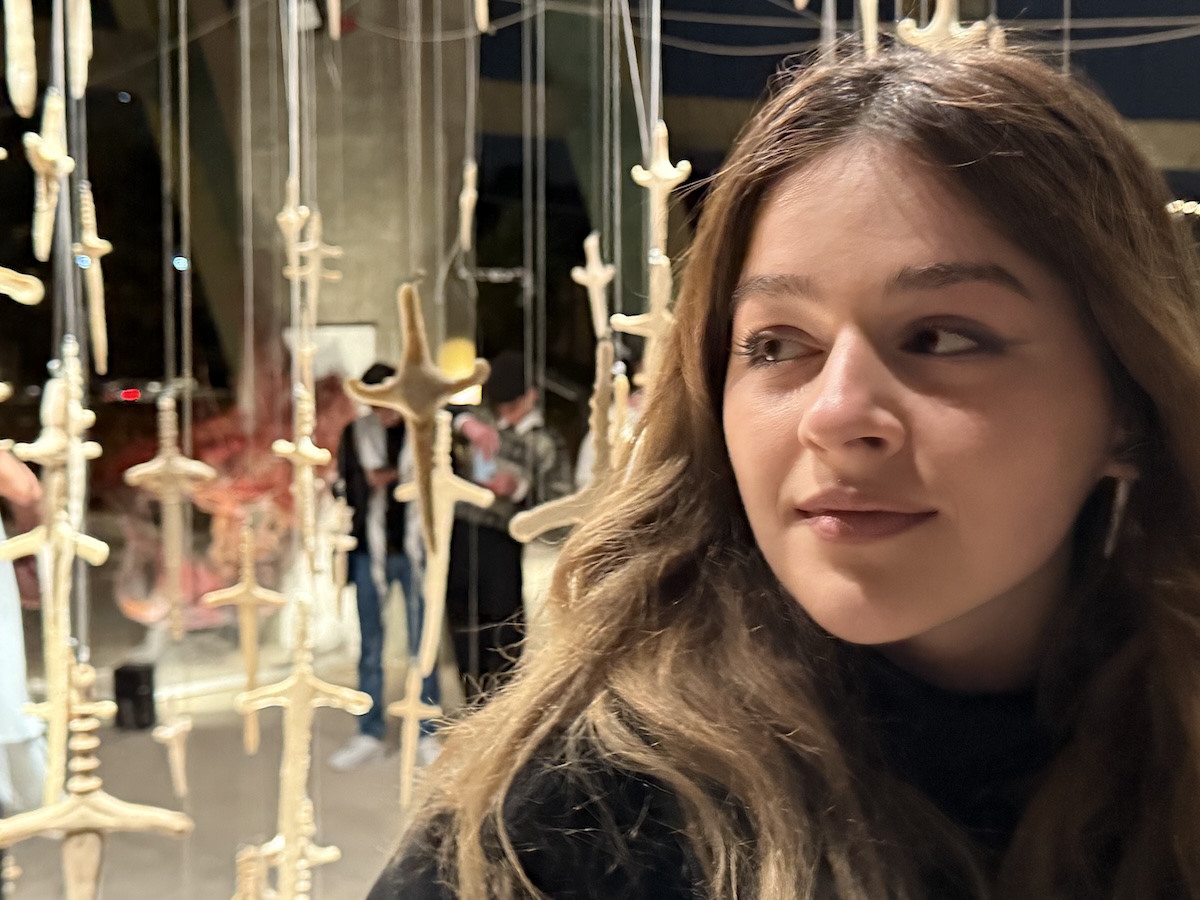
Tarabishi’s installation, “Embed,” was a forest of resin swords frozen mid-fall, through which visitors could walk. “When I embed my sword into the earth during a fight, I’m putting an end to it — in the most peaceful way,” she said. But none of the swords in “Embed” had yet reached that point. “The closer the sword is to the ground, the closer I am to forgetting, or forgiving,” Tarabishi explained. “Some things are harder to let go of.”
For viewers, she hoped, it would be “as if the swords are memories or people who caused them pain. I wanted them to lean more into forgiveness, so they could live a more peaceful life.”
But for Tarabishi, forgiveness is anything but simple. “It’s very hard. Some things feel too big for us to truly forgive, so we just coexist with our pain instead.”
Eyad Dayoub’s installation, “Crossing,” was equally visceral. Suspended black and red wires hung like fishing nets. “Each level represents a period in Syria — full of darkness and blood,” Dayoub said. “The material looks like something that traps fish. I feel like I’ve been hunted by my country. I’m stuck — I can’t leave it, and I can’t love it either.”
Creating the piece was part-therapy, part-confrontation. “Our dreams were lost. But I’m trying to find love again between me and my country,” he continued, adding that some visitors wept when he explained the symbolism of the piece. “People are ready to feel again. After war, we became numb. But I see us becoming sensitive again.”
If Dayoub’s wires evoked entrapment, Judi Chakhachirou’s work addressed instability. Her installation featured a trembling platform — a metaphor for emotional imbalance. “When someone hasn’t forgiven you — or you haven’t forgiven them — you feel unstable. You don’t know what’s wrong, but you’re not OK,” she said.
Her piece was a message to the living: “Take your chances now. Don’t leave people in your life hurt. Forgive — or at least try. Because one day, it’ll be too late.”
The war has buried so much in silence, she added, that emotions — even tears — feel like progress. “Some people cried when they saw it. Others said it made them feel calm, like they finally understood what was bothering them,” she said. “I hope my next work will be more hopeful.”
For Mariam Al-Fawal, forgiveness is less emotional and more philosophical. Her interactive installation, “A Delicate Balance,” draws on Karl Popper’s formulation of the paradox of tolerance. Visitors can rearrange its colored puzzle pieces on wooden stands to construct a final, diverse pattern.
“If you tolerate all ideologies — including the intolerant — you destroy tolerance itself,” Al-Fawal explained. “Without exclusion, there can be no true inclusion. To see the full picture, you have to flip the pieces, adjust them. That’s how people work too. You can’t have one color, one shape; you have to embrace difference.”
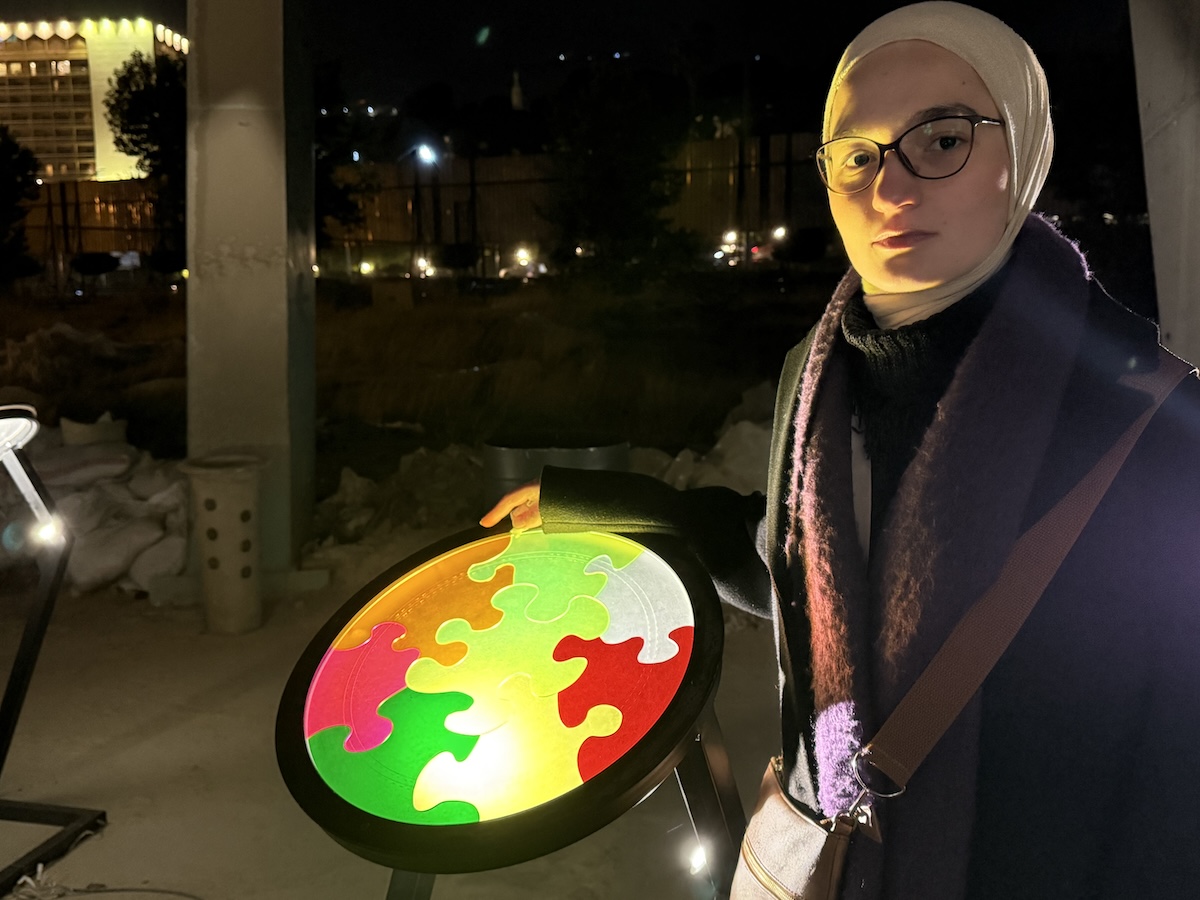
Al-Fawal’s puzzle asks viewers to build balance. “People interacted with it differently,” she said, “But most walked away with a shifted perspective. That’s why I made it interactive: the process carries the message.”
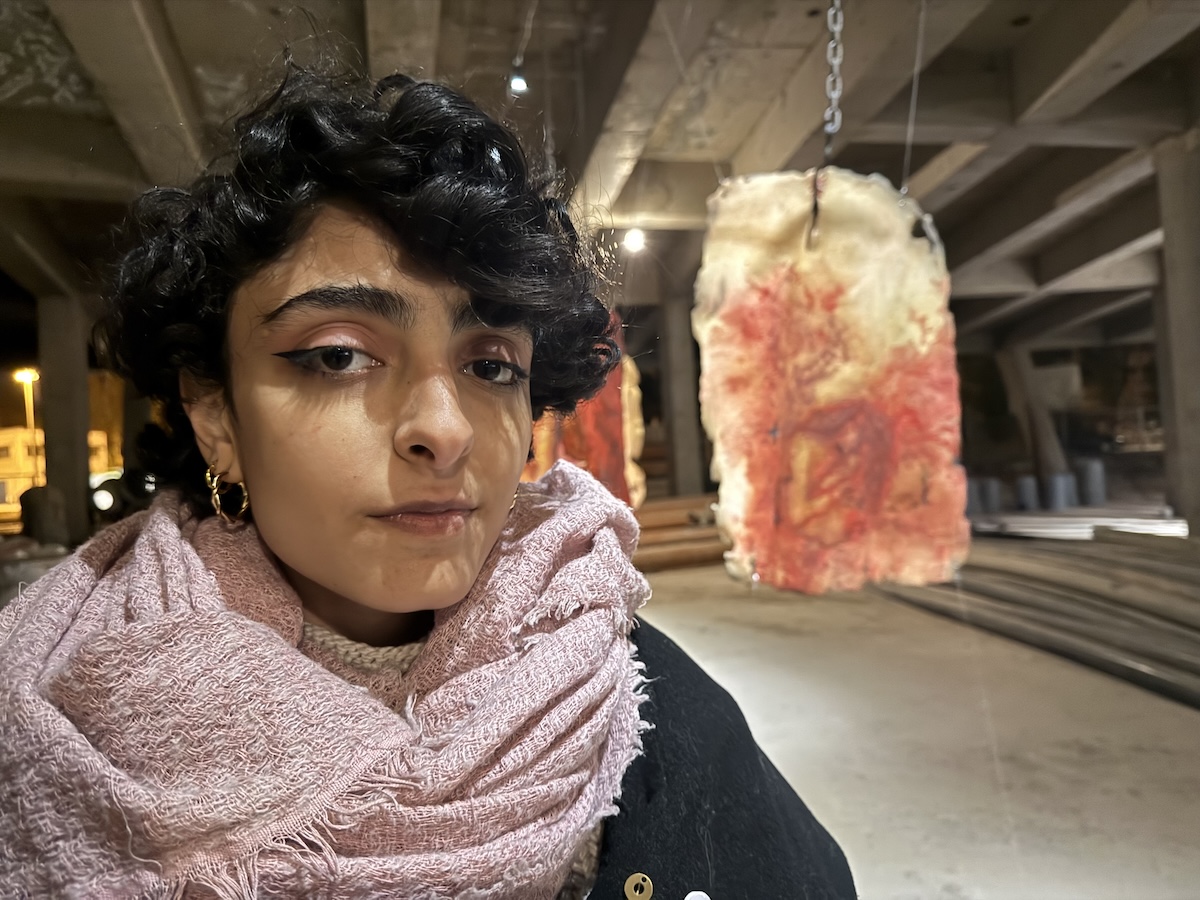
Lamia Saida contributed “To Memory, Once More,” which consisted of a set of blood-red, burned and shredded canvases suspended like raw meat.
“I thought if I wanted to express these memories visually, it had to be meat,” she explained. “That’s what they feel like. That’s why they hang. That’s why they bleed.”
Syria’s trauma, for Saida, is not abstract —it is textured, fleshy, and inescapable. And yet, through art, it is manageable. “Art is more than therapy,” she continued. “When I make something honest, I feel like I forgive people. I find stability.”
Her final painting is a single, steady line. “It’s the calm I reached after expressing everything else,” she said.
More than 400 visitors visited the exhibition daily, according to the organizers. Some brought questions. Some brought grief. Others brought quiet. “Even political officials came,” Tayara said. “Not to control. Just to understand.”
What started as a tribute to a beloved teacher has become a mirror for the country. “All Syrians have this memory of grief,” said Tarabishi. “Whether from war or daily life — it’s what binds us.”
Madad hopes to bring “The Path” to other cities too.
“We believe in the power of art,” said Tayara. “It won’t rebuild Syria alone. But it might rebuild the spirit. That’s where everything begins.”