

Oil Updates — crude drops, poised for biggest monthly fall in 3 years

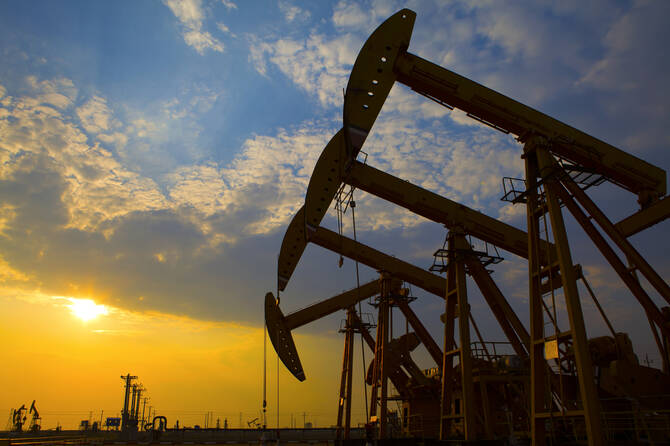
Brent crude futures fell by 83 cents, or 1.29 percent, to $63.42 per barrel by 10:30 a.m. Saudi time. Shutterstock
Short Url
Updated 30 April 2025
Follow

Oil Updates — crude drops, poised for biggest monthly fall in 3 years

SINGAPORE: Oil prices extended declines on Wednesday and were set for their largest monthly drop in more than three years as the global trade war eroded the outlook for fuel demand, while fears of mounting supply also weighed.

Brent crude futures fell by 83 cents, or 1.29 percent, to $63.42 per barrel by 10:30 a.m. Saudi time. US West Texas Intermediate crude futures dropped 92 cents, or 1.52 percent, to $59.50 a barrel.

Brent and WTI have lost 15 percent and 17 percent respectively so far this month, the biggest percentage drop since November 2021.

Both benchmarks slumped after US President Donald Trump’s April 2 announcement of tariffs on all US imports. They then sank further to four-year lows as China responded with its own levies against US imports, stoking a trade war between the top two oil-consuming nations.

Trump’s tariffs on imports into the US have made it probable the global economy will slip into recession this year, according to a Reuters poll.

China’s factory activity contracted at the fastest pace in 16 months in April, a factory survey showed on Wednesday.

Worries about demand amid the trade war have weighed on investor sentiment, said ANZ bank senior commodity strategist Daniel Hynes.

“There are also concerns that recent strength in US economic data was only temporary, due to stockpiling ahead of the tariffs that now appears to be abating,” he added.

US consumer confidence slumped to a nearly five-year low in April on growing concerns over tariffs, data showed on Tuesday.

Recent signs of a de-escalation in the trade wars, including a pair of orders Trump signed on Tuesday to soften the blow of his auto tariffs, eased some jitters among global investors.

That said, analysts believe the oil market will stay under pressure as the Trump administration continues to prioritize lower oil prices to manage inflation.

Oil prices were also undermined by fears of mounting supply from the Organization of the Petroleum Exporting Countries and their allies, known as OPEC+.

Several OPEC+ members will suggest a ramp-up of output hikes for a second straight month in June, sources told Reuters last week. The group will meet on May 5 to discuss output plans.

On the supply front, US crude oil inventories rose by 3.8 million barrels last week, market sources said on Tuesday citing American Petroleum Institute data.

US government data on stockpiles is due at 5:30 p.m. Saudi time on Wednesday. Analysts polled by Reuters expect, on average, an 400,000 barrel increase in US crude oil stocks for last week.


Saudi minister at Davos urges collaboration on minerals

Global collaboration on minerals essential to ease geopolitical tensions and secure supply, WEF hears. (Supplied)
Updated 20 January 2026
Follow

Saudi minister at Davos urges collaboration on minerals

  • The reason of the tension of geopolitics is actually the criticality of the minerals

LONDON: Countries need to collaborate on mining and resources to help avoid geopolitical tensions, Saudi Arabia’s minister of industry and mineral resources told the World Economic Forum on Tuesday.

“The reason of the tension of geopolitics is actually the criticality of the minerals, the concentration in different areas of the world,” Bandar Alkhorayef told a panel discussion on the geopolitics of materials.

“The rational thing to do is to collaborate, and that’s what we are doing,” he added. “We are creating a platform of collaboration in Saudi Arabia.”

Bandar Alkhorayef, Saudi Minister of Industry and Mineral Resources 

The Kingdom last week hosted the Future Minerals Forum in Riyadh. Alkhorayef said the platform was launched by the government in 2022 as a contribution to the global community. “It’s very important to have a global movement, and that’s why we launched the Future Minerals Forum,” he said. “It is the most important platform of global mining leaders.”

The Kingdom has made mining one of the key pillars of its economy, rapidly expanding the sector under the Vision 2030 reform program with an eye on diversification. Saudi Arabia has an estimated $2.5 trillion in mineral wealth and the ramping up of extraction comes at a time of intense global competition for resources to drive technological development in areas like AI and renewables.

“We realized that unlocking the value that we have in our natural resources, of the different minerals that we have, will definitely help our economy to grow to diversify,” Alkhorayef said. The Kingdom has worked to reduce the timelines required to set up mines while also protecting local communities, he added. Obtaining mining permits in Saudi Arabia has been reduced to just 30 to 90 days compared to the many years required in other countries, Alkhorayef said.

“We learned very, very early that permitting is a bottleneck in the system,” he added. “We all know, and we have to be very, very frank about this, that mining doesn’t have a good reputation globally.

“We are trying to change this and cutting down the licensing process doesn’t only solve it. You need also to show the communities the impact of the mining on their lives.”

Saudi Arabia’s new mining investment laws have placed great emphasis on the development of society and local communities, along with protecting the environment and incorporating new technologies, Alkhorayef said. “We want to build the future mines; we don’t want to build old mines.”