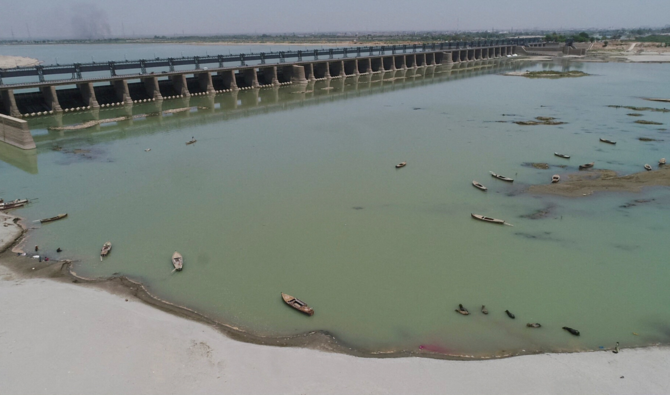
ISLAMABAD: Pakistan’s government on Monday decided not to build new canals on River Indus, Prime Minister Shehbaz Sharif’s office said, following weeks of protests in the southern Sindh province over the key irrigation project.
Pakistan’s government launched the ambitious agricultural project in February to build a network of six canals on the Indus. The government said it aimed to irrigate millions of acres of barren lands and ensure food security for 240 million people of the country.
But critics said the project would trigger water shortages in the southern parts of the country, mainly Sindh. The project sparked protests by lawyers, civil society and supporters of nationalist parties that disrupted trade and traffic on National Highway in Sindh, forcing the government last week to pause it.
On Monday, PM Sharif summoned a meeting of the Council of Common Interests (CCI), a constitutional body aimed at resolving the disputes between the federation and its provinces, to discuss the irrigation project and heightened tensions with New Delhi over a recent attack in Kashmir among other things.
“Federal Government has decided that no new canals will be built without mutual understanding from CCI,” Sharif’s office said in a statement after the meeting. “It has been decided that the Federal Government will not move further until mutual understanding is evolved among the provinces.”
The development comes at a time when India has suspended the Indus Waters Treaty with Pakistan that splits Indus River and its tributaries between Pakistan and India, threatening Pakistan’s food security. Islamabad has described the move as an “act of war” and said it would take “all appropriate steps” to safeguard its due share of water.
Sharif’s office said the government was forming a committee to engage all provincial governments to chart out a long-term consensus roadmap for the development of an agriculture policy and water management infrastructure across Pakistan, adding that water rights of all provinces were enshrined in the Water Apportionment Accord-1991 and Water Policy-2018.
“The committee will propose solutions to Pakistan’s long-term agriculture needs and water use of all provinces in line with the two consensus documents,” it said, adding that any concerns on the proposals would be addressed through due diligence among all stakeholders.
“Water is one of the most precious commodities and the makers of the constitution recognized this, mandating all water disputes to be resolved amicably through mutual understanding.”


Pakistan says won’t build new canals, dousing row over key irrigation project
https://arab.news/9s22d
Pakistan says won’t build new canals, dousing row over key irrigation project

- Government launched project in Feb. to build network of six canals on Indus to irrigate millions of acres of barren lands
- Critics say project would trigger water shortages, weeks of protests forced government to pause plans last week

No casualties as blast derails Jaffar Express train in Pakistan’s south
- Passengers were stranded and railway staffers were clearing the track after blast, official says
- In March 2025, separatist militants hijacked the same train with hundreds of passengers aboard
QUETTA: A blast hit Jaffar Express and derailed four carriages of the passenger train in Pakistan’s southern Sindh province on Monday, officials said, with no casualties reported.
The blast occurred at the Abad railway station when the Peshawar-bound train was on its way to Sindh’s Sukkur city from Quetta, according to Pakistan Railways’ Quetta Division controller Muhammad Kashif.
No group immediately claimed responsibility for the bomb attack, but passenger trains have often been targeted by Baloch separatist outfits in the restive Balochistan province that borders Sindh.
“Four bogies of the train were derailed due to the intensity of the explosion,” Kashif told Arab News. “No casualty was reported in the latest attack on passenger train.”
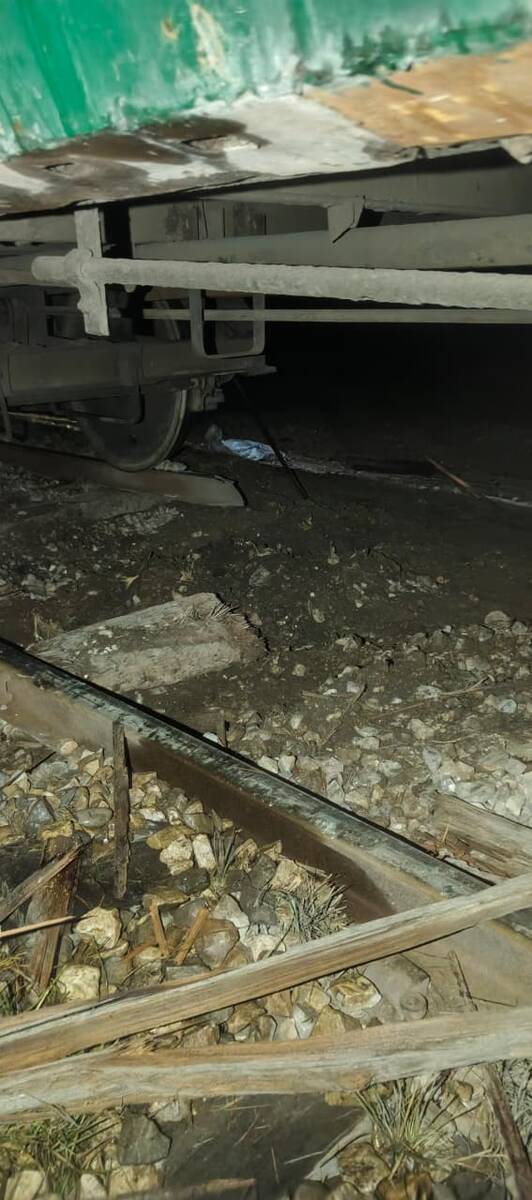
Another railway employee, who was aboard the train and requested anonymity, said the train was heading toward Sukkur from Jacobabad when they heard the powerful explosion, which derailed power van among four bogies.
“A small piece of the railway track has been destroyed,” he said, adding that passengers were now standing outside the train and railway staffers were busy clearing the track.
In March last year, fighters belonging to the Balochistan Liberation Army (BLA) separatist group had stormed Jaffar Express with hundreds of passengers on board and took them hostage. The military had rescued them after an hours-long operation that left 33 militants, 23 soldiers, three railway staff and five passengers dead.
The passenger train, which runs between Balochistan’s provincial capital of Quetta and Peshawar in the country’s northwest, had been targeted in at least four bomb attacks last year since the March hijacking, according to an Arab News tally.

Pakistan Railways says it has beefed up security arrangements for passenger trains in the province and increased the number of paramilitary troops on Jaffar Express since the hijacking in March, but militants have continued to target them in the restive region.
Balochistan, Pakistan’s southwestern province that borders Iran and Afghanistan, is the site of a decades-long insurgency waged by Baloch separatist groups who often attack security forces and foreigners, and kidnap government officials.
The separatists accuse the central government of stealing the region’s resources to fund development elsewhere in the country. The Pakistani government denies the allegations and says it is working for the uplift of local communities in Balochistan.


