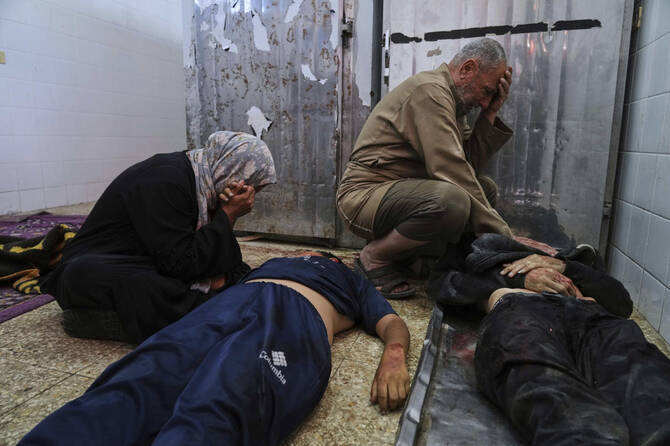
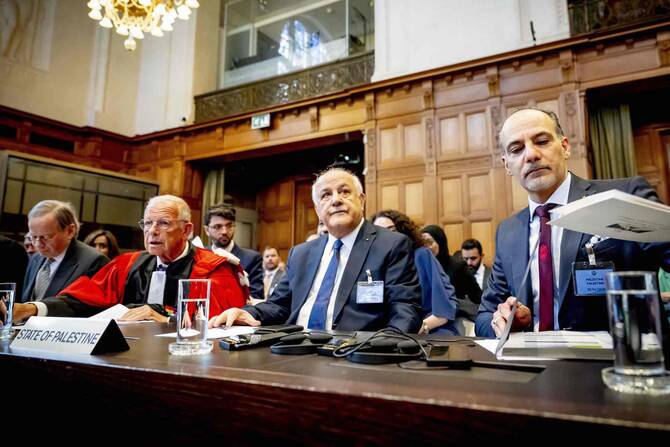
THE HAGUE: A top Palestinian official told the United Nations top court on Monday that Israel was blocking humanitarian aid to Palestinians in Gaza as a “weapon of war.”
Kicking off a week of hearings at the International Court of Justice about Israel’s obligations to United Nations aid agencies, Ammar Hijazi told judges: “Starvation is here. Humanitarian aid is being used as a weapon of war.”
The ICJ is holding a week of hearings over Israel’s obligations to the UN, including aid agencies, in war-ravaged Gaza before delivering a non-binding “advisory opinion.”
Dozens of countries and organizations will address the 15-judge panel in a marathon set of hearings.
Israel is not participating in the hearings but its ally the United States will take part on Wednesday.
“All UN-supported bakeries in Gaza have been forced to shut their doors. Nine of every ten Palestinians have no access to safe drinking water,” said Hijazi.
“Storage facilities of the UN and other international agencies are empty.”
Israel strictly controls all inflows of international aid vital for the 2.4 million Palestinians in the Gaza Strip.
It halted aid deliveries to Gaza on March 2, days before the collapse of a ceasefire that had significantly reduced hostilities after 15 months of war.
The UN estimates 500,000 Palestinians have been displaced since the two-month ceasefire ended in mid-March.
The UN has asked the ICJ to rule “with the utmost urgency” on the case but will likely take several months to reach its opinion.
Judges will consider Israel’s legal obligations toward the UN and its agencies, international organizations or third-party states to “ensure and facilitate the unhindered provision of urgently needed supplies essential to the survival of the Palestinian civilian population.”
Although the ICJ’s advisory opinions are not legally binding, the court believes they “carry great legal weight and moral authority.”


![]()
![]()

Israel using aid blockage as ‘weapon of war’ Palestinian official tells ICJ
Short Url
https://arab.news/jzntd
Israel using aid blockage as ‘weapon of war’ Palestinian official tells ICJ
- United Nations’ highest court is opening hearings into Israel’s obligation to provide urgently needed humanitarian assistance to Palestinian civilians
- Some 40 countries are expected to participate in a week of hearings starting Monday


Latest updates


© 2026 SAUDI RESEARCH & PUBLISHING COMPANY, All Rights Reserved And subject to Terms of Use Agreement.