Saudi health minister leads Walk 30 initiative at Sports Boulevard

1 / 5
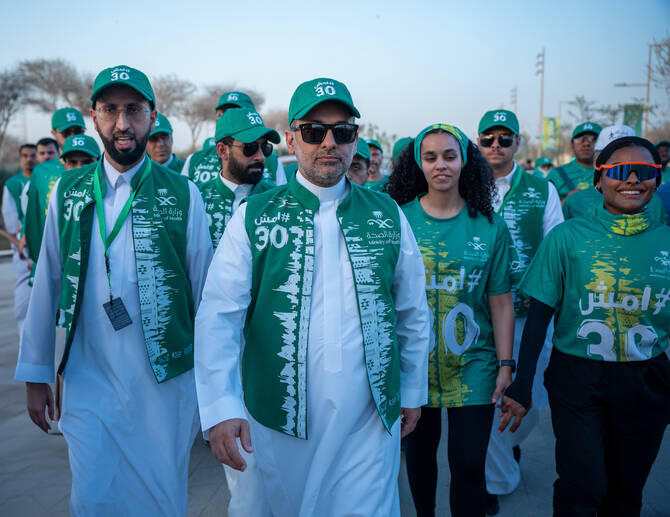
Saudi Minister of Health Fahad Al-Jalajel leads a walk at Riyadh’s Sports Boulevard on Saturday to kick off Walk 30 public health initiative. (AN photo by Loai Elkelawy)
2 / 5
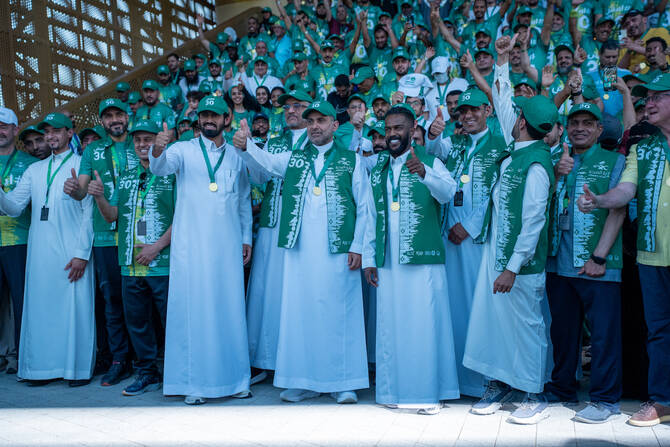
Saudi Minister of Health Fahad Al-Jalajel leads a walk at Riyadh’s Sports Boulevard on Saturday to kick off Walk 30 public health initiative. (AN photo by Loai Elkelawy)
3 / 5
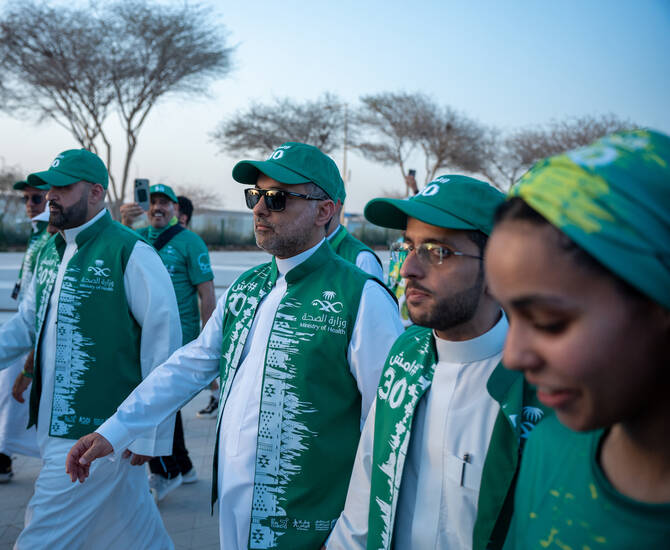
Saudi Minister of Health Fahad Al-Jalajel leads a walk at Riyadh’s Sports Boulevard on Saturday to kick off Walk 30 public health initiative. (AN photo by Loai Elkelawy)
4 / 5
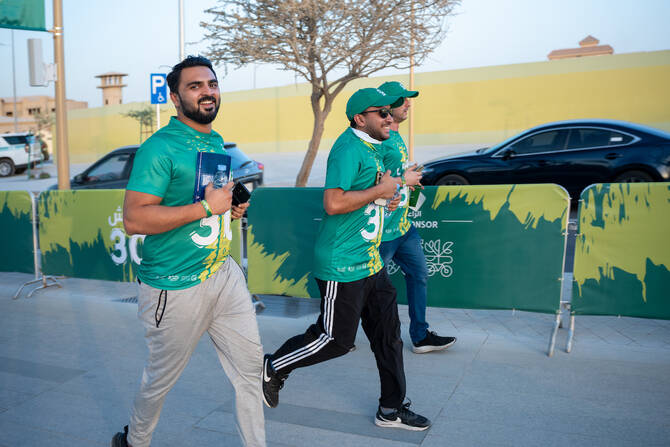
Saudi Minister of Health Fahad Al-Jalajel leads a walk at Riyadh’s Sports Boulevard on Saturday to kick off Walk 30 public health initiative. (AN photo by Loai Elkelawy)
5 / 5
Saudi Minister of Health Fahad Al-Jalajel leads a walk at Riyadh’s Sports Boulevard on Saturday to kick off Walk 30 public health initiative. (AN photo by Loai Elkelawy)
Short Url
Updated 27 April 2025
Follow

Saudi health minister leads Walk 30 initiative at Sports Boulevard

  • Activity program is ‘a pillar of health and quality of life transformations,’ Fahad Al-Jalajel says
  • Efforts have contributed to rise in average life expectancy in the Kingdom, minister says

RIYADH: Saudi Arabia’s Minister of Health Fahad Al-Jalajel led a walk at Riyadh’s Sports Boulevard on Saturday to kick off the Walk 30 public health initiative.

Al-Jalajel told Arab News that one of the aims of the program is to increase activity among the Kingdom’s population, with the goal of at least 150 minutes each week.

Walk 30 aims to address the health challenge of physical inactivity, which currently affects over 80 percent of people.

The campaign encourages a simple, but effective, goal: Walk 30 minutes per day, or 150 minutes per week, to achieve long-term behavioral change, and become healthier and more active.

“Walk 30, in its fifth season, is considered a pillar of the health and quality of life transformations,” Al-Jalajel said.

The push for healthier lifestyles is bearing fruit, with 58.5 percent of adults now engaging in at least 150 minutes of physical activity each week, above the 2024 target. Among children and adolescents, 18.7 percent meet the daily 60-minute activity recommendation.

These efforts have contributed to a rise in average life expectancy, which now stands at 78.8 years, edging closer to the Vision 2030 target of 80 years.

“I’m really glad to see Walk 30 today achieving a new record,” Al-Jalajel said.

He said that walking, even for 30 minutes a day, enhances one’s health and can lower the risk of chronic illnesses, including heartburn by 30 percent and strokes by 40 percent.

With the approach of summer and higher temperatures, the minister advised people to walk in the evenings, when it is cooler, and to stay hydrated and shaded.

He also highlighted the Healthy Mall program, which encourages people to take exercise in shopping malls.  

The program began in 2019, and takes place in several locations across the Kingdom.

Malls have been transformed into places where members of the community can comfortably walk, featuring stations for bottled drinking water and restaurants serving healthy meals.

Al-Jalajel said: “We think that Walk 30 is something that can be replicated in different countries. Last season we had Dr. Tedros (Adhanom Ghebreyesus), director-general of WHO, participating with us, and they have a walking program, too.
 
“We have multiple initiatives for advancing Walk 30 in the wintertime, in the summertime, and we can participate with different countries on that,” he said.


Crown prince sponsors launch of world-class Arabic calligraphy center in Madinah

Updated 23 December 2025
Follow

Crown prince sponsors launch of world-class Arabic calligraphy center in Madinah

  • The Prince Mohammed bin Salman Global Center for Arabic Calligraphy was inaugurated by Prince Salman bin Sultan bin Abdulaziz

RIYADH: A new center for Arabic calligraphy under the patronage of Crown Prince Mohammed bin Salman officially opened in Madinah on Monday.

The Prince Mohammed bin Salman Global Center for Arabic Calligraphy was inaugurated by Prince Salman bin Sultan bin Abdulaziz, governor of Madinah region.

He was joined by Culture Minister Prince Badr bin Abdullah bin Farhan, touring the new facility’s exhibition spaces and receiving briefings on cultural programming and the center’s achievements.

They also viewed collections highlighting Arabic calligraphy’s artistic and historical importance.

Speaking at the opening, Prince Badr said: “From this land of enlightenment and scholarship, we proudly launch a global platform dedicated to Arabic calligraphy as an invaluable cultural asset.”

He went on to credit the crown prince’s “generous and boundless support” for the cultural sector.

The minister said that the center demonstrated to the world the legacy of Arabic calligraphy while underscoring Saudi Arabia’s commitment to safeguarding its cultural identity and heritage.

According to Prince Badr, the facility represents an ambitious vision to elevate Arabic calligraphy as both a universal communication tool and an integral element of Arab heritage, art, architecture and design.

The center further aims to enhance the Kingdom’s cultural identity and strengthen its international presence, targeting calligraphers, emerging talents, visual artists, Islamic arts researchers, educational and cultural institutions, as well as art and heritage enthusiasts worldwide.

It will deliver specialized programs including research and archival services, calligraphy instruction, academic grants, a permanent museum, touring exhibitions, an international calligraphy association and a business incubator supporting calligraphy enterprises.

Additional offerings feature artist residency programs, expert-led workshops, and standardized curriculum development, complemented by international educational partnerships aimed at heritage conservation and expanding global appreciation for this time-honored art form.

The center’s establishment in Madinah carries particular significance, given the city’s historical role as the cradle of Arabic calligraphy and its association with transcribing the Qur’an and preserving Islamic knowledge.