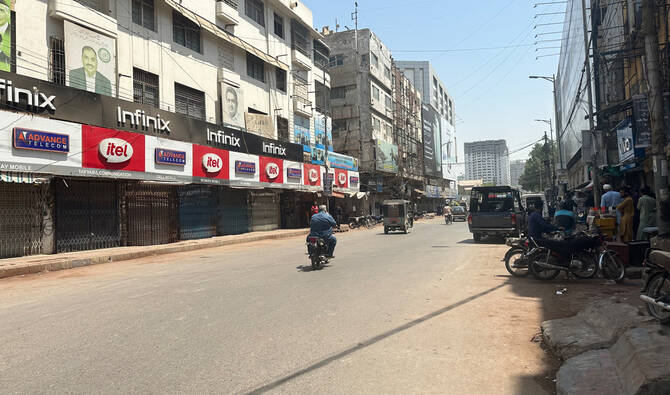

KARACHI: Markets and businesses remained shut in Pakistan’s commercial capital of Karachi on Saturday in response to a nationwide strike called by Jamaat-e-Islami (JI) religious party to express solidarity with the people of Gaza, amid renewed Israeli military strikes in the Palestinian enclave.
The strike was widely supported by various organizations representing traders, lawyers and people from different walks of life, and there was no major commercial activity in the southern Pakistani port city.
It followed massive Gaza solidarity marches in Lahore, Karachi and Islamabad this month, which were attended by tens of thousands of Pakistanis who demanded the world stop Israeli military actions.
“Today, there is a strike throughout Karachi,” JI Karachi chief Monem Zafar Khan said, noting the strike was not only supported by Karachi’s business community but also by professionals and civil society groups.
“It is a shutter-down strike, and the entire business community of Karachi, the lawyers of Karachi, the students of Karachi, the scholars of Karachi, the civil society of Karachi — all of them are supporting this.”
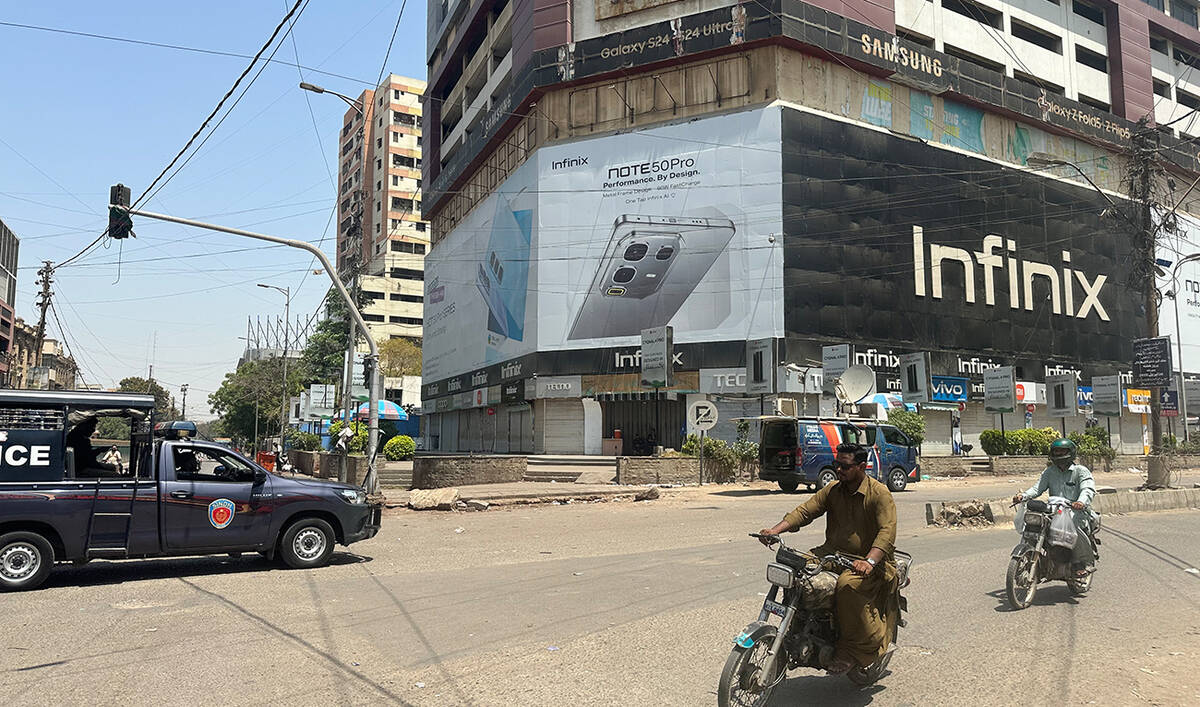
Police patrol on streets during a nationwide strike called by a Pakistani political party and supported by trade organizations against the Israeli military aggression in Gaza, in Karachi, Pakistan on April 26, 2025. (AN Photo)
The strike was largely observed in Karachi and it could only partially take hold elsewhere in Pakistan.
Pakistan, which does not have diplomatic ties with Israel, has consistently condemned Israeli military actions and called for the uninterrupted flow of humanitarian aid into the Palestinian territory.
The South Asian country has stressed the urgent need to revive negotiations aimed at a two-state solution to the Palestine Issue, with East Jerusalem as the capital of a future Palestinian state.
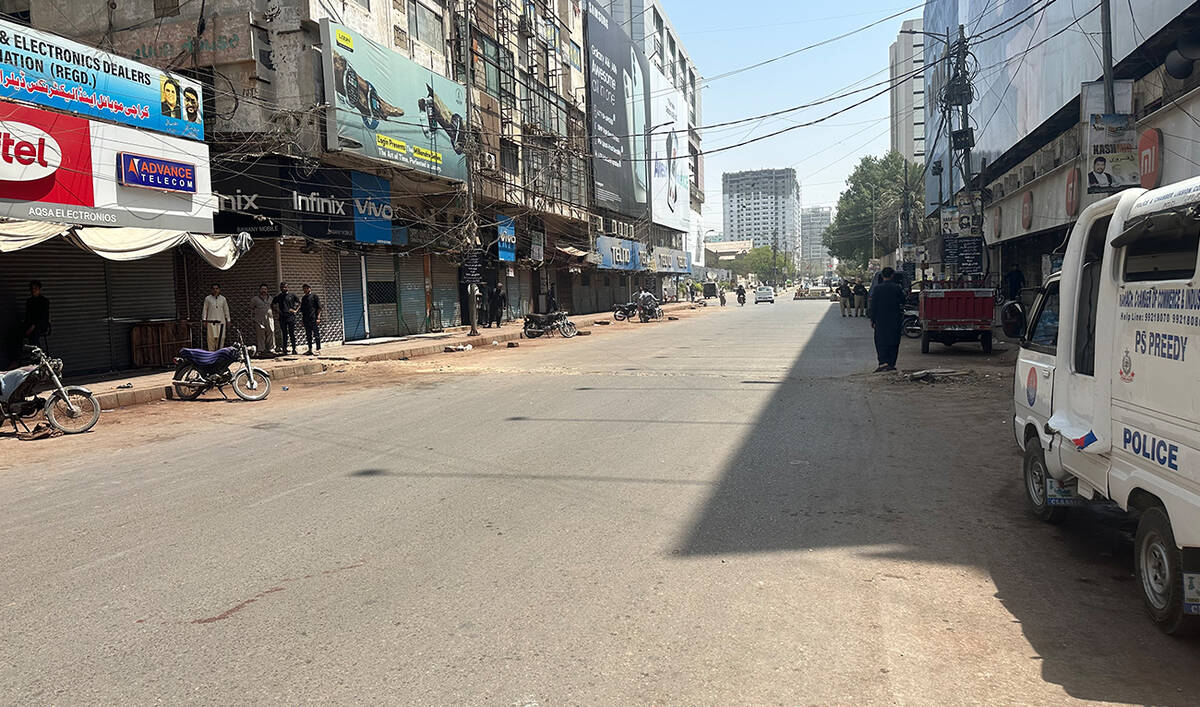
Commuters make their way through a partially deserted street during a nationwide strike called by a Pakistani political party and supported by trade organizations against the Israeli military aggression in Gaza, in Karachi, Pakistan on April 26, 2025. (AN Photo)
Muhammad Aslam Khan, general-secretary of the Cooperative Market Association, condemned Israel’s war on Gaza, which has killed over 50,000 Palestinians since Oct. 2023, and demanded stronger international action over it.
“It is now 12 o’clock and the city is completely silent and shut down,” Aslam told Arab News, surrounded by closed shops in the Saddar business district.
“We are sending them [Palestinians] a clear message that the hearts of the people are beating for the Palestinian Muslims, and we are deeply pained by the genocide happening to them, the oppression they are facing, and the fact that their basic needs like food and water have been completely cut off.”
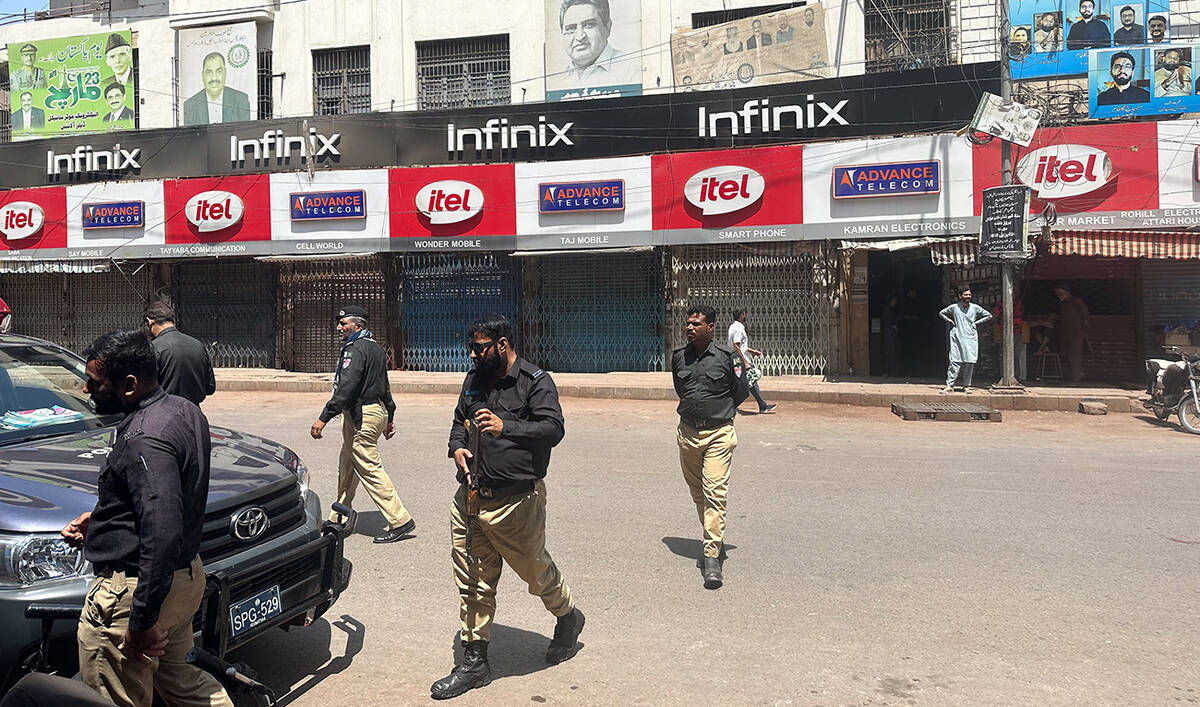
Police stand guard during a nationwide strike called by a Pakistani political party and supported by trade organizations against the Israeli military aggression in Gaza, in Karachi, Pakistan on April 26, 2025. (AN Photo)
Usman Sharif, a representative of the All-Pakistan Cottage Industry Association in Karachi, said the Pakistani trader fraternity wanted to contribute to the Palestinian cause.
“Every trader says that they want to contribute in some way, whether it be through prayers, funds, participating in the strike, joining a rally, or through a boycott,” he said.
“The strike is happening across Pakistan, and here in Karachi as well, people have participated in the strike.”