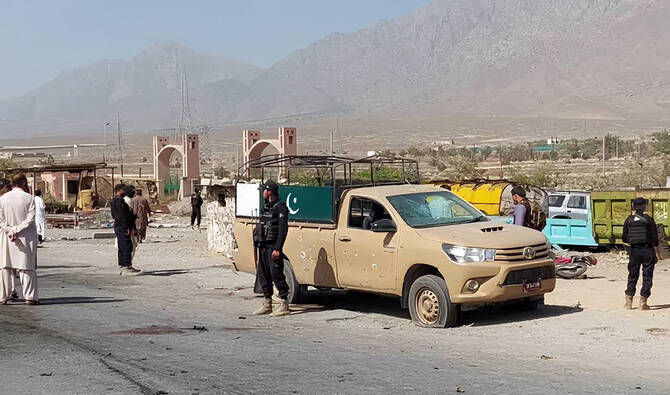
QUETTA: A roadside blast killed three paramilitary troops and injured four others in Pakistan’s southwestern Balochistan province on Friday, a local administration official said.
The blast in Margat area, home to coal mines and located some 60 kilometers from the provincial capital of Quetta, appeared to target the Frontier Corps paramilitary force’s bomb disposal personnel when they were clearing the route.
Balochistan, which shares a porous border with Iran and Afghanistan, has been the site of a decades-long insurgency by Baloch separatists who have targeted security forces protecting mining fields, laborers and truckers transporting minerals.
“An improvised explosive device (IED) was planted along the route being used for the transportation of coal from the Marget coalfield which exploded when the bomb disposal wing of the Frontier Corps was busy in security clearance of the route,” Quetta Deputy Commissioner Saad bin Asad told Arab News.
“Three soldiers of the BD wing were killed and four wounded in the attack.”
No group immediately claimed responsibility for the attack, but suspicion is likely to fall on ethnic Baloch separatist militants, who frequently target security forces, Chinese nationals, ethnic Punjabi commuters and laborers in the restive province.
The separatists accuse Islamabad of exploiting the province’s natural resources, such as gold and copper. Successive Pakistani governments have denied the allegations and said they only worked for the uplift of the region and its people.
The latest attack comes a day after three people, including two women, were killed when a vehicle was hit by a powerful explosion in Balochistan’s Kalat district. Last month, the Baloch Liberation Army separatist group hijacked a train with hundreds of passengers aboard near Balochistan’s Bolan Pass, which resulted in the deaths of 23 soldiers, three railway employees and five passengers. At least 33 insurgents were also killed.
Pakistan accuses the neighboring Afghanistan and India of supporting separatist militants in Balochistan, an allegation denied by New Delhi and Kabul.


Roadside blast kills three paramilitary troops in Pakistan’s volatile southwest
https://arab.news/pvckj
Roadside blast kills three paramilitary troops in Pakistan’s volatile southwest

- The blast appeared to target bomb disposal personnel of the Frontier Corps paramilitary force in the Marget coalfield
- No group immediately claimed responsibility for the attack but suspicion is likely to fall on Baloch separatist militants

No casualties as blast derails Jaffar Express train in Pakistan’s south
- Passengers were stranded and railway staffers were clearing the track after blast, official says
- In March 2025, separatist militants hijacked the same train with hundreds of passengers aboard
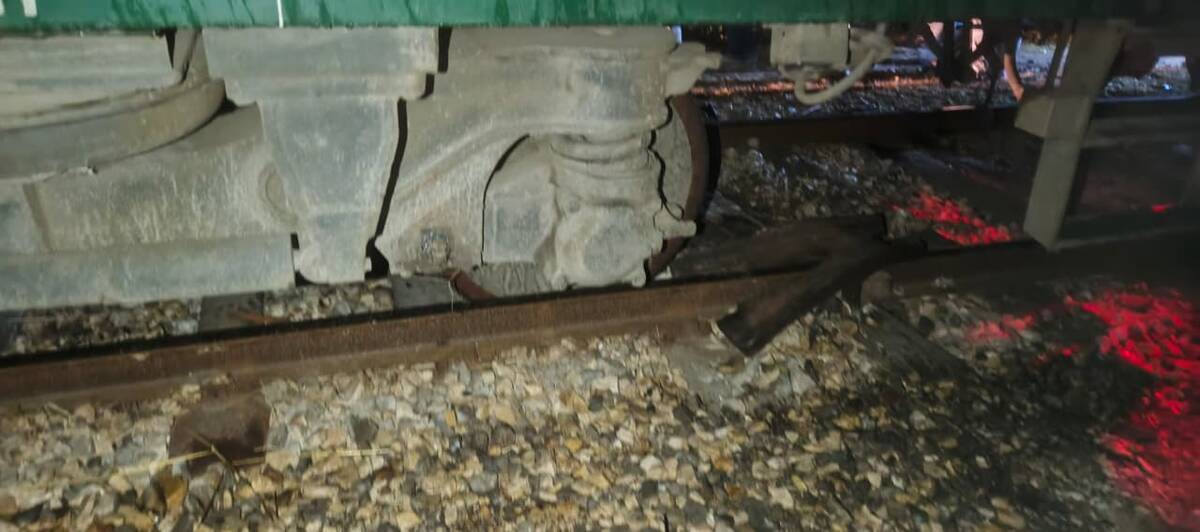
QUETTA: A blast hit Jaffar Express and derailed four carriages of the passenger train in Pakistan’s southern Sindh province on Monday, officials said, with no casualties reported.
The blast occurred at the Abad railway station when the Peshawar-bound train was on its way to Sindh’s Sukkur city from Quetta, according to Pakistan Railways’ Quetta Division controller Muhammad Kashif.
No group immediately claimed responsibility for the bomb attack, but passenger trains have often been targeted by Baloch separatist outfits in the restive Balochistan province that borders Sindh.
“Four bogies of the train were derailed due to the intensity of the explosion,” Kashif told Arab News. “No casualty was reported in the latest attack on passenger train.”
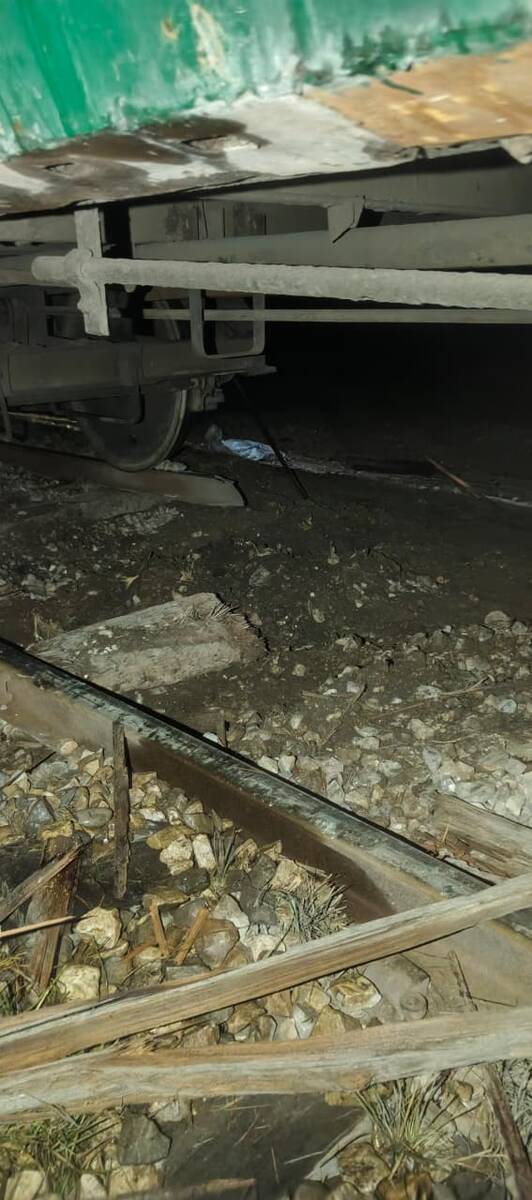
Another railway employee, who was aboard the train and requested anonymity, said the train was heading toward Sukkur from Jacobabad when they heard the powerful explosion, which derailed power van among four bogies.
“A small piece of the railway track has been destroyed,” he said, adding that passengers were now standing outside the train and railway staffers were busy clearing the track.
In March last year, fighters belonging to the Balochistan Liberation Army (BLA) separatist group had stormed Jaffar Express with hundreds of passengers on board and took them hostage. The military had rescued them after an hours-long operation that left 33 militants, 23 soldiers, three railway staff and five passengers dead.
The passenger train, which runs between Balochistan’s provincial capital of Quetta and Peshawar in the country’s northwest, had been targeted in at least four bomb attacks last year since the March hijacking, according to an Arab News tally.
Pakistan Railways says it has beefed up security arrangements for passenger trains in the province and increased the number of paramilitary troops on Jaffar Express since the hijacking in March, but militants have continued to target them in the restive region.
Balochistan, Pakistan’s southwestern province that borders Iran and Afghanistan, is the site of a decades-long insurgency waged by Baloch separatist groups who often attack security forces and foreigners, and kidnap government officials.
The separatists accuse the central government of stealing the region’s resources to fund development elsewhere in the country. The Pakistani government denies the allegations and says it is working for the uplift of local communities in Balochistan.


