

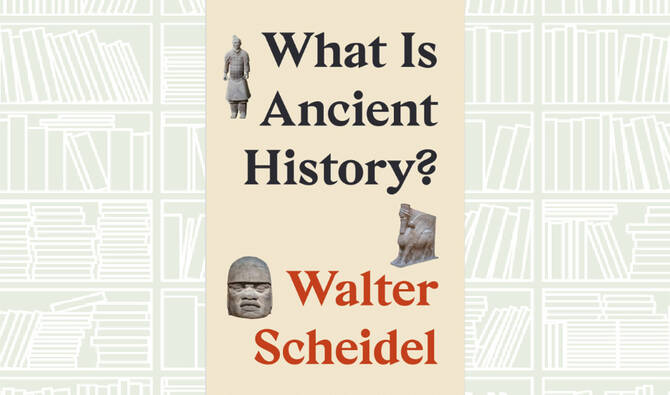
What We Are Reading Today: ‘What Is Ancient History?’ by Walter Scheidel

Short Url
Updated 24 April 2025
Follow

What We Are Reading Today: ‘What Is Ancient History?’ by Walter Scheidel

It’s easy to think that ancient history is, well, ancient history —obsolete, irrelevant, unjustifiably focused on Greece and Rome, and at risk of extinction.

In “What Is Ancient History?” Walter Scheidel presents a compelling case for a new kind of ancient history — a global history that captures antiquity’s pivotal role as a decisive phase in human development, one that provided the shared foundation of our world and continues to shape our lives today.

For Scheidel, ancient history is when the earliest versions of today’s ways of life were created and spread — from farming, mining, and engineering to housing and transportation, cities and government, writing and belief systems. 

Transforming the planet, this process unfolded all over the world, in Eurasia, Africa, and the Americas, often at different times, sometimes haltingly but ultimately unstoppably.


What We Are Reading Today: ‘Rituals of War’

Photo/Supplied
Updated 29 December 2025
Follow

What We Are Reading Today: ‘Rituals of War’

  • Bahrani brings together and analyzes facets of war and sovereign power that fall under the categories of representation and display, the aesthetic, the ritualistic, and the supernatural

Author: Zainab Bahrani

“Rituals of War” is an investigation into the earliest historical records of violence and biopolitics. In Mesopotamia, ancient Iraq (ca. 3000–500 BC) rituals of war and images of violence constituted part of the magical technologies of warfare that formed the underlying irrational processes of war. In the book, three lines of inquiry are converged into one historical domain of violence, namely, war, the body, and representation.

Building on Foucault’s argument in “Discipline and Punish” that the art of punishing must rest on a whole technology of representation, Zainab Bahrani investigates the ancient Mesopotamian record to reveal how that culture relied on the portrayal of violence and control as part of the mechanics of warfare. Moreover she takes up the more recent arguments of Giorgio Agamben on sovereign power and biopolitic to focus on the relationship of power, the body and violence in Assyro-Babylonian texts and monuments of war.

Bahrani brings together and analyzes facets of war and sovereign power that fall under the categories of representation and display, the aesthetic, the ritualistic, and the supernatural.