

World Bank forecasts MENA growth at 2.6% in 2025, 3.7% in 2026 

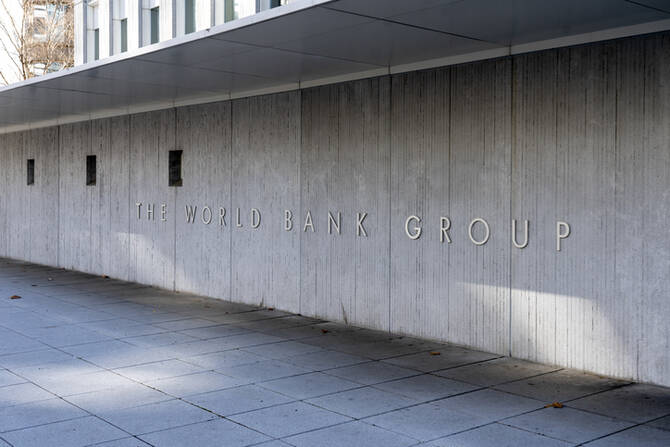
Economic activity in the Gulf Cooperation Council countries is expected to benefit from rising oil output, according to the World Bank. Getty
Short Url
Updated 24 April 2025
Follow

World Bank forecasts MENA growth at 2.6% in 2025, 3.7% in 2026 

RIYADH: The Middle East and North Africa is on track for a modest economic recovery after 2024’s muted growth, with real gross domestic product projected to rise 2.6 percent in 2025 and 3.7 percent in 2026, the World Bank has said. 

Its latest economic outlook, titled “Shifting Gears: The Private Sector as an Engine of Growth in the Middle East and North Africa,” attributed the improved forecast to the easing of OPEC+ production cuts, a rebound in agricultural output across oil-importing economies, and resilient private consumption. 

This follows growth of just 1.9 percent in 2024, with the report noting that while the recovery is underway, the region remains vulnerable to geopolitical tensions, climate-related disruptions, and volatility in global oil and trade markets. 

Ousmane Dione, World Bank vice president for the Middle East and North Africa, said in the report’s foreword: “Our macroeconomists forecast a moderate acceleration of growth in 2025 and 2026.

“Realizing the potential of the region will depend on navigating risks and advancing much-needed reforms.” 

He added that the economic outlook remains uncertain, with persistent challenges and fragility shaping the region’s trajectory.

“While some positive signs are emerging in conflict-affected economies, the situation remains fragile, and deep structural challenges persist amidst global policy uncertainty,” Dione noted. 

The report added that economic activity in the Gulf Cooperation Council countries, including Saudi Arabia, is expected to benefit from rising oil output following OPEC+’s decision to accelerate production increases from May. 

Saudi Arabia’s GDP is projected to grow by 2.8 percent in 2025, compared to 1.3 percent in 2024, with growth driven by non-oil sectors, the World Bank said. 

For oil-importing countries such as Egypt and Morocco, the easing of inflation and improvements in agriculture are expected to support higher growth. 

Egypt’s growth is forecast to reach 3.8 percent in the fiscal year 2025, while Morocco is expected to grow by 3.4 percent. 

The World Bank report pointed out that the region’s long-standing low productivity is partly due to the lack of a dynamic private sector. 

It noted that few firms invest, innovate or provide formal training, while a significant divide persists between a small formal sector and a large informal one. 

“A dynamic private sector is essential to unlocking sustainable growth and prosperity in the region,” said Roberta Gatti, World Bank chief economist for MENA. 

“To realize this potential, governments across the region must embrace their role as stewards of competitive markets,” she added. 

The report also underscored the need to better harness the region’s human capital, particularly by improving female participation in the labor market. 

“The region has long underused human capital. Women are largely left out of the labor market. Businesses can find more talent by attracting women leaders, who in turn will hire more women,” said Dione. 

“Closing the gender employment gap could substantially boost income per capita by around 50 percent in a typical MENA economy,” he added. 

The report has called for increased competition, improvements in the regulatory environment, better data access, and a reconsideration of the role of state-owned enterprises. 

It also highlighted the need for firms to adopt improved management practices and leverage the untapped potential of women entrepreneurs and employees. 

While the outlook signals a cautious recovery, the World Bank stressed that unlocking the full potential of the private sector is essential to achieving long-term, inclusive economic growth across the region.


Cruise Saudi strengthens global ties as Celestyal makes maiden calls to Jeddah

Updated 10 December 2025
Follow

Cruise Saudi strengthens global ties as Celestyal makes maiden calls to Jeddah

JEDDAH: Saudi Arabia is accelerating its push to become a global cruise hub, with Cruise Saudi — a wholly owned Public Investment Fund subsidiary — expanding international partnerships to draw more travelers to the Kingdom’s Red Sea and Arabian Gulf ports.

The latest milestone came as award-winning Greek cruise line Celestyal completed its first-ever calls to Jeddah, signaling rising global interest in Saudi Arabia’s cultural and natural attractions.

The visits form part of Cruise Saudi’s strategy to build a year-round cruise ecosystem that supports tourism growth, boosts local supply chains, and contributes to the Kingdom’s broader economic diversification.

Three UNESCO World Heritage Sites — AlUla, Jeddah Historic District, and Al-Ahsa Oasis — are now accessible by sea, with curated shore excursions designed to deepen visitor engagement.

Cruise Saudi aims to welcome 1.3 million cruise passengers annually by 2035, creating 50,000 direct and indirect jobs and positioning the Kingdom as a premier international cruise destination.

The 1,360-passenger Celestyal Discovery arrived in Jeddah on Dec. 5, following the 1,260-passenger Celestyal Journey, which made its maiden call on Nov. 29. The Journey concluded a seven-night Athens–Jeddah itinerary with stops in Turkiye and Egypt, marked by a traditional plaque exchange ceremony attended by Cruise Saudi executives, port officials and Celestyal representatives.

Passengers were welcomed with traditional Saudi hospitality and toured Jeddah’s historic Al-Balad district, bustling souks, and cultural sites. Some Muslim travelers also visited Makkah to perform Umrah.

“We are honored to celebrate our maiden call in Jeddah alongside our partners at Cruise Saudi, marking the beginning of a long and effective relationship,” said Lee Haslett, chief commercial officer at Celestyal.

He added that Jeddah’s role as “the cultural heart of Saudi Arabia” presents strong potential for cruise tourism.

Barbara Buczek, chief destination experiences officer at Cruise Saudi, told Arab News: “This maiden Red Sea sailing highlights the strong appeal of the region and aligns with Cruise Saudi's commitment to developing seamless, high-quality cruise experiences in Saudi Arabia.”

She noted that Celestyal’s expanded itineraries reflect rising demand for distinctive Red Sea and Arabian Gulf voyages.

Since its launch in 2021, Cruise Saudi has activated five cruise ports, introduced Aroya Cruises, the Kingdom’s first homegrown cruise line, and established Aman at Sea, an ultra-luxury JV with Aman Group set to launch in 2027. The company manages the full value chain — from terminals and berths to curated excursions — and has already welcomed more than 600,000 passengers of over 120 nationalities.

Celestyal, which carries more than 140,000 passengers annually across two refurbished vessels, is aligning with the Kingdom’s Vision 2030 ambition to transform coastal tourism. After departing Jeddah, both Celestyal ships continued to Abu Dhabi to begin the company’s second Arabian Gulf season.

Aroya Cruises has also launched a new seasonal program featuring stops in Mykonos, Athens, Crete, and coastal cities in Turkiye, expanding on a successful inaugural season that attracted over 95,000 guests.

The growing activity underscores Saudi Arabia’s emergence as a world-class cruise destination, supported by modern infrastructure, expanding routes, and experiences that highlight the Kingdom’s culture, heritage and hospitality.