

Oil Updates — crude steadies after 2% drop on potential OPEC+ output increase

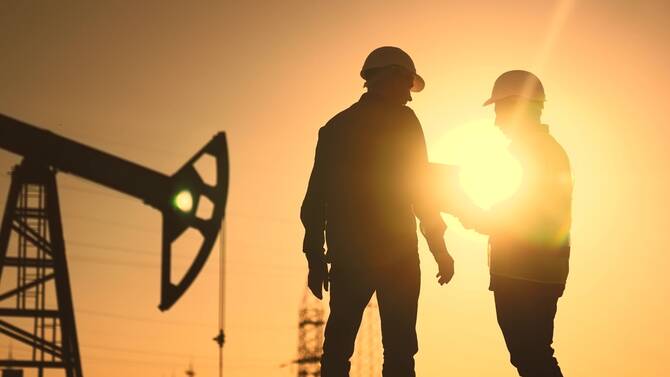
Brent crude futures rose 8 cents, or 0.12 percent, to $66.20 a barrel by 8:05 a.m. Saudi time. Shutterstock
Short Url
Updated 24 April 2025
Follow

Oil Updates — crude steadies after 2% drop on potential OPEC+ output increase

BEIJING: Oil prices ticked up on Thursday after falling nearly 2 percent in the previous session, with investors weighing a potential OPEC+ output increase against conflicting tariff signals from the White House and ongoing US-Iran nuclear talks.

Brent crude futures rose 8 cents, or 0.12 percent, to $66.20 a barrel by 8:05 a.m. Saudi time, while US West Texas Intermediate crude gained 9 cents, or 0.14 percent, to $62.36 a barrel.

Prices settled down 2 percent in the previous trading session after Reuters reported that several OPEC+ members would suggest the group accelerate oil output increases for a second month in June, citing three sources familiar with the OPEC+ talks.

“While a risk-on move lifted most risk assets yesterday, oil was left behind thanks to OPEC+ discord,” ING analysts wrote in a note.

Kazakhstan, which produces about 2 percent of global oil output and has repeatedly exceeded its quota over the past year, said it would prioritize national interest, rather than that of OPEC+ in deciding production levels, Reuters reported on Wednesday.

There have previously been disputes among OPEC+ members over compliance with production quotas, one of which resulted in Angola exiting OPEC+ in 2023.

“Further disagreement between OPEC+ members is a clear downside risk, as it could lead to a price war,” the ING analysts said.

Signs that the US and China could be moving closer to trade talks supported prices. The Wall Street Journal reported that the White House would be willing to lower its tariffs on China to as low as 50 percent in order to open up negotiations.

US Treasury Secretary Scott Bessent said on Wednesday that current import tariffs — of 145 percent on Chinese products headed into the US and 125 percent on US products headed into China — were not sustainable and would have to come down before trade talks between the two sides could begin.

White House Press Secretary Karoline Leavitt later told Fox News, however, that there would be no unilateral reduction in tariffs on goods from China.

Rystad Energy analysts say a prolonged US-China trade war could cut China’s oil demand growth in half this year to 90,000 barrels per day from 180,000 bpd.

Trump is also mulling tariff exemptions on car part imports from China, the Financial Times reported on Wednesday.

Potentially putting downward pressure on oil prices, the US and Iran will hold a third round of talks this weekend on a possible deal to reimpose restraints on Tehran’s uranium enrichment program. The market is watching the talks for any sign that a US-Iran rapprochement could lead to the easing of sanctions on Iran oil and boost supply.

But the US on Tuesday put fresh sanctions on Iran’s energy sector, which Iran’s foreign ministry spokesperson said showed a “lack of goodwill and seriousness” over dialogue with Tehran. 


Reforms target sustained growth in Saudi real estate sector, says Al-Hogail

Updated 26 January 2026
Follow

Reforms target sustained growth in Saudi real estate sector, says Al-Hogail

RIYADH: The Real Estate Future Forum opened its doors for its first day at the Four Seasons Riyadh, with prominent global and local figures coming together to engage with one of the Kingdom’s most prospering sectors.

With new regulations, laws, and investments underway, 2026 is expected to be a year of momentous progress for the real estate sector in the Kingdom.

The forum opened with a video highlighting the sector’s progress in the Kingdom, during which an emphasis was placed on the forum’s ability to create global reach, representation, as well as agreements worth a cumulative $50 billion

With the Kingdom now opening up real estate ownership to foreigners, this year’s Real Estate Future Forum is placing a great deal of importance on this new milestone and its desired outcomes and impact on the market. 

Aside from this year’s forum’s unique discussions surrounding those developments, it will also be the first of its kind to launch the Real Estate Excellence Award and announce its finalist during the three-day summit.

Minister of Municipalities and Housing and Chairman of the Real Estate General Authority Majed Al-Hogail took to stage to address the diverse audience on the real estate market’s achievements thus far and its milestones to come.

Of those important milestones, he underscored “real estate balance” as a key pillar of the sector’s decisions to implement regulatory tools “with the aim of constant growth which can maintain the vitality of this sector.” He pointed to examples of those regulatory measures, such as the White Land Tax.

On 2025’s progress, the minister highlighted the jump in Saudi family home ownership, which went from 47 percent in 2016 to 66 percent in 2025, keeping the Kingdom’s Vision 2030 goal of 70 percent by the end of the decade on track.

He said the opening of the real estate market to foreigners is an indicator of the sector’s maturity under the leadership of Crown Prince Mohammed bin Salman. He said his ministry plans to build over 300,000 housing units in Riyadh over the next three years.

Speaking to Arab News,  Al-Hogail elaborated on these achievements, stating: “Today, demand, especially local demand, has grown significantly. The mortgage market has reached record levels, exceeding SR900 billion ($240 billion) in mortgage financing, we are now seeing SRC (Saudi Real Estate Refinance Co.) injecting both local and foreign liquidity on a large scale, reaching more than SR54 billion”

Al-Hogail described Makkah and Madinah as unique and special points in the Kingdom’s real estate market as he spoke of the sector’s attractiveness.

 “Today, the Kingdom of Saudi Arabia has become, in international investment indices, one that takes a good share of the Middle East, and based on this, many real estate investment portfolios have begun to come in,” he said. 

Al-Ahsa Gov. Prince Saud bin Talal bin Badr Al-Saud told Arab News the Kingdom’s ability to balance both heritage sites with real estate is one of its strengths.

He said: “Actually the real estate market supports the whole infrastructure … the whole ecosystem goes back together in the foundation of the real estate; if we have the right infrastructure we can leverage more on tourism plus we can leverage more on the quality of life … we’re looking at 2030, this is the vision … to have the right infrastructure the time for more investors to come in real estate, entertainment, plus tourism and culture.”