

Riyadh hosts Pakistan’s National Assembly speaker for bilateral talks

1 / 5
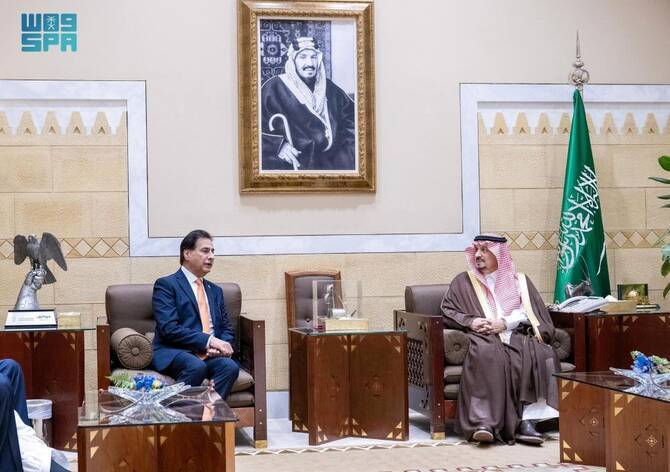
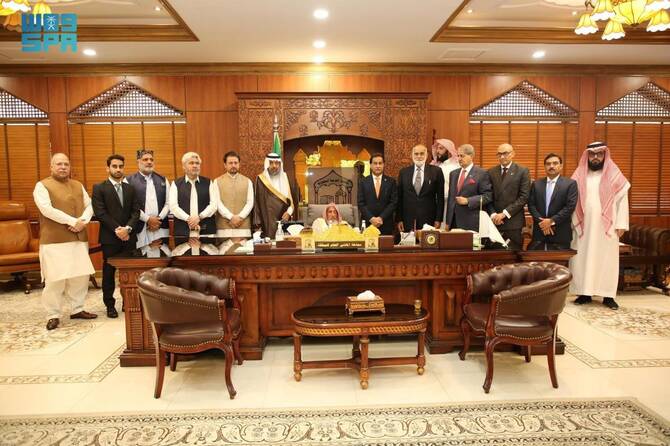
Riyadh Gov. Prince Faisal bin Bandar meets Pakistan's National Assembly Speaker Sardar Ayaz Sadiq. (SPA)
2 / 5
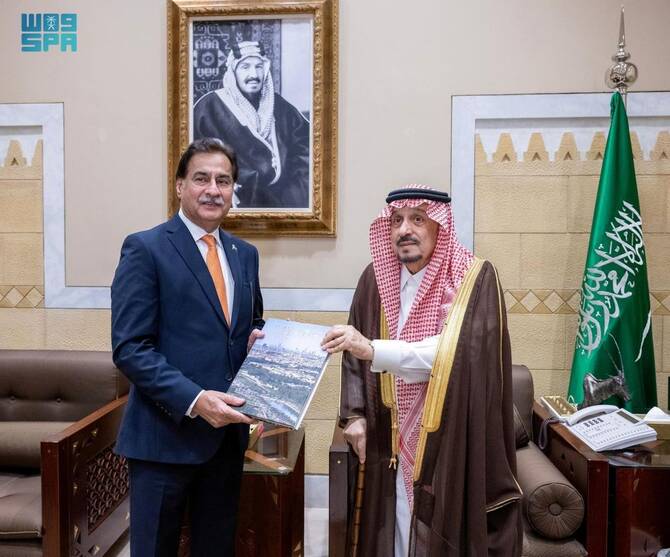
Riyadh Gov. Prince Faisal bin Bandar meets Pakistan's National Assembly Speaker Sardar Ayaz Sadiq. (SPA)
3 / 5
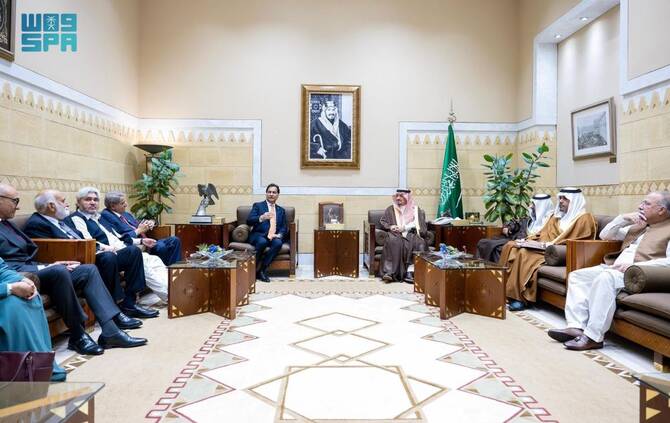
Riyadh Gov. Prince Faisal bin Bandar meets Pakistan's National Assembly Speaker Sardar Ayaz Sadiq. (SPA)
4 / 5
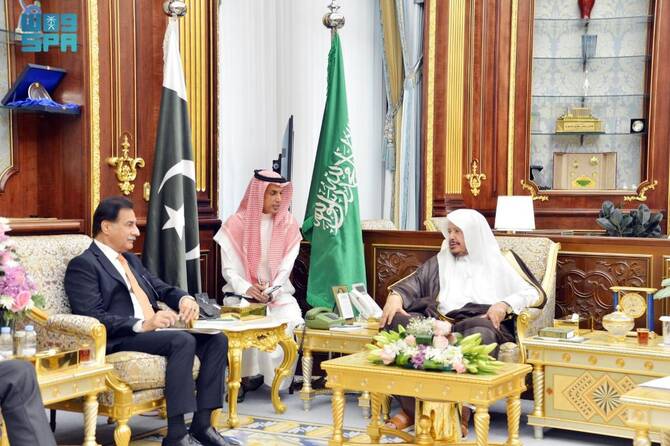
Saudi Shoura Council Speaker Sheikh Abdullah Al-Asheikh meets Pakistan's National Assembly Speaker Sardar Ayaz Sadiq in Riyadh. (SPA)
5 / 5
Saudi Shoura Council Speaker Sheikh Abdullah Al-Asheikh meets Pakistan's National Assembly Speaker Sardar Ayaz Sadiq in Riyadh. (SPA)
Short Url
Updated 22 April 2025
Follow

Riyadh hosts Pakistan’s National Assembly speaker for bilateral talks

  • Parties discuss topics of mutual interest, further strengthening ties
  • Pakistani speaker also met Saudi Shoura Council Speaker Sheikh Abdullah Al-Asheikh

RIYADH: Riyadh Gov. Prince Faisal bin Bandar has received Pakistan’s National Assembly Speaker Sardar Ayaz Sadiq in the Saudi capital.

The parties discussed topics of mutual interest and further strengthening the strong ties between the two countries, the Saudi Press Agency reported.

The Pakistani speaker also met Saudi Shoura Council Speaker Sheikh Abdullah Al-Asheikh in Riyadh.

Al-Asheikh welcomed Sadiq and his delegation, highlighting the strong ties between Saudi Arabia and Pakistan at various levels.

He stressed the importance of enhancing ties through effective joint meetings between the Shoura Council and Pakistan’s National Assembly to meet leadership aspirations.

Sadiq praised the fraternal relations between Pakistan and Saudi Arabia, commending the Kingdom’s continued role in fostering solidarity within the Islamic world and serving Islam and Muslims globally.

The talks covered mutual interests and explored ways to enhance Saudi-Pakistani parliamentary relations.

Sheikh Abdulaziz Al-Asheikh, the Kingdom’s grand mufti and president of the Council of Senior Scholars, also received the Pakistani National Assembly speaker.

The grand mufti, who is also the president of the General Presidency of Scholarly Research and Ifta, stressed the presidency’s role in clarifying Islamic rulings on issues affecting Muslims, including contemporary jurisprudential matters requiring scholarly guidance.

Al-Asheikh also highlighted the commitment to promoting moderation and combating extremism and terrorism, the SPA reported.

Sadiq praised the Kingdom’s vital support for Pakistan on various issues, commending the deep-rooted ties between the two nations.


Saudi Arabia announces new financial support to the Yemeni government

Updated 16 January 2026
Follow

Saudi Arabia announces new financial support to the Yemeni government

RIYADH: Saudi Ambassador to Yemen and Supervisor of the Saudi Program for the Development and Reconstruction of Yemen Mohammed Al-Jaber announced that the Kingdom, under the directives of its leadership, has provided new support to the Yemeni government's budget, aimed at paying the salaries of state employees in all sectors.

In a post on X, Al-Jaber stated that this support complements a package of development projects and initiatives, amounting to SR1.9 billion, announced on Wednesday. The package includes provision of necessary petroleum derivatives to operate power plants, which will contribute to improving the living standards of people in Yemen and alleviating daily burdens on them.

Al-Jaber’s post emphasized, in particular, that all salaries of military and security forces linked to the the higher military committee linked to the Saudi led Coalition will be paid as of Sunday. 


The post is likely relate to Several Media reports which have suggested that disgraced former Southern Transitional Council (STC) chief Aidaroos Al Zubaidi — who has now fled Yemen — was taking advantage of military personnel and withholding salaries as means of pressure. Al-Zubaidi is wanted by the Yemeni government for acts of high treason and corruption. 

The ambassador emphasized that these steps come within the framework of supporting the Yemeni government's efforts to implement the economic reform program, which aims to achieve financial and economic stability and enhance the state's ability to meet its basic obligations.