

Visa overstayers face $13,000 fine, prison, deportation
Updated 22 April 2025
Rashid Hassan
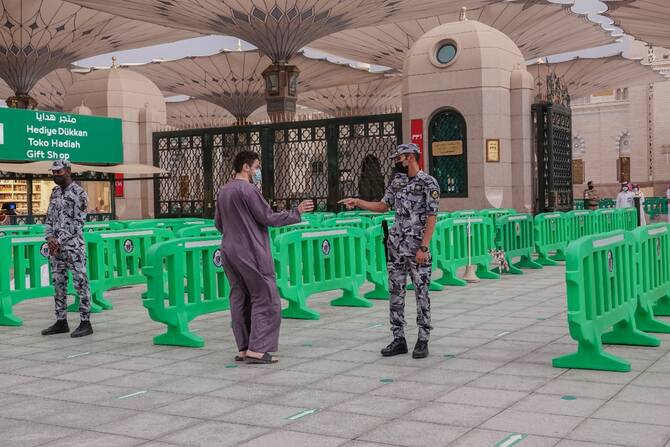
RIYADH: As Saudi Arabia gears up for Hajj 2025, the Ministry of Interior on Tuesday warned that expatriates who fail to leave the Kingdom after their visas expire face heavy penalties.
The ministry announced on X that expatriates may face fines of up to SR50,000 (about $13,000), imprisonment for up to six months, and/or deportation, the Saudi Press Agency reported.
The Saudi Arabia government has appealed to citizens and residents to ensure that their guests who arrived on visit or Umrah visas abide by the regulations.
“Visas of all types — with the exception of the Hajj visa — do not entitle their holder to perform the Hajj pilgrimage,” the ministry stated on X.
Welcoming the decision Osama Ghanem Alobaidy, a law professor in Riyadh, told Arab News the ministry’s decision was “crucial” to ensure visitors comply with the law.
“This move by the Ministry of Interior will help deal with crowd management efficiently, and ensure the safety and security of pilgrims during Hajj,” he added.
Earlier this month, the ministry also warned Hajj and Umrah companies and establishments to adhere to the country’s laws and regulations.
The ministry said that companies or establishments that delay reporting individuals who have failed to leave will be fined up to SR100,000. The fine will be multiplied based on the number of individuals involved.
Flag hoisting, cultural performances, and a reception highlight India–Saudi friendship and growing partnership
Updated 11 sec ago
Afshan Aziz
JEDDAH: The 77th Republic Day of India was celebrated in Riyadh and Jeddah on Monday.
Th events brought together the Indian community, Saudi dignitaries, and members of the diplomatic corps, highlighting the friendship between India and Saudi Arabia.
The celebrations in Riyadh began with Ambassador Dr. Suhel Ajaz Khan unfurling the tricolour, the singing of the national anthem, and floral tributes at Mahatma Gandhi’s bust.
Khan read the Indian president’s message to the nation and Indians worldwide, followed by cultural performances by schoolchildren and the Indian community.
The performances included special features marking the 150th anniversary of India’s national song, Vande Mataram.
A photo booth highlighting the song’s significance was set up, and later, the ambassador interacted with members of the Indian diaspora and local journalists.
Indian Consul General Fahad Ahmed Khan Suri at the 77th Republic Day event in Jeddah on Monday. (X: @CGIJeddah)
In Jeddah, the celebrations began in the morning with the unfurling of the Indian national flag at the Consulate General of India.
Consul General Fahad Ahmed Khan Suri read out a message from the president of India, acknowledging the dedication of the Indian diaspora in strengthening ties between the two nations.
Patriotic performances by students from the International Indian School added a festive touch, and the consul general addressed the performers while interacting with community members.
The celebrations continued in the evening with a reception at Al-Sohba Hall, Park Hyatt, attended by consuls general from different countries, along with prominent Saudi and Indian dignitaries.
Fareed bin Saad Al-Shehri, director-general of the Ministry of Foreign Affairs and the chief guest, said he always feels delighted at such events, which showcase the blending of Saudi and Indian cultures.
The guest of honor was Capt. Ali Salem Al-Mehwari, director-general of the Jeddah Islamic Port.
Speaking to Arab News, the Indian consul general said the reception reflects the strength of India–Saudi Arabia relations and underscores the complementary visions of Saudi Arabia’s Vision 2030 and India’s Vision 2047.
“Both countries are working toward inclusive growth, economic diversification, and long-term partnership,” he added.
Suri said: “India and Saudi Arabia share a robust strategic partnership that has strengthened in recent years across trade, investment, energy, education, and cultural exchange.
“Educational and professional cooperation is expanding, people-to-people ties are deepening, and cultural interactions continue to thrive. This partnership is creating long-term opportunities for mutual growth and shared prosperity.”