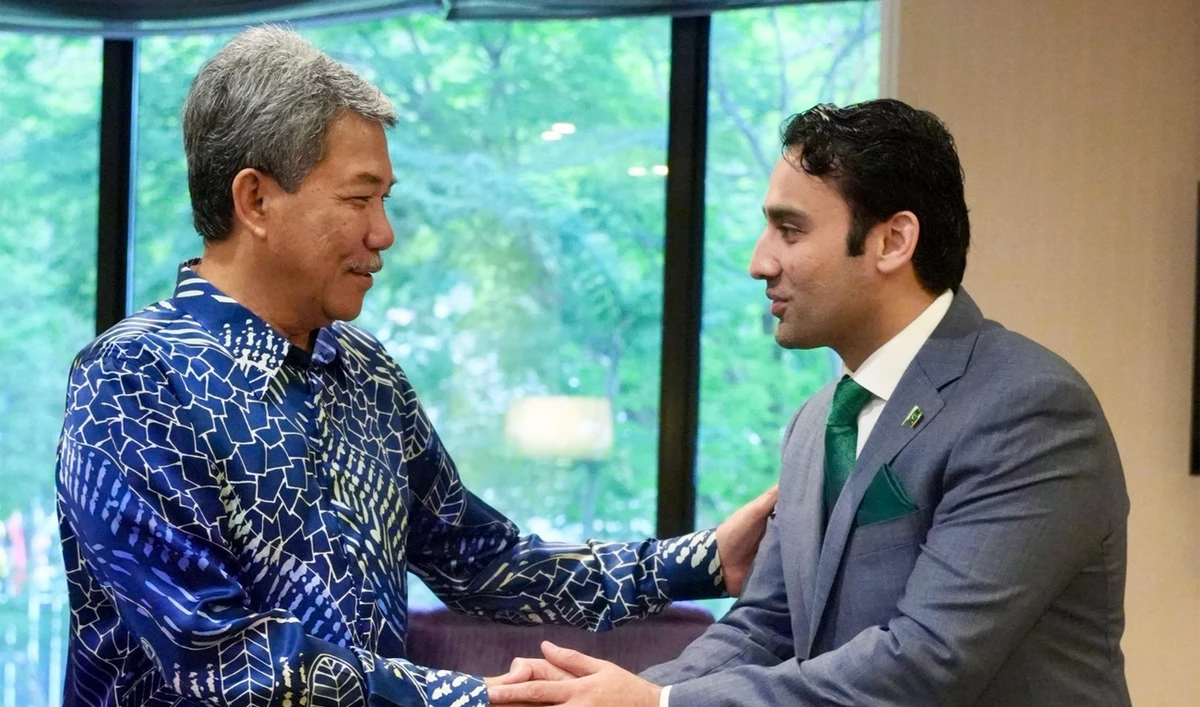
KARACHI: Malaysian Foreign Minister Mohamad bin Hajji Hasan has met with Bilal bin Saqib, head of the Pakistan Crypto Council (PCC), and discussed with him collaborative opportunities in blockchain technology, digital assets and Shariah-compliant finance, the Pakistani finance ministry said on Tuesday.
The development comes more than a week after Pakistan introduced its first-ever policy framework to regulate virtual assets and service providers, aligning with compliance and financial integrity guidelines of the global Financial Action Task Force (FATF).
The move followed the establishment of the Pakistan Crypto Council last month to create a legal framework to create a legal framework for cryptocurrency trading in a bid to lure international investment.
The meeting between the Malaysian FM and PCC chief in Kuala Lumpur focused on laying the groundwork for a Pakistan-Malaysia Digital Finance Partnership, aimed at co-developing FATF-compliant, Shariah-aligned digital asset frameworks.
“Malaysia’s leadership in Islamic finance and Pakistan’s momentum in crypto regulation form a natural alliance,” Saqib was quoted as saying by the Pakistani finance ministry.
“Together, we have a historic opportunity to set global standards for ethical innovation in digital finance — from halal stablecoins and tokenized sukuks to compliant regulatory sandboxes and youth empowerment.”
Cryptocurrencies including bitcoin are not officially regulated in Pakistan but are also not illegal or banned. As of Jan. 16, 2021, the State Bank of Pakistan has not authorized any individuals or organizations to carry out the sale, purchase, exchange, and investment of virtual currencies, coins, and tokens.
Pakistan’s new policy for virtual assets and service providers, created by a special government group under the Anti-Money Laundering (AML) and Counter Terrorism Financing (CTF) authority, is meant to set rules for how digital money like cryptocurrencies and the companies that deal in it should operate in Pakistan.
The finance ministry said the PCC is leading efforts to design a passportable crypto regulatory framework tailored to emerging markets that fosters innovation while ensuring full compliance with international standards.
During Saqib’s meeting with the Malaysian FM, both sides expressed strong alignment on key areas of cooperation, including regulatory coordination between financial authorities and cross-border talent development and education initiatives.
“This milestone engagement signals the beginning of a deeper economic and technological partnership between Pakistan and Malaysia — driven by a shared vision to build the future of finance through values-based innovation and strategic collaboration,” the Pakistani finance ministry said.
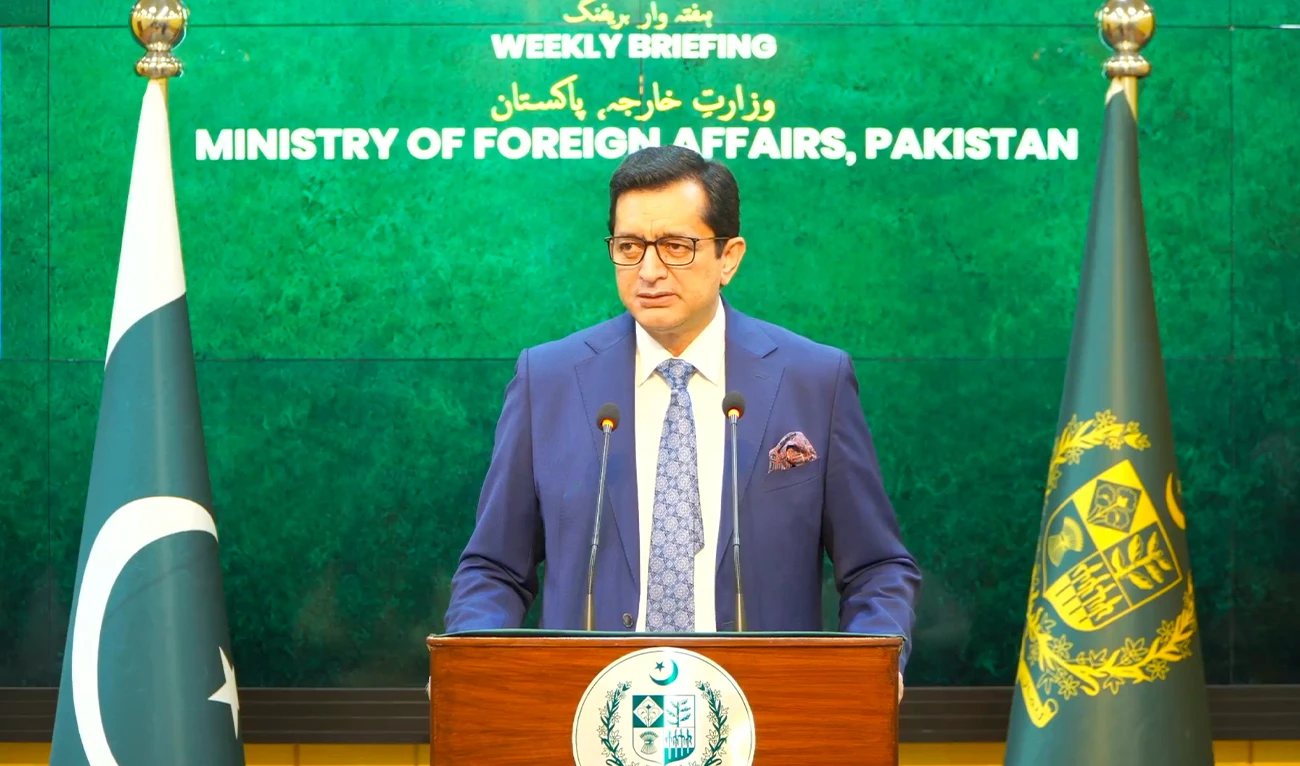
Pakistan, Malaysia join forces to develop Shariah-aligned digital assets framework
https://arab.news/vwmh8
Pakistan, Malaysia join forces to develop Shariah-aligned digital assets framework
- The development comes more than a week after Pakistan introduced its first-ever policy framework to regulate virtual assets and service providers
- Pakistan Crypto Council chief says Malaysia’s leadership in Islamic finance and Pakistan’s momentum in crypto regulation form a ‘natural alliance’
Pakistan offers Kyrgyzstan Arabian Sea access as two states sign 15 cooperation accords
- Pakistan and Kyrgyzstan sign MOUs spanning trade, energy, agriculture, ports, education, security cooperation
- Kyrgyz president is on first visit to Pakistan in 20 years as both sides push connectivity and CASA-1000 power links
ISLAMABAD: Pakistan on Thursday offered Kyrgyzstan the shortest and most economical route to the Arabian Sea as the two countries signed 15 agreements and memoranda of understanding aimed at boosting cooperation across trade, energy, agriculture, education, customs data-sharing and port logistics.
The accords were signed during a visit to Islamabad by President Sadyr Zhaparov, the first by a Kyrgyz head of state to Pakistan in two decades, and part of Islamabad’s renewed push to link South Asia with landlocked Central Asian economies through ports, power corridors and transport routes.
For Pakistan, Kyrgyzstan offers access to hydropower through CASA-1000, a $1.2 billion regional electricity transmission project designed to carry surplus summer electricity from Kyrgyzstan and Tajikistan through Afghanistan into Pakistan. For Bishkek, Pakistan provides overland access to warm-water ports on the Arabian Sea, creating a shorter commercial route to global markets.
“President Asif Ali Zardari has reiterated Pakistan’s readiness to offer Kyrgyzstan the shortest and most economical route to the Arabian Sea,” Radio Pakistan reported after Zhaparov met the Pakistani president.
The two leaders also discussed expanding direct flights to deepen business, tourism and people-to-people ties.
Zardari welcomed Kyrgyzstan’s completion of its segment of the CASA-1000 project and “reaffirmed Pakistan’s commitment to completing its part of the project, which is now at an advanced stage,” the state broadcaster said.
Zhaparov thanked Islamabad for supporting Bishkek’s candidacy for a non-permanent UN Security Council seat and invited Zardari to visit Kyrgyzstan at a time of his convenience. Both sides expressed satisfaction with progress under the Quadrilateral Traffic in Transit Agreement, designed to facilitate road movement between Pakistan, Kyrgyzstan, Kazakhstan and China.
Earlier, both governments exchanged 15 sectoral cooperation documents covering commerce, mining, geosciences, power, agriculture, youth programs, the exchange of convicted persons, customs electronic data systems and a sister-city linkage between Islamabad and Bishkek.
According to APP, the MOUs were signed by ministers representing foreign affairs, commerce, economy, energy, power, railways, interior, culture, health and tourism. Agreements also covered cooperation between Pakistan’s Foreign Service Academy and the Diplomatic Academy of Kyrgyzstan, as well as collaboration between universities, youth ministries and cultural institutions.
“Our present mutual trade, comprising of about $15–16 million will be enhanced to $200 million in the next two years,” Prime Minister Shehbaz Sharif said after the agreements were signed, calling them “a framework for structured, result-oriented engagement and closer institutional linkages.”
Sharif said Pakistan was ready to serve as a maritime outlet for the landlocked Central Asian republic, offering access to Karachi, Port Qasim and Gwadar to help Kyrgyz goods reach regional and global markets.