Pakistan starts vaccinating intending Hajj pilgrims against meningitis, flu and polio

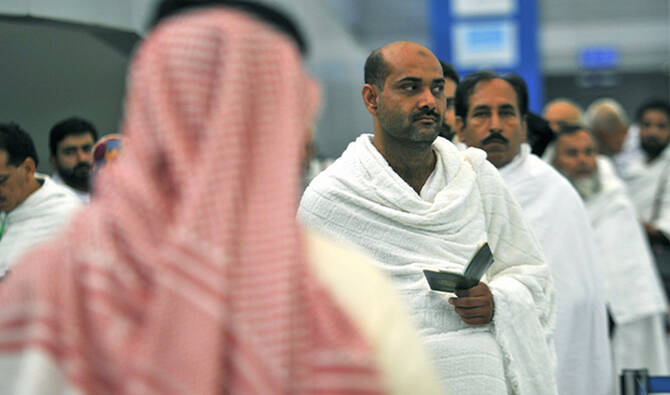
Pakistani Muslims wait to be checked by security as the first pilgrims for the annual Hajj pilgrimage arrive in Jeddah, Saudi Arabia, on July 24, 2017. (AFP/File)
Short Url
Updated 22 April 2025
Follow

Pakistan starts vaccinating intending Hajj pilgrims against meningitis, flu and polio

  • The annual Hajj pilgrimage is expected to take place in June
  • Over 113,000 Pakistanis are expected to perform Hajj this year

ISLAMABAD: Pakistan has started vaccinating intending Hajj pilgrims against meningitis, flu and polio ahead of this year’s pilgrimage, the Pakistani religion ministry said on Tuesday.
The annual pilgrimage is expected to take place in June. Nearly 90,000 Pakistanis are expected to travel to Saudi Arabia under the government scheme, while 23,620 Pakistanis will perform Hajj through private tour operators this year.
The South Asian country has made arrangement for the vaccination of pilgrims at 11 Hajj camps established across the country, according to the religious affairs ministry.
“Hajj pilgrims should visit the Hajj camps as per the given schedule,” the ministry said. “Pilgrims must get the yellow card issued by the government after getting vaccinated.”
Pakistan will launch Hajj flight operations from Apr. 29, with the first flight departing from the eastern city of Lahore.
While a precise number of pilgrims for Hajj 2025 is difficult to be determined in advance, projections suggest it will be a record-breaking year, with over 2.5 million pilgrims expected.
“Special arrangements have been made for coronavirus vaccine for pilgrims above 65 years of age,” the Pakistani religion ministry added.


Pakistan president eyes strengthening trade, investment, tourism cooperation during Iraq visit

Updated 6 sec ago
Follow

Pakistan president eyes strengthening trade, investment, tourism cooperation during Iraq visit

  • President Asif Ali Zardari arrived in Baghdad on Saturday for four-day visit aimed to bolster bilateral ties
  • Zardari, Iraqi leaders to discuss ways to strengthen cooperation in energy, manpower, technology and education

ISLAMABAD: President Asif Ali Zardari is in Iraq for a four-day visit where he will review bilateral ties and hold meetings with the country’s leadership to strengthen cooperation in trade, investment, religious tourism and energy as well as other sectors, state-run media said this week. 

Zardari arrived in Baghdad on a four-day trip on Saturday where he was received by the country’s Culture Minister Dr. Ahmed Fakkak Al-Badrani.

Pakistan and Iraq established diplomatic relations in 1947 and have traditionally maintained cordial ties, though commercial links remain modest, with officials and business groups identifying scope for cooperation in construction services, pharmaceuticals, manpower and agricultural exports.

“During the visit, President Asif Ali Zardari will hold high-level meetings with the Iraqi leadership, during which all aspects of bilateral relations will be reviewed,” state broadcaster Pakistan Television reported on Saturday. 

“The meetings will consider ways to further strengthen cooperation in key areas of mutual interest, including trade, investment, energy, reconstruction, manpower, technology, education, and people-to-people contacts.”

It said both sides are also expected to discuss regional and international issues, including cooperation at multilateral forums. 

“The president’s visit is expected to further strengthen friendly relations between Pakistan and Iraq, explore new avenues of partnership, and promote people-to-people ties, particularly religious tourism and economic cooperation,” PTV said. 

Earlier this month, Pakistan’s Interior Minister Mohsin Naqvi met his Iraqi counterpart, Abdul Ameer Al-Shammari, on the sidelines of meetings in Brussels, where both sides agreed to enhance cooperation on security and facilitate travel for Pakistani Shia pilgrims to Najaf and Karbala.

The two officials discussed measures to ensure the smoother movement of these pilgrims and their compliance with visa regulations.