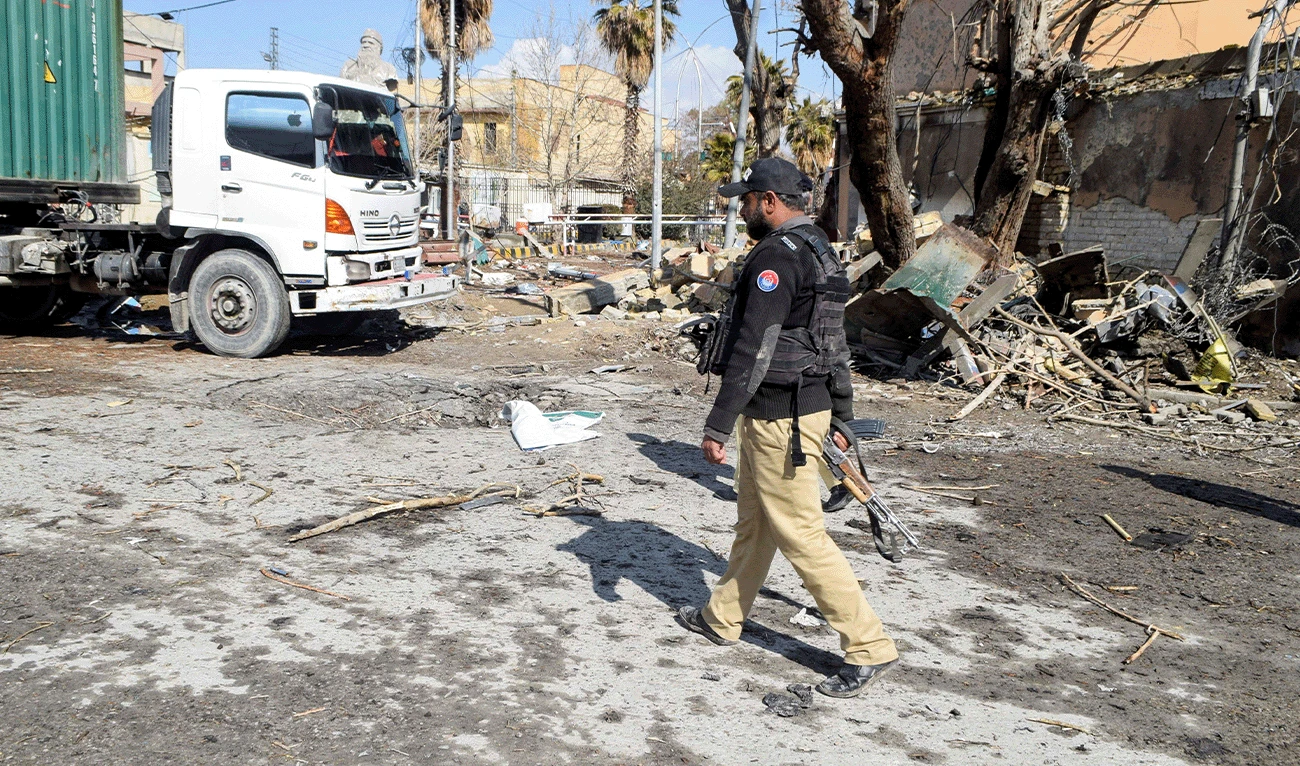
Free ambulance service in southern Pakistan delivers babies, and hope, onboard 

Sindh Integrated Emergency and Health Services (SIEHS) ambulances drive down an highway in Makli, Sindh, on April 20, 2025. (AN Photo)
Short Url
Updated 21 April 2025
Follow

Free ambulance service in southern Pakistan delivers babies, and hope, onboard 

  • Nearly 100 babies successfully delivered inside Sindh Integrated Emergency and Health Services ambulances this year
  • As per UN report, Pakistan was among four countries that accounted for nearly half of all maternal deaths worldwide in 2023

MAKLI, Sindh: Earlier this month close to the crack of dawn, a free ambulance service in southern Pakistan received a call that a 26-year-old woman from a remote village in Thatta had gone into labor without a health facility nearby for miles. 

Within minutes of receiving the call, a Sindh Integrated Emergency and Health Services (SIEHS) ambulance staffed with health workers trained in emergency obstetric care sped off toward Shabeera Bibi’s location in the Sindh province. The paramedics stabilized her and left with her for the nearest health center but realized soon that there just wasn’t enough time to reach the facility.

With her husband’s consent, Shabeera’s baby boy was delivered in the moving ambulance, one of 100 babies born in an SIEHS ambulance in this year alone. 
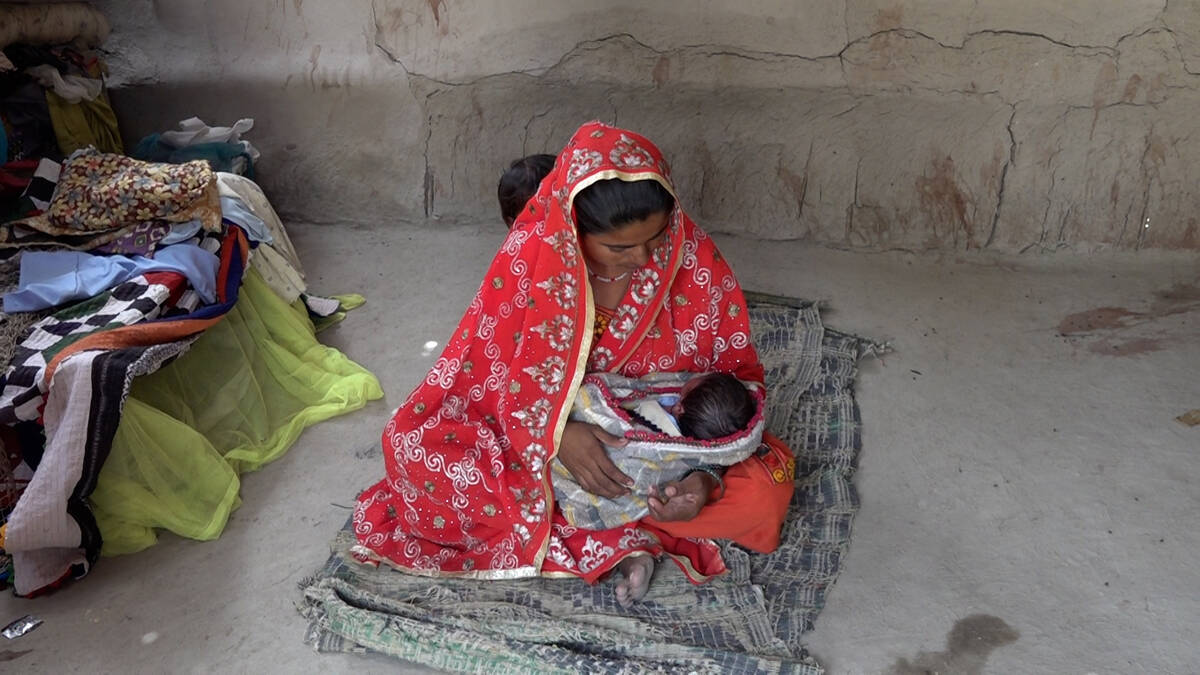


Shabeera Bibi holding her baby at her residence in Makli, Sindh, Pakistan on April 20, 2025. (AN Photo)

“I was in a lot of pain when I was about to deliver, the baby’s condition was also at risk and my water had broken,” Bibi recalled, sitting on a charpoy back at home in her mud home in Hussain Notiar village. 

In her arms, she held her newborn son Fayyaz. 

“I am simply grateful to Allah for saving my baby and my life, and that my baby is still with me today.”

Pakistan’s Sindh province is the second most populated province of the country where 30 percent of women receive no prenatal care, 60 percent do not give birth in a health facility, and the maternal mortality ratio is thrice the UN’s Sustainable Development Goal 3 target.

As per a recent United Nations report, Pakistan was among four countries that accounted for nearly half of all maternal deaths worldwide in 2023. The situation is dire in rural districts such as Thatta, where the health infrastructure is shoddy and few skilled birth attendants are available.
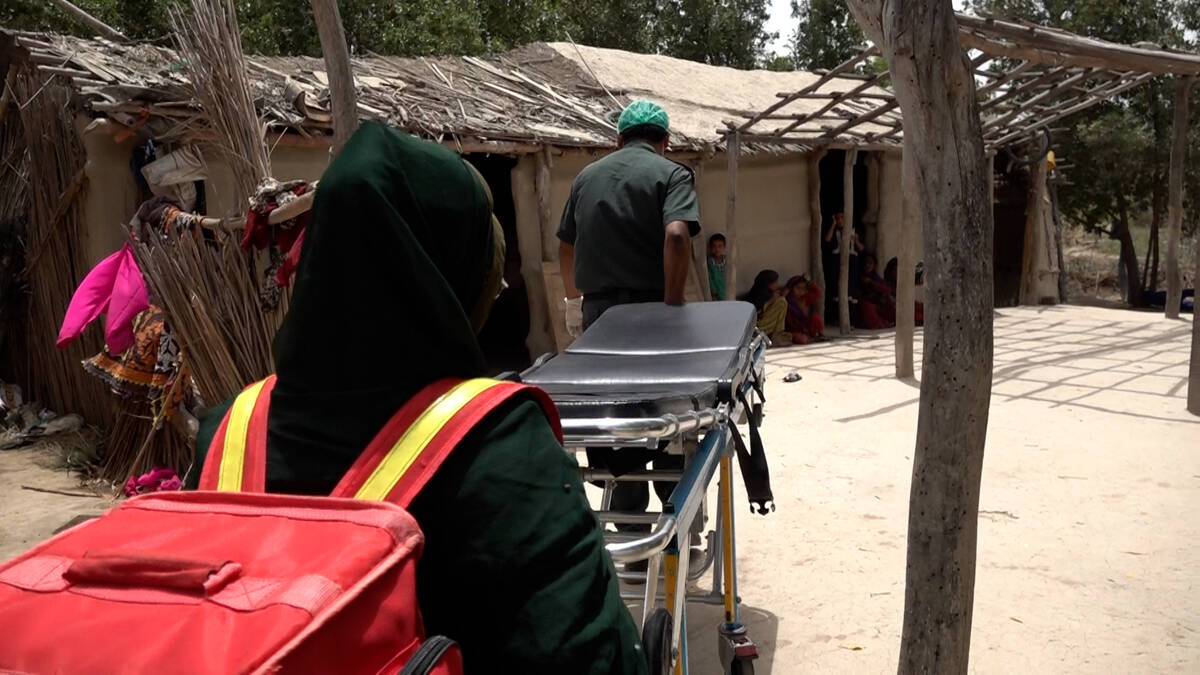


Sindh Integrated Emergency and Health Services (SIEHS) health workers enter a small house in a remote village in Makli, Sindh, Pakistan on April 20, 2025. (AN Photo)

Set up in 2021, SIEHS, which runs as a public-private partnership, wants to fill the gap, with its ambulances, called ‘HOPE,’ providing free and round-the-clock assistance to people in Sindh though the 1122 helpline. 

“Our job is to respond to emergencies,” Farheen Haider, an emergency Mmedical technician (EMT) at SIEHS, told Arab News. “When it’s a delivery case, we respond immediately. If the situation is more critical, we try to manage the patient on the way.”

Since its establishment, SIEHS has delivered 400 babies in ambulances across Sindh, with the mothers surviving in all cases, Haider added.

Shabeera’s was one such case in which paramedics worked in the confined space of the ambulance, performing the delivery and administering immediate postnatal care, including carrying out an APGAR scoring to gauge the health of the baby, as well as cleaning the mother and baby and cutting the umbilical cord. 

The baby’s grandmother, Haseena Bibi, recalled the ordeal the woman went through that day. 

“We are very poor and we couldn’t reach the hospital … we were very worried and then the girl [Shabeera] said that she couldn’t bear it anymore,” Haseena said.

She said the ambulance arrived quickly and Shabeera gave birth on the way.
 
Around 600 HOPE ambulances are operating in various districts of Sindh, Wazeer Ahmed, SIEHS regional manager told Arab News. 

One of the main objectives of the service, he explained, was to move expecting women to hospitals:

“But if there are complications or the baby is about to be delivered, we take permission from the parents or the husband and proceed with the delivery inside the ambulance.”
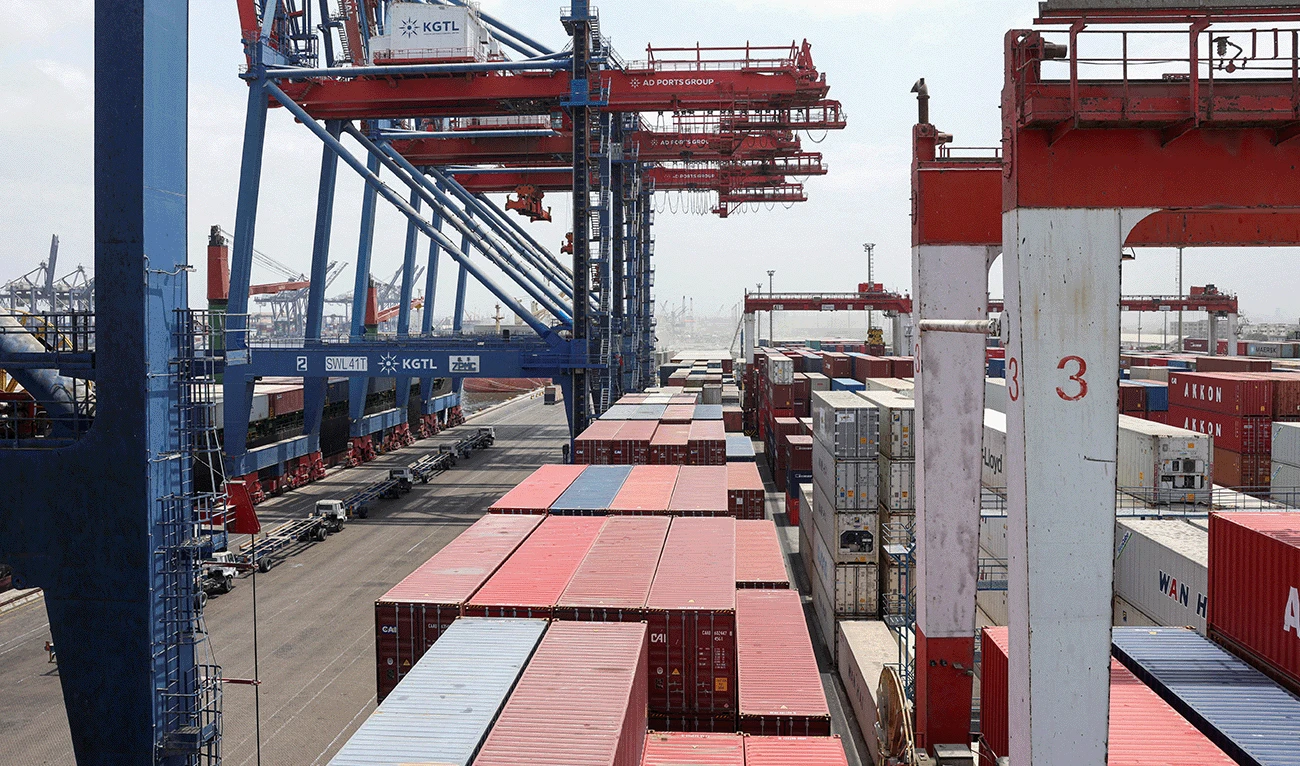


World Bank approves $700 million for Pakistan’s economic stability

Updated 6 sec ago
Follow

World Bank approves $700 million for Pakistan’s economic stability

  • Of this, $600 million will go for federal programs and $100 million will ⁠support a provincial program in Sindh
  • The results-based design ensures that resources are only disbursed once program objectives are achieved

ISLAMABAD: The World Bank has approved $700 million in ​financing for Pakistan under a multi-year initiative aimed at supporting the country’s macroeconomic stability and service delivery, the bank said on Friday.

The funds will be released under the bank’s Public ‌Resources for Inclusive ‌Development — Multiphase ‌Programmatic ⁠Approach (PRID-MPA) that ‌could provide up to $1.35 billion in total financing, according to the lender.

Of this amount, $600 million will go for federal programs and $100 million will ⁠support a provincial program in ‌the southern Sindh province. The results-based design ensures that resources are only disbursed once program objectives are achieved.

“Pakistan’s path to inclusive, sustainable growth requires mobilizing more domestic resources and ensuring they are used efficiently and transparently to deliver results for people,” World Bank country director Bolormaa Amgaabazar said in a statement.

“Through this MPA, we are working with the Federal and Sindh governments to deliver tangible impacts— more predictable funding for schools and clinics, fairer tax systems, and stronger data for decision‑making— while safeguarding priority social and climate investments and strengthening public trust.”

The approval ‍follows a $47.9 ‍million World Bank grant ‍in August to improve primary education in Pakistan’s most populous Punjab province.

In November, an IMF-World Bank ​report, uploaded by Pakistan’s finance ministry, said Pakistan’s fragmented ⁠regulation, opaque budgeting and political capture are curbing investment and weakening revenue.

Regional tensions may surface over international financing for Pakistan. In May, Reuters reported that India would oppose World Bank funding for Pakistan, citing a senior government ‌source in New Delhi.

“Strengthening Pakistan’s fiscal foundations is essential to restoring macroeconomic stability, delivering results and strengthening institutions,” said Tobias Akhtar Haque, Lead Country Economist for the World Bank in Pakistan.

“Through the PRID‑MPA, we are launching a coherent nationwide approach to support reforms that expand fiscal space, bolster investments in human capital and climate resilience, and strengthen revenue administration, budget execution, and statistical systems. These reforms will ensure that resources reach the frontline and deliver better outcomes for people across Pakistan with greater efficiency and accountability.”

In Sindh, the program is expected to increase provincial revenues, enhance the speed and transparency of payments, and broaden the use of data to guide provincial decision making. The program will directly support the increase of public resources for inclusive development, including more equitable and responsive financing for primary health care facilities and more funding for schools.