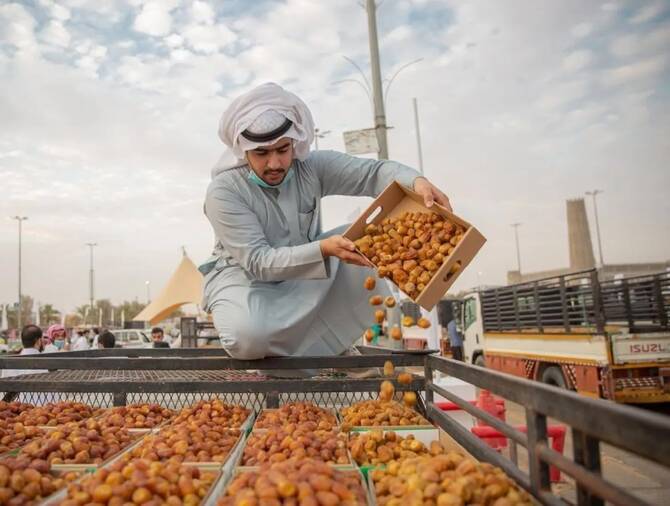

RIYADH: Saudi Arabia’s date exports saw a 15.9 percent year-on-year increase in 2024, reaching SR1.695 billion ($451.7 million), according to newly released data from the National Center for Palms and Dates.
In the same year, the Kingdom produced more than 1.9 million tonnes of dates, underscoring its significant role in the global date industry, the Saudi Press Agency reported.
Home to over 33 million palm trees—representing approximately 27 percent of the world’s total—Saudi Arabia maintains around 123,000 palm agricultural holdings across the country, further solidifying its position as a global leader in date production.
Looking ahead, the global date market is expected to grow from $120 million in 2023 to $220 million by 2032, with a projected compound annual growth rate of 5.22 percent, according to Market Research Future.
The SPA statement said: “Saudi dates have achieved notable expansion across global markets, reaching consumers in 133 countries. The export value represents a 15.9 percent increase compared to 2023.”
It added: “The growth is attributed to sustained efforts aimed at enhancing the quality of Saudi dates and broadening their global marketing presence, highlighting the increasing importance of the palm and date sector in bolstering the national economy and diversifying revenue streams.”
The Kingdom’s date industry has undergone a remarkable transformation since the launch of Vision 2030 in 2016 — a strategic initiative aimed at diversifying Saudi Arabia’s non-oil economy.
According to recent data, the value of Saudi date exports has surged by 192.5 percent over the past eight years, reflecting an impressive compound annual growth rate of 12.7 percent.
This upward trajectory underscores Saudi Arabia’s continued progress in establishing itself as a key player in the global date market, while also highlighting the sector’s growing role in contributing to global food security.
The sector’s success can be attributed to the unwavering support of the Kingdom’s leadership, recognizing the palm and date industry as a cornerstone of Saudi heritage and cultural identity.
This support is complemented by the collaborative efforts of producers, exporters, and government agencies working to streamline export processes and expand international market reach through strategic partnerships with the private sector.
The cultural and economic importance of dates is symbolized by the inclusion of a date palm flanked by crossed swords in the Saudi national emblem. As a symbol of Arab hospitality and a staple in the daily lives of Saudis, the fruit holds deep-rooted significance in the Kingdom.
In recent years, a range of local and international initiatives have helped elevate the market value of Saudi dates. Notably, the establishment of the National Center for Palms and Dates and the International Dates Council—which brings together 11 date-producing countries—reflects the Kingdom’s leadership in shaping the future of the global date industry.