

Launch of Cinamaa platform marks push for film studies in Saudi Arabia

1 / 6
The Saudi Film Commission's Cinamaa exhibit. (AN)
2 / 6
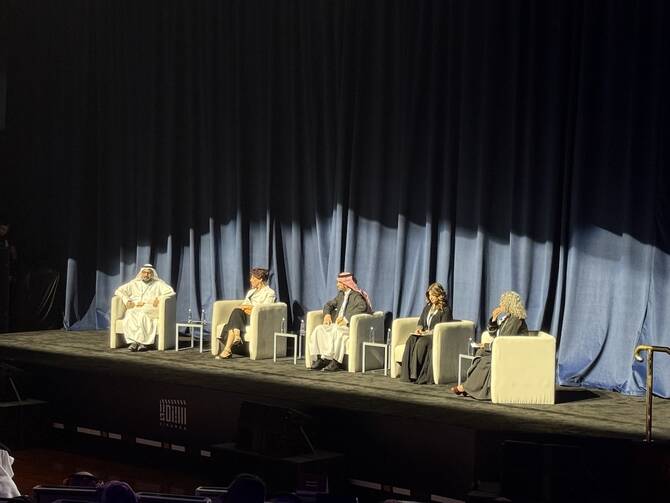
Panel discussion featuring Salma Tarek, professor of literature at the University of Cairo French language department and Tareq AlKhawaji, film critic and cultural adviser at the King Abdulaziz Center for World Culture (Ithra). (AN)
3 / 6
The Saudi Film Commission's Cinamaa exhibit. (AN)
4 / 6
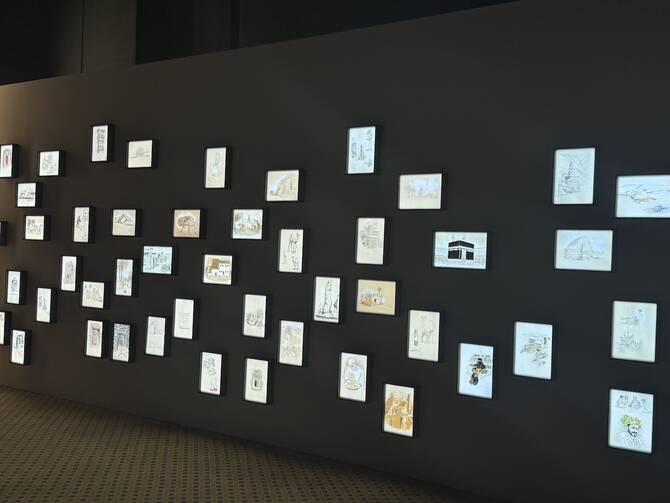
The exhibit showcased a display of what the Cinamaa platform has built and what it hopes to accomplish. (AN)
5 / 6
The Saudi Film Commission's Cinamaa exhibit. (AN)
6 / 6
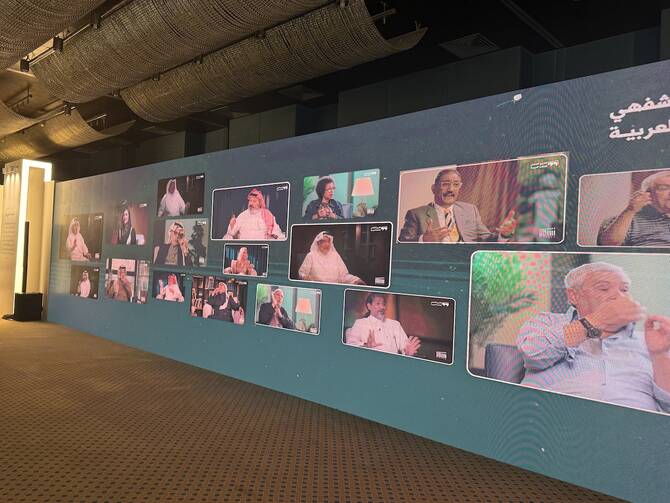
The Saudi Film Commission's Cinamaa exhibit presented archives of Arabic films. (AN)
Short Url
Updated 17 April 2025
Follow

Launch of Cinamaa platform marks push for film studies in Saudi Arabia

  • Saudi Film Commission and National Film Archive launch platform to educate and support budding filmmakers
  • Experts describe the importance of developing film studies in Saudi Arabia

RIYADH: The Saudi Film Commission has introduced a new initiative, Cinamaa, to promote film studies and support people entering the industry.

A launch event was held on Wednesday at the Cultural Palace in Riyadh, hosted by the commission and National Film Archive.

The Cinamaa website, a platform intended to help educate aspiring filmmakers, critics, and film enthusiasts, allowing them to share their work, gives users access to articles, research studies, discussions, workshops, and short films on various topics related to film.

Following a panel discussion in which she spoke on the importance of film studies in academia, Salma Tarek, professor of literature at the University of Cairo’s French language department, told Arab News: “We need to distinguish between academic studies, meaning university-level education, and studies at film institutes, which aim to train technicians and filmmakers.”

The latter is very important and widely available, she said, but cinema studies at the school and university levels are still lacking.

“Abroad, for example, children in elementary school have reading and literacy programs that include a section on how to ‘read’ a film. They learn what a shot is, what camera movement means, because these have become part of the basic language of how we interpret the world around us,” Tarek said.

“Cinema is no longer just an art form; it is a form of discourse. We are constantly exposed to it, and it’s very important that we learn how to decode its messages.”

Tarek said that these are messages that are constantly being sent to viewers, who must receive them in an open and thoughtful way.

“The university is the institution best suited to play this role.”

When asked what can be done to push this agenda forward, the professor said that first, there must be conviction in the value of cinema studies, a task she said is “not simple.”

The entry point, however, is in interdisciplinary studies.

“For example, literature departments can offer courses on the relationship between performance art and cinema. In history departments, there can be a course on cinema and history. Gradually, these borders will open up, and we will start to develop a cinematic culture within academic institutions.”

These institutions will then have the capabilities and foundation to establish dedicated departments for cinema studies, which Tarek said is the “ultimate goal.”

The panel also discussed the need for more original Arabic content in addition to translations of foreign films.

Tareq Al-Khawaji, film critic and cultural adviser at the King Abdulaziz Center for World Culture, said that young Saudis interested in screenplay writing have a great opportunity to develop scripts that can contribute to bolstering the cinematic scene in the Kingdom.

The launch of Cinamaa was followed by the signing of two memoranda of understanding between the Saudi Film Commission and its partners, the Saudi Broadcasting Authority and the International Federation of Film Critics.

The commission’s CEO Abdullah Al-Qahtani took the stage with Mohammed Fahad Al-Harthi, SBA CEO and former editor in chief of Arab News, and Fipresci CEO Ahmad Shawky.

The establishment of the Cinema Critics Association was also announced, the first independent professional entity dedicated to film criticism in Saudi.

At the end of the night, the doors opened to welcome guests into an exhibition on film history in the Arab world.


Kingdom drives global efforts on space debris

Updated 54 min 44 sec ago
Follow

Kingdom drives global efforts on space debris

  • 75 countries gather in Riyadh to address orbital risks, promote sustainable space use
  • DebriSolver competition highlights innovative solutions for orbital safety

RIYADH: The Saudi Space Agency will host the second Space Debris Conference in Riyadh on Monday, the Saudi Press Agency reported.

The two-day event will bring together experts, decision-makers, and representatives from 75 countries, including governments, international organizations, and specialized space companies.

The conference is part of Saudi Arabia’s efforts to unify international initiatives addressing the growing challenges of space debris and to promote the sustainable use of outer space as a shared resource.

It aims to protect space activities and orbital infrastructure while supporting the growth of the global space economy, the SPA added.

Held with the support of the UN Office for Outer Space Affairs and in partnership with the International Telecommunication Union, the conference highlights the importance of international cooperation and effective governance frameworks to mitigate space debris risks and ensure a safe, sustainable space environment.

The event seeks to strengthen Saudi Arabia’s position as a global hub for space sustainability by enhancing international coordination on space debris issues.

It also highlights the Saudi Space Agency’s role in promoting policies and initiatives that safeguard the future of the space economy, the SPA reported.

Key objectives of the conference include raising global awareness of space debris risks, reviewing related legislation and policies, fostering research and innovation, and developing effective international governance mechanisms to ensure the responsible and sustainable use of orbital environments.

The conference will feature panel discussions and keynote speeches on themes including space sustainability, protection of the global space economy, strengthening international cooperation, and showcasing innovations, partnerships, and operational solutions to address space debris challenges.

A highlight of the event is the DebriSolver competition, an international platform encouraging applied innovation in space debris mitigation.

Leading experts and international judges will evaluate innovative solutions against the highest scientific and technical standards, supporting the transition from research concepts to practical, deployable solutions.

By hosting the conference, Saudi Arabia reaffirms its leading role in supporting international space initiatives, strengthening public-private partnerships, and shaping the future of the global space community.

This aligns with the objectives of Vision 2030, reinforcing the Kingdom’s position as a global hub for the space economy and sustainability, the SPA stated.

The first edition, held in Riyadh in 2024, attracted participants from more than 50 countries, along with international organizations and global companies, and concluded with recommendations to raise awareness of the importance of managing space debris.