Pakistan moves to amend company laws to curb financial crimes under FATF guidelines

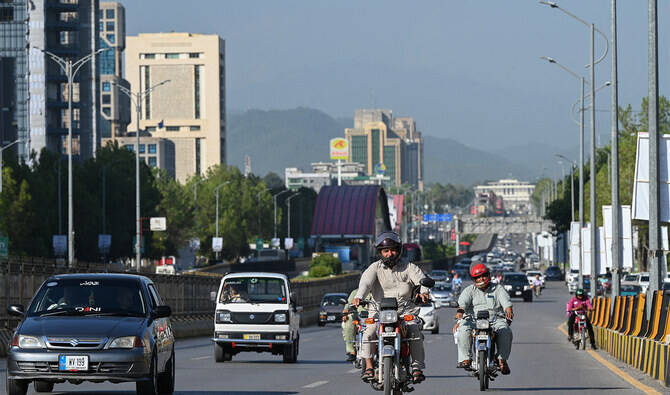
People commute on a road in Islamabad on July 11, 2023. (AFP/File)
Short Url
Updated 15 April 2025
Follow

Pakistan moves to amend company laws to curb financial crimes under FATF guidelines

  • SECP plans to introduce centralized registry of Ultimate Beneficial Owners of corporate companies 
  • UBO register helps to prevent crimes such as money laundering, financing terrorism, tax fraud and corruption

KARACHI: The Securities and Exchange Commission of Pakistan (SECP) said on Tuesday it had proposed amendments to the Companies Regulations 2024 to set up a centralized UBO Registry for the corporate sector in line with guidelines on financial transparency by the Financial Action Task Force (FATF).
UBOs (Ultimate Beneficial Owners) are the owners or the persons who are in charge of a company. A UBO register helps to prevent financial and economic crimes such as money laundering, financing terrorism, tax fraud, and corruption. The register makes it clear to whom money is sent so any potential financial crimes cannot be hidden behind a corporation. 
“In terms of the proposed changes, companies would be required to submit UBO information, already being obtained from their shareholders, to the Commission [SECP] through the eZfile portal along with other relevant regulatory returns/forms,” the SECP said in a statement.
“This information can be accessed by Financial Institutions, as and when required.”
Pakistan was removed in 2022 from a FATF grey list that warranted increased surveillance for terrorism financing. Pakistan was listed in 2018 because of “strategic counter-terrorist financing-related deficiencies.”
“In line with FATF standards, the centralized corporate UBO Registry will ensure maintenance of an accurate, up-to-date and comprehensive UBO data. This reform is expected not only to highlight Pakistan’s commitment to global best practices but also strengthens investor confidence in the country’s financial ecosystem,” SECP said.
The Commission said the centralized registry concept was aimed at boosting financial transparency and aligning Pakistan’s ‘Anti-Money Laundering and Countering the Financing of Terrorism’ framework with global standards set by FATF, the Organization for Economic Cooperation and Development (OECD) and other international organizations.


Pakistan warns citizens in Iran to keep travel documents ready amid intensifying protests

Updated 6 sec ago
Follow

Pakistan warns citizens in Iran to keep travel documents ready amid intensifying protests

  • Iranian universities reschedule exams, allow foreign students to leave the country for one month
  • Donald Trump pledges support for Iranian protesters as ‘activists’ report more than 2,500 deaths

ISLAMABAD: Pakistan’s top diplomat to Iran on Tuesday urged Pakistani nationals to keep their travel documents handy and advised students to plan ahead after Iranian universities rescheduled examinations to allow international students to leave, as weeks-long nationwide protests further intensified.

Iran has been gripped by protests since late December after shopkeepers in Tehran’s Grand Bazaar shut their businesses to protest worsening economic conditions, triggered by the Iranian rial plunging to record lows against the US dollar.

The demonstrations quickly spread beyond the capital, with unrest reported in most of the country’s 31 provinces and involving traders, students and other groups.

Authorities have responded with arrests, use of force and Internet and mobile network disruptions, which rights groups say are aimed at curbing coordination and limiting coverage of the protests.

At least 100 Pakistani citizens, including students and pilgrims, have returned home through the Pakistan-Iran border in the southwestern province of Balochistan, a Pakistani official told Arab News on Tuesday, though many are still believed to be in the neighboring state.

“I urge all Pakistani citizens in Iran to keep their travel documents, particularly immigration-related documents such as passport and ID cards, readily available with them,” Ambassador Mudassir Tipu said in a post on X. “Those who have expired documents, or their documents are not in their possession, they may kindly urgently approach us for timely and expeditious assistance.”

In a separate post, he said Iranian universities had rescheduled examinations and allowed international students to leave the country for one month, advising Pakistani students to make their plans accordingly.

On Jan. 1, Pakistan advised its citizens to avoid traveling to Iran, citing safety concerns linked to the protests. The Pakistani embassy in Tehran also set up a crisis management unit to provide round-the-clock assistance to citizens.

Iran eased some restrictions on Tuesday, allowing international phone calls via mobile networks for the first time in days, but maintained limits on Internet access and text messaging as the death toll from the protests rose to at least 2,571 people, according to the Associated Press that quoted “activists.”

In a message on Truth Social, US President Donald Trump urged Iranian protesters to continue their anti-government demonstrations, saying “help is on its way,” without providing details. Shortly afterward, Ali Larijani, secretary of Iran’s Supreme National Security Council, accused the United States and Israel of responsibility for the deaths of Iranian civilians.

Iranian state television said officials would hold funerals on Wednesday for “martyrs and security defenders” killed during the unrest, which has intensified over the past week.