WASHINGTON: Meta CEO Mark Zuckerberg took to the witness stand on the first day of a historic antitrust trial to defend his company against allegations it illegally monopolized the social media market.
The trial could force the tech giant to break off Instagram and WhatsApp, startups Meta bought more than a decade ago that have since grown into social media powerhouses.
FTC attorney Daniel Matheson called Zuckerberg as the first witness, as it seeks to prove that Meta acquired Instagram and WhatsApp to preserve its monopoly in the social networking space.
At the hearing, Matheson focused on a communication sent to colleagues that illustrated Zuckerberg’s frustration with a lack of progress on developing a photo-sharing app to compete with Instagram’s.
“The way I read this message is that I’m not happy about how we’re executing on that project,” Zuckerberg said.
Matheson followed up by asking if that was because of Instagram’s rapid growth.
“That does seem to be what I’m highlighting,” Zuckerberg said, adding that he’s always urging his teams to do better.
Later in the day, Zuckerberg appeared frustrated when Matheson asked him about his concerns expressed about how fast Instagram was growing.
“I don’t have the full timeline of Instagram’s development in my head,” Zuckerberg said, when Matheson asked him about his mention of its growth. “You could probably get that better from somebody else.”
Matheson also asked about comments of plans to keep Instagram running, while focusing on Facebook and not investing in Instagram. Zuckerberg said he wouldn’t characterize it as a plan, and he insisted that Instagram wasn’t neglected.
“In practice, we ended up investing a ton in it after we acquired it,” Zuckerberg, who testified most of the afternoon, said.
In opening statements, Matheson said Meta has used its position to generate enormous profits even as consumer satisfaction has dropped. He said Meta was “erecting a moat” to protect its interests by buying the two startups.
Mark Hansen, an attorney for Meta, said the FTC was making a “grab bag” of arguments that were wrong. He said Meta has plenty of competition and has made improvements to the startups it acquired.
“This lawsuit, in summary, is misguided,” Hansen said, adding: “anyway you look at it, consumers have been the big winners.”
The trial will be the first big test of President Donald Trump’s Federal Trade Commission’s ability to challenge Big Tech. The lawsuit was filed against Meta — then called Facebook — in 2020, during Trump’s first term. It claims the company bought Instagram and WhatsApp to squash competition and establish an illegal monopoly in the social media market.
Meta, the FTC argues, has maintained a monopoly by pursuing Zuckerberg’s strategy, “expressed in 2008: ‘It is better to buy than compete.’ True to that maxim, Facebook has systematically tracked potential rivals and acquired companies that it viewed as serious competitive threats.”
Facebook also enacted policies designed to make it difficult for smaller rivals to enter the market and “neutralize perceived competitive threats,” the FTC says in its complaint, just as the world shifted its attention to mobile devices from desktop computers.
Facebook bought Instagram — then a scrappy photo-sharing app with no ads and a small cult following — in 2012. The $1 billion cash and stock purchase price was eye-popping at the time, though the deal’s value fell to $750 million after Facebook’s stock price dipped following its initial public offering in May 2012.
Instagram was the first company Facebook bought and kept running as a separate app. Up until then, Facebook was known for smaller “acqui-hires” — a type of popular Silicon Valley deal in which a company purchases a startup as a way to hire its talented workers, then shuts the acquired company down. Two years later, it did it again with the messaging app WhatsApp, which it purchased for $22 billion.
WhatsApp and Instagram helped Facebook move its business from desktop computers to mobile devices, and to remain popular with younger generations as rivals like Snapchat (which it also tried, but failed, to buy) and TikTok emerged. However, the FTC has a narrow definition of Meta’s competitive market, excluding companies like TikTok, YouTube and Apple’s messaging service from being considered rivals to Instagram and WhatsApp.
Meta, meanwhile, says the FTC’s lawsuit “defies reality.”
“The evidence at trial will show what every 17-year-old in the world knows: Instagram, Facebook and WhatsApp compete with Chinese-owned TikTok, YouTube, X, iMessage and many others. More than 10 years after the FTC reviewed and cleared our acquisitions, the Commission’s action in this case sends the message that no deal is ever truly final. Regulators should be supporting American innovation, rather than seeking to break up a great American company and further advantaging China on critical issues like AI,” the company said in a statement.
In a filing last week, Meta also stressed that the FTC “must prove that Meta has monopoly power in its claimed relevant market now, not at some time in the past.” This, experts say, could also prove challenging since more competitors have emerged in the social media space in the years since the company bought WhatsApp and Instagram.
Meta’s fate will be decided by US District Judge James Boasberg, who late last year denied Meta’s request for a summary judgment and ruled that the case must go to trial.
While the FTC may face an uphill battle in proving its case, the stakes are high for Meta, whose advertising business could be cut in half if it’s forced to spin off Instagram.
Meta isn’t the only technology company in the sights of federal antitrust regulators, Google and Amazon face their own cases. The remedy phase of Google’s case is scheduled to begin on April 21. A federal judge declared the search giant an illegal monopoly last August.


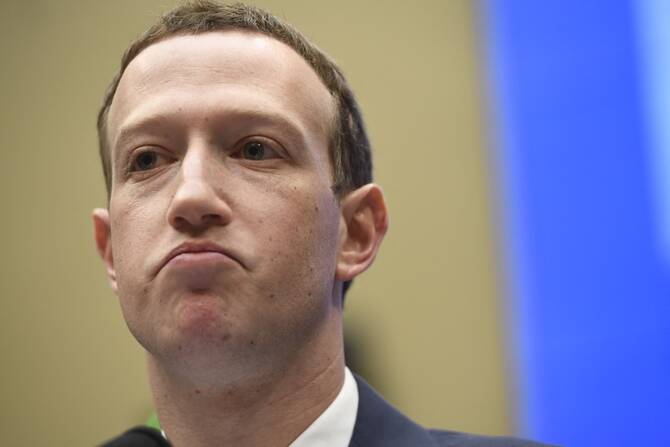
Meta CEO Mark Zuckerberg takes the stand in historic antitrust trial
https://arab.news/2xwqd
Meta CEO Mark Zuckerberg takes the stand in historic antitrust trial


UNICEF warns of rise in sexual deepfakes of children
- The findings underscored the use of “nudification” tools, which digitally alter or remove clothing to create sexualized images
UNITED NATIONS, United States: The UN children’s agency on Wednesday highlighted a rapid rise in the use of artificial intelligence to create sexually explicit images of children, warning of real harm to young victims caused by the deepfakes.
According to a UNICEF-led investigation in 11 countries, at least 1.2 million children said their images were manipulated into sexually explicit deepfakes — in some countries at a rate equivalent to “one child in a typical classroom” of 25 students.
The findings underscored the use of “nudification” tools, which digitally alter or remove clothing to create sexualized images.
“We must be clear. Sexualized images of children generated or manipulated using AI tools are child sexual abuse material,” UNICEF said in a statement.
“Deepfake abuse is abuse, and there is nothing fake about the harm it causes.”
The agency criticized AI developers for creating tools without proper safeguards.
“The risks can be compounded when generative AI tools are embedded directly into social media platforms where manipulated images spread rapidly,” UNICEF said.
Elon Musk’s AI chatbot Grok has been hit with bans and investigations in several countries for allowing users to create and share sexualized pictures of women and children using simple text prompts.
UNICEF’s study found that children are increasingly aware of deepfakes.
“In some of the study countries, up to two-thirds of children said they worry that AI could be used to create fake sexual images or videos. Levels of concern vary widely between countries, underscoring the urgent need for stronger awareness, prevention, and protection measures,” the agency said.
UNICEF urged “robust guardrails” for AI chatbots, as well as moves by digital companies to prevent the circulation of deepfakes, not just the removal of offending images after they have already been shared.
Legislation is also needed across all countries to expand definitions of child sexual abuse material to include AI-generated imagery, it said.
The countries included in the study were Armenia, Brazil, Colombia, Dominican Republic, Mexico, Montenegro, Morocco, North Macedonia, Pakistan, Serbia, and Tunisia.


