

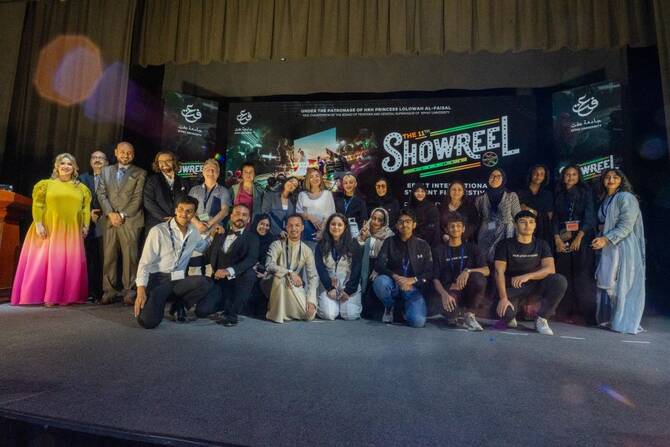




JEDDAH: The 12th edition of a student film festival celebrating the creativity of up-and-coming Saudi filmmakers is taking place at Effat University in Jeddah.
The Effat International Student Film Festival, which ends on April 15, has attracted more than 2,200 film submissions from 90 countries, as well as entries from 10 Saudi universities.
The competition shortlisted a total of 89 films from 28 countries, with cash prizes totaling more than SR50,000 ($13,333) available to the winners.
This year’s festival, held under the theme “From Dream to Film,” recognizes notable figures in the film industry, including Saudi director Abdullah Al-Muheisen, Saudi actor Hassan Assiri, Saudi director Khalid Al-Harbi, British director Joanna Quinn, and Prof. Ghada Gabara, president of the Egyptian Academy of Arts.
Other honorees hail from Japan, the US, and China.
Dr. Mohamed Ghazala, head of the School of Cinematic Arts and festival director, told of his passion for the event by emphasizing the importance of community and creative storytelling.
He said: “Running a film festival is just like making a film. We’re fueled by passion and the incredible support of our volunteers, contributors, and arts funding.
“It’s not about the money; it’s about uplifting filmmakers and nurturing a vibrant community. While organizing a festival can be challenging, it’s an exciting journey filled with hard work and joy.
“You don’t need a massive budget, endless time, or extensive business expertise to start a small film festival, the audience will find you. What matters most is a genuine love for film, the courage to take risks, and the drive to share meaningful stories.”
Jala Jalal, the leader of the student club at the School of Cinematic Arts, reflected on the significance of the festival for students.
Jalal said: “The showreel is more than just a collection of films, it’s a celebration of our creativity and growth as filmmakers. It’s a reflection of our voices and visions.
“What I love most about this festival is the opportunity it gives us to connect with the film industry, both locally and internationally. Working on the showreel and seeing the final outcome fills us with pride, not just in ourselves, but also in being part of a university that provides us the platform to bring our visions to life.”
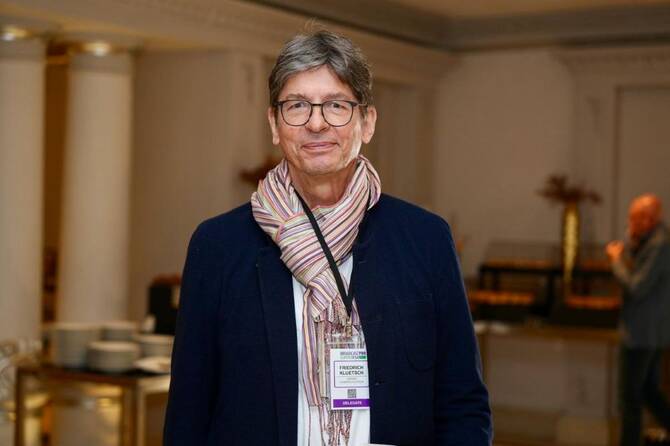
The festival’s jury members come from a diverse international background. Friedrich Kluetsch, president of the documentary film jury, told Arab News: “The Saudi submissions were marked by a palpable joy in discovering the filmmakers’ surroundings and their close connection to the protagonists.
“It was evident in the films’ self-reflection, with three of them exploring filmmaking itself, portraying established filmmakers and an abandoned cinema.
“We noticed slight differences between the Saudi and international entries, particularly in the use of commentary or a narrator’s voice, which was more common in the international films and helped express the filmmakers' perspectives.”
Dr. Haifa Jamal Al-Lail, president of Effat University, highlighted the festival’s broader mission to provide a unique platform for Saudi and international film students to showcase their work.
She said: “This festival plays a pivotal role in creating connections between young filmmakers worldwide. It aligns with Saudi Arabia’s Vision 2030, fostering the country’s cultural movement and global presence in the arts.”
Dr. Asmaa Ibrahim, dean of the College of Architecture and Design at Effat University, underscored the growing international recognition of the festival, saying: “The increasing number of applications each year is testament to the festival’s growing status.
“It’s now the largest festival of its kind in the Arab world in terms of both the quality of films and the specialized focus on student filmmakers.”
Alongside film screenings, the festival features a range of seminars and workshops conducted by industry leaders, including representatives from Netflix, Sony, MBC Academy, and Toon Boom Animation.
Notable academic figures, such as professors from the University of Southern California, and the Communication University of China, were also scheduled to contribute lectures and workshops on topics like cinematography, directing, sound production, and film distribution.
An open discussion hosted by media personality Suha Al-Waal with actor and producer Hassan Assiri at Hayy Jameel also took place at the event.
Assiri, who was to be honored for his significant contributions to Saudi drama and production, shared insights into the evolving Saudi film industry, highlighting the growing opportunities for local talent and the increasing global recognition of Saudi productions.


