

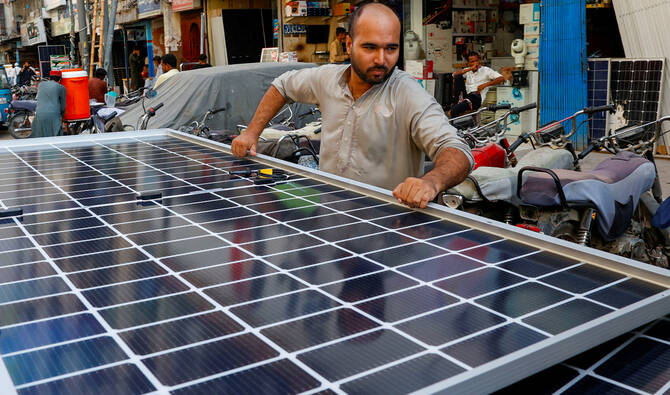

ISLAMABAD: Pakistan has joined the ranks of the world’s leading solar markets, importing 17 gigawatts (GW) of solar panels last year alone, according to the Global Electricity Review 2025 by Ember, an energy think tank in the UK.
In 2024, for the first time, solar power supplied more than 2,000 TWh of electricity, increasing by 474 TWh (+29 percent) from the previous year. This was the largest increase in generation from any power source in 2024. It took 8 years for solar to go from 100 TWh to 1,000 TWh of power — and then just 3 years to pass 2,000 TWh, meaning that solar has now been the largest source of new electricity globally for three years in a row.
Solar is now so cheap that large markets can emerge in the space of a single year – as evidenced in Pakistan in 2024. Amid high electricity prices linked to expensive contracts with privately-owned thermal power stations, rooftop solar installations in Pakistan’s homes and businesses soared as a means of accessing lower cost power.
“The country imported 17 GW of solar panels in 2024 to meet this growing consumer demand, double the amount imported the year before,” the Global Electricity Review 2025 said.
“Within just a year, Pakistan became one of the world’s largest markets for new solar installations in 2024.”
Pakistan’s case shows that the low-cost, fast-to-build nature of solar power can transform electricity systems at an unprecedented rate. Updated system planning and regulatory frameworks are needed alongside this deployment to ensure a sustainable and managed transition.
In the Middle East, Saudi Arabia imported 16 GW in 2024, more than double the amount imported the year before. Oman saw the largest percentage growth in imports in the region, with 2.5 GW of imports in 2024 representing a fivefold increase from the year before.
South Africa imported 3.8 GW of solar panels in 2024, following a record-breaking 2023 when 4.3 GW were imported as consumers turned to the technology amid rising blackouts. Nigeria and Morocco imported 1.3 GW and 1.1 GW respectively, marking the first time that either country has imported more than 1 GW in a single year.
The expansion of solar power is a worldwide phenomenon, with 99 countries doubling the amount of electricity they produce from solar power in the last five years. The majority of solar generation now comes from non-OECD countries (58 percent), with China alone making up 39 percent of the global total.
Increases in generation have been achieved thanks to the pace of capacity additions, the Global Electricity Review said. The world installed a record 585 gigawatts of solar capacity last year – 30% more than in 2023, and more than double the amount installed in 2022. Having surpassed 1 TW of solar power in 2022, it took only two years to install the next 1 TW.
“This is not just unprecedented for solar power – it is a rate of growth that no power source has seen before. In fact, the solar capacity installed in 2024 is more than the annual capacity installations of all fuels combined in any year before 2023,” the Global Electricity Review 2025 report added.
As solar’s share of the global electricity mix has risen to 6.9 percent of global generation in 2024, some countries are showing it is possible to incorporate much larger amounts. There are now 21 countries that generate more than 15 percent of their electricity from solar power, up from just three countries five years ago.


