



RIYADH: Startups across the Middle East, North Africa and South Asia are securing fresh capital and expanding into new markets, signaling strong investor confidence.
Saudi-based business-to-business marketplace Sary has announced it will merge with Bangladesh’s commerce platform ShopUp to create the SILQ Group, a newly formed entity aiming to transform cross-border trade across South Asia and the Gulf.
The merger is supported by a $110 million funding package comprising an equity investment and a financing facility dedicated to SILQ Financial, the group’s financial services arm.
The funding round includes participation from a broad investor base, led by Sanabil Investments, and joined by Valar Ventures, Flourish Ventures and STV, as well as MSA Capital, VSQ and Rocketship VC. Wafra Investment, Peak XV and Prosus were also involved, along with Tiger Global, Endeavor Catalyst and Raed Ventures.
Qatar Development Bank also participated as a new investor, as SILQ sets its sights on establishing a significant presence in the Qatari market.
This strategic alliance signals a significant step toward deeper commercial integration between the two regions, aiming to serve micro-, small-, and medium-sized enterprises with improved access to global supply chains and embedded financial tools.
Founded in 2018 by Mohammed Al-Dossary and Khaled Al-Siari, Sary connects small retailers and merchants with manufacturers and lenders across Saudi Arabia and the Gulf region.
ShopUp, founded in 2016 by Afeef Zaman, offers similar services in Bangladesh, acting as a crucial link between mills, brands, and neighborhood retailers.
The newly formed SILQ Group combines these complementary regional networks, technology stacks, and market expertise.
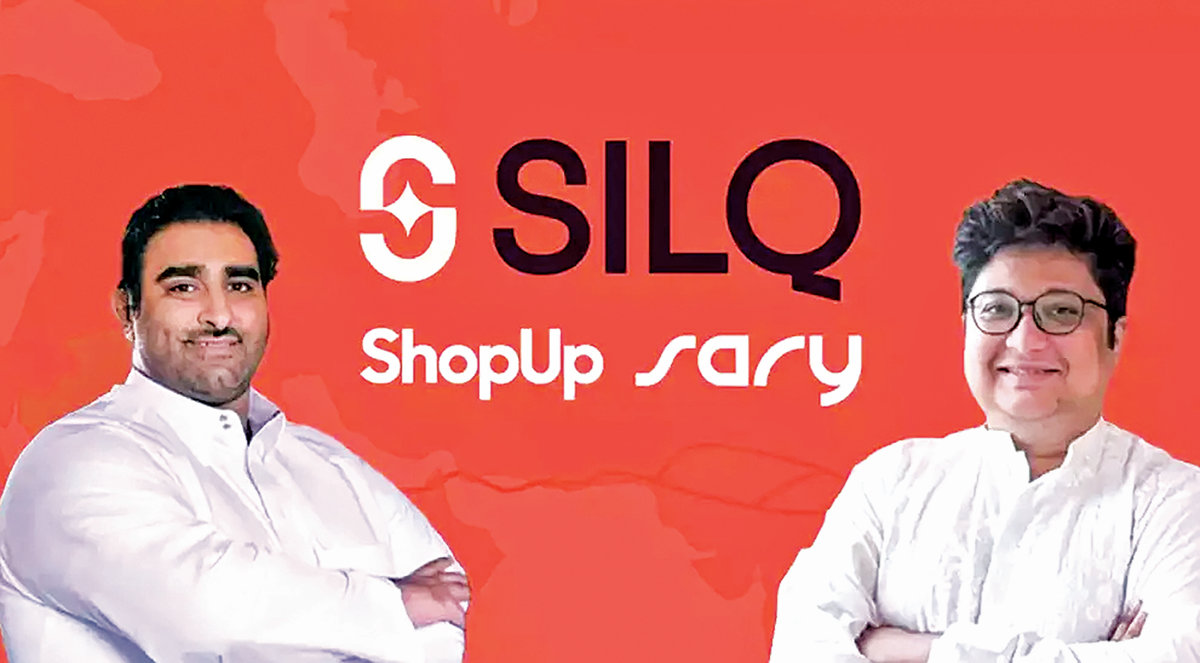
Saudi-based business-to-business marketplace Sary has announced it will merge with Bangladesh’s commerce platform ShopUp to create the SILQ Group. (Supplied)
“Through this merger, we’re entering what’s set to become one of the world’s largest trade corridors — projected to reach $682 billion,” said Zaman, now CEO of SILQ Group.
“We’re in the front seat to serve some of the most exciting, fast-growing economies that are set to shape global consumption in the coming decades, giving them greater access to products from around the world.” He added SILQ will focus on eliminating friction in the B2B supply chain and enabling MSMEs with better technology and financial inclusion.
Al-Dossary, now CEO of SILQ Financial, said: “By merging our strengths, we’re not just expanding our reach — we’re revolutionizing how digital commerce serves Gulf’s merchants and South Asia manufacturers.”
He added: “This alliance brings together the best of both worlds — deep regional expertise and world-class technology to empower every business in our ecosystem where financial services are a cornerstone.”
Language AI platform STUCK? secures six-figure pre-seed round
Saudi-based artificial intelligence startup STUCK?, which offers real-time language support for English and Arabic content, has raised a six-figure pre-seed investment round to advance its product and market reach.
The funding was led by the UK-based Mena Tech Fund, with participation from the KAUST Innovation Fund and several angel investors from Saudi Arabia.
Founded in 2022 by Asmaa Naga, STUCK? delivers AI-powered language assistance to content teams, offering contextual help in writing, editing and translation.
The company aims to remove language barriers for both native and non-native speakers operating in bilingual business environments.
STUCK? provides services via an AI-first platform that combines natural language processing with generative tools optimized for business communication and brand tone consistency.
With this latest round, STUCK? plans to scale its engineering capabilities.
Rabbit launches in Saudi Arabia with Riyadh regional HQ
Cairo-born quick commerce startup Rabbit has expanded its operations to Saudi Arabia by opening a regional headquarters in Riyadh.
The move marks Rabbit’s first major international market entry, as it looks to replicate its rapid delivery model — offering grocery and everyday essentials in under 20 minutes — within the Kingdom’s growing e-commerce landscape.
Founded in 2021 by Ahmed Yousry, Walid Shabana, Ismail Hafezz and Tarek El-Geresy, Rabbit leverages a network of dark stores and a proprietary logistics platform to optimize ultra-fast last-mile delivery.
In Egypt, Rabbit has positioned itself as a leader in q-commerce with its tech-driven approach, and it now seeks to replicate this success in the Gulf by localizing its services for Saudi consumers.

We pride ourselves on being a hyperlocal company, bringing our cutting-edge tech and experience to transform the grocery shopping experience for Saudi households.
Ahmad Yousry, Rabbit co-founder and CEO
Rabbit’s expansion is supported by funding from investors including Lorax Capital Partners, Global Ventures, Raed Ventures, and Beltone Venture Capital.
Existing backers Global Founders Capital, Goodwater Capital, Hub71, Simple Capital and Foundation Ventures have also reaffirmed their commitment to the company’s growth strategy.
“We are delighted to announce Rabbit’s expansion into the Kingdom,” said co-founder and CEO Ahmad Yousry.
“We pride ourselves on being a hyperlocal company, bringing our cutting-edge tech and experience to transform the grocery shopping experience for Saudi households and delivering the best products — especially local favorites — in just 20 minutes. We’re building Rabbit Saudi for Saudis by Saudi hands.”
Sellou raises seed funding round at $3m valuation
Bahrain-based social commerce startup Sellou has closed a seed funding round at a $3 million valuation, aimed at scaling its video-powered marketplace platform across the MENA region.
Founded by Salman Al-Khalifa, Sellou allows users to create short, interactive videos to showcase and sell a wide range of products — ranging from handmade goods to general merchandise.
The platform is part of a rising wave of social commerce innovation, particularly in the Middle East, where mobile-first consumer behavior is driving the adoption of new retail formats.
Sellou’s app enables sellers to build storefronts with personalized video content and engage buyers through direct messaging, streamlining the e-commerce experience for both sides.
With fresh capital, Sellou intends to invest in expanding its engineering team, enhancing creator tools and entering new markets across the region.
Rentify raises $500k to grow rental payment platform
UAE-based proptech and fintech company Rentify has raised $500,000 in seed funding to accelerate the development of its rental payment and management platform.
The startup was founded in 2025 by Rashed Hareb and Rajneel Kumar with a vision to digitize rental transactions and improve transparency between tenants and landlords.
Rentify enables tenants to manage rental installments through a secure platform.
The company reports that over $408 million worth of property rentals have already been registered on the platform.
The seed funding will be used to further scale operations, integrate more properties across the Emirates, and introduce new fintech features including credit scoring and embedded finance solutions for tenants.
PayTic raises $4m to expand African operations
Morocco-based fintech startup PayTic has secured $4 million in funding to support its expansion into new African markets.
The round was led by AfricInvest, with participation from Build Ventures, Axian Group, Mistral, Island Capital Partner, and Concrete.
Founded in 2020 by Imad Boumahdi, PayTic focuses on automating operational processes for card issuers and banks, such as reconciliation, chargeback management, and regulatory reporting.
The capital injection will enable PayTic to grow its presence in both North Africa and sub-Saharan Africa.
Haball raises $52m to grow Shariah-compliant supply chain financing
Pakistan-based fintech firm Haball has raised $52 million to scale its Shariah-compliant supply chain finance and payment solutions.
The round includes $5 million in equity and $47 million in strategic financing.
Zayn VC and Meezan Bank led the investment, with the capital earmarked for growth in Pakistan and expansion into the Middle East, starting with Saudi Arabia later this year.
Founded to address the credit gap in Pakistan’s SME ecosystem, Haball enables businesses to access Islamic finance products for inventory and procurement needs.
“Supply chain finance in Pakistan is nascent but is expected to be worth over $9 billion; driven by the severe financing gap faced by the country’s SMEs — less than 5 percent can access financing from commercial banks,” the company said in a statement.
The funding will allow Haball to introduce new services tailored to Islamic finance users, integrate further with enterprise resource planning systems, and partner with banks to onboard new business clients.


