

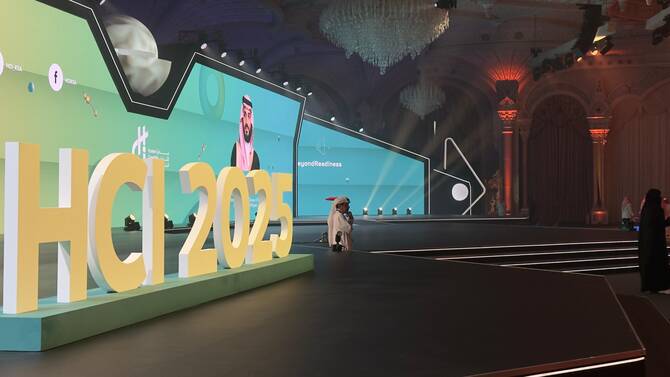

RIYADH: The Human Capability Initiative 2025 kicks off today in Riyadh, bringing together global leaders to explore how education, technology, and policy can shape future-ready societies and resilient workforces.
Held under the patronage of Crown Prince Mohammed bin Salman at the King Abdulaziz International Conference Center, the event has become a key platform for rethinking education, workforce transformation, and policy innovation amid rapid global change.
With the theme “Beyond Readiness,” the two-day conference seeks to explore how individuals, institutions, and nations can stay ahead of disruptive shifts in technology, economics, and societal needs by investing in future-ready skills and inclusive development strategies.
Anas Al-Mudaifer, CEO of the Human Capability Development Program, told Arab News: “We believe that human development is key to driving sustainable and inclusive growth.”
He added: “In a world being shaped by technology, shifting economic priorities, and evolving societal needs, it has never been more important to empower individuals with future-ready skills. It’s not just about responding to change but staying ahead of it.”
Over the two days, HCI 2025 is set to bring together more than 12,000 experts, policymakers, corporate leaders, investors, and academics from over 100 countries. More than 300 speakers will lead 120 dialogue sessions, panel discussions, and interactive workshops, examining the critical role of human capability development in driving economic and societal growth.

HCI 2025 will welcome a diverse lineup of thought leaders, ministers, and industry pioneers, including representatives from global organizations, Fortune 500 companies, and top academic institutions. AN Photo
Running alongside the conference is the Education Global Exhibition, organized by the Ministry of Education, which underscores the link between learning ecosystems and workforce transformation.
HCI 2025 is scheduled to explore three core themes, seamlessly integrated into both discussions and interactive spaces.
The first theme, “Harnessing the Ways We Learn,” delves into innovations in lifelong learning, upskilling, and reskilling, ensuring individuals remain adaptable in a rapidly shifting global landscape.
Al-Mudaifer emphasized the urgency of this focus, noting that by 2030, the World Economic Forum projects technological advancements will create 170 million new jobs while displacing approximately 92 million.
“Moreover, an estimated 44 percent of workers’ core skills are expected to shift within just the next five years,” he said. “This signals a powerful opportunity to rethink how we support individuals in building the skills they need to grow, adapt, and thrive in a changing world.”
The second theme, “Honoring the Ways We Belong,” focuses on ethics, social cohesion, and well-being, highlighting how inclusive communities and resilient environments can sustain human development.
The third theme, “Harmonizing the Ways We Act,” examines cross-sector partnerships and seeks to identify scalable, lasting impact strategies that unify policymakers, businesses, and change-makers.
Sessions are expected to cover a wide range of pressing topics, from the impact of artificial intelligence on workforce dynamics and global equity in education to the role of research and innovation in shaping tomorrow’s economies.
Al-Mudaifer explained that this year’s conference builds on the success of its first edition by moving “from preparation to participation, from adaptation to innovation.”
He added: “We’re delving deeper into critical areas such as artificial intelligence, sustainability skills, and strategies for building more connected, adaptable workforces.”
To facilitate these discussions, HCI 2025 features five dynamic platforms. The “#BeyondReadiness Arena” will serve as the main stage for high-profile keynotes, ministerial panels, and strategic global discussions.
The HCI Dialogues will offer interactive expert-led discussions that encourage cross-sector engagement. The Success Stage will be dedicated to showcasing inspiring case studies and real-world success stories.
The “Learn, Act, Belong Stage” will provide a multi-functional area featuring immersive experiences, innovation showcases, and emerging trends. The Mastery Stage will focus on hands-on skill development and specialized training workshops.
Among the standout sessions, the opening keynote will outline a “New Vision for How We Live, Work, and Thrive.” Other highly anticipated discussions include “Macroeconomic Insights: The New World of Work,” “Beyond Productivity — Redefining Human Value in the Age of AI,” and “Global Equity and Access: Engineering the Great Equalization.”
Al-Mudaifer highlighted the practical implications of this year’s theme, stating that it challenges us to rethink how we prepare individuals for the evolving world of work. “It’s about equipping people with the tools to lead, innovate, and thrive in an ever-changing landscape, both locally and globally,” he said.
HCI 2025 will welcome a diverse lineup of thought leaders, ministers, and industry pioneers, including representatives from global organizations, Fortune 500 companies, and top academic institutions.
Key figures set to speak include Minister of Education Yousef Al-Benyan, top executives from global corporations and technology firms, as well as academics and policymakers specializing in future workforce strategies.
Several special sessions will stand out, including “The Brain Revolution: How Our Bodies Can Unlock Superhuman Learning Potential,” a deep dive into neuroscience and human cognition.

Sessions are expected to cover a wide range of pressing topics, from the impact of artificial intelligence on workforce dynamics and global equity in education to the role of research and innovation in shaping tomorrow’s economies. AN Photo
“The Role of a Historian in a Data and AI World” will explore the intersection of history, technology, and human connection. “Redefining Environments for Inclusive Capabilities” will discuss designing accessible workplaces.
“Mastering the Mind: How the Psychology of Winning Builds Resilience and Adaptability” will examine mental resilience in both sports and business. Additionally, the conference will feature success stories, showcasing transformative initiatives such as Saudi in Silicon Valley, The Rise of Women's Basketball in Saudi Arabia, and The Comedy Pod Story.
Al-Mudaifer also addressed the role of AI and automation, emphasizing that the focus should be on how tools like AI can amplify human potential rather than replace it. “Our HCI program underscores the value of human-machine collaboration, showcasing how technology can complement human capabilities rather than compete with them,” he said.
As part of Saudi Vision 2030, the Human Capability Development Program is committed to empowering Saudi citizens and enhancing their global competitiveness. With a strong emphasis on future-focused education, workforce transformation, and lifelong learning, HCI 2025 serves as a crucial milestone in this journey.
Al-Mudaifer noted that HCI is central to this effort, serving as a global platform that unites experts and thought leaders from around the world. “Human capability development is a collective issue — addressing its challenges requires collaboration and the exchange of best practices,” he said.
Beyond Saudi Arabia, the initiative also seeks to foster international partnerships, offering a global stage to exchange insights, forge collaborations, and drive meaningful action.
With discussions spanning economic growth, AI’s transformative role, and equity in education, HCI 2025 is poised to shape the global discourse on human capability development for years to come.


