ISLAMABAD: Pakistan confirmed late Saturday night the killings of eight of its nationals in Iran’s Sistan-Baluchestan province, with Prime Minister Shehbaz Sharif emphasizing the need for all regional countries to come together to devise and enforce a coordinated counterterrorism strategy to eliminate militant violence.
The news of the killings first emerged in local media in the evening, though the country’s foreign ministry and federal authorities did not issue immediate statements.
However, the foreign office later confirmed the development in response to media queries.
“We are aware of this tragic incident and are in touch with Iranian authorities,” said spokesperson Ambassador Shafqat Ali Khan. “We will comment once facts are established and confirmed details are available.”
Khan added that Pakistan’s embassy in Tehran and consulate in Zahedan had been in constant contact with the relevant Iranian authorities over the incident.
In a separate statement, Prime Minister Shehbaz Sharif expressed grief over the killing of the eight Pakistani nationals and voiced concern over the attack on Iranian soil.
“Terrorism is a scourge that is devastating for all countries in the region,” he said. “All regional states must implement a coordinated strategy to root out terrorism.”
Sharif urged the Iranian government to swiftly apprehend the perpetrators and ensure they are held accountable.
“The Iranian government must bring those responsible to justice and share the reasons behind this heinous act with the public,” he continued.
The prime minister also directed Pakistan’s foreign ministry to remain in contact with the victims’ families and instructed the embassy in Tehran to ensure the safe repatriation of the bodies.
Earlier in the day, Afghanistan’s Khaama Press News Agency reported the attack took place in the early hours of the day in a village in Mehrestan district, located near the Iran-Pakistan border. The outlet said the victims were auto mechanics.
However, the separatist Balochistan National Army (BNA) claimed responsibility for the attack later in the day, alleging that the slain workers were members of Pakistan’s premier spy agency.
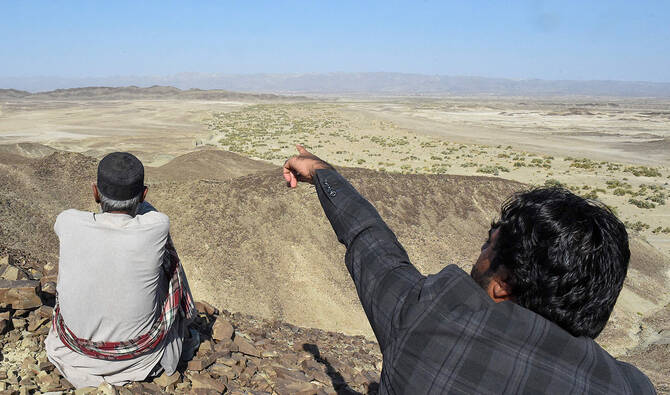
Pakistan’s southwestern Balochistan province, which borders Iran and Afghanistan, has faced a low-level insurgency for nearly two decades. Baloch separatist groups accuse the central government of exploiting the region’s natural resources, such as gold and copper, without benefiting the local population.
Islamabad denies the allegations, saying it is committed to improving the lives of Baloch residents through various development projects.
Thousands of Pakistanis, mostly from economically disadvantaged regions, frequently cross into Iran to take up informal work in sectors such as vehicle repair, construction and agriculture.
In January last year, nine Pakistani laborers were killed and three critically injured in a similar attack in Saravan city, also located in Iran’s southeastern border region.
The victims in that case had also been working at an auto repair shop.
Last year’s killings took place at a time when Pakistan and Iran were trying to mend diplomatic ties following tit-for-tat missile and drone strikes.


![]()

Pakistan confirms killing of eight nationals in Iran, urges regional counterterrorism strategy
Short Url
https://arab.news/cgade
Pakistan confirms killing of eight nationals in Iran, urges regional counterterrorism strategy
- Baloch separatists have claimed responsibility for killing the victims, who reportedly worked as auto mechanics
- Pakistani authorities say they are aware of the incident and are in contact with relevant Iranian officials
Latest updates



© 2026 SAUDI RESEARCH & PUBLISHING COMPANY, All Rights Reserved And subject to Terms of Use Agreement.