



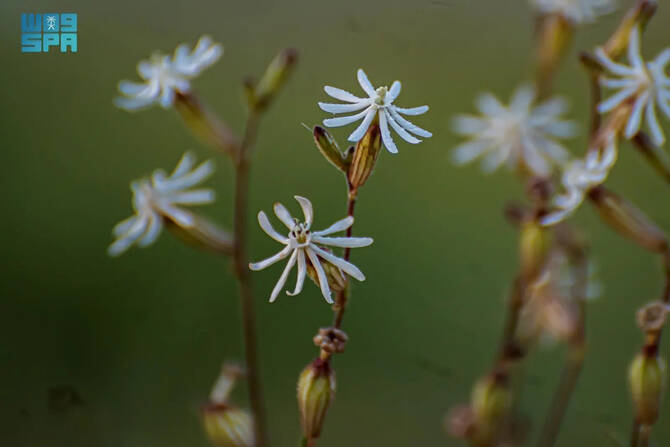

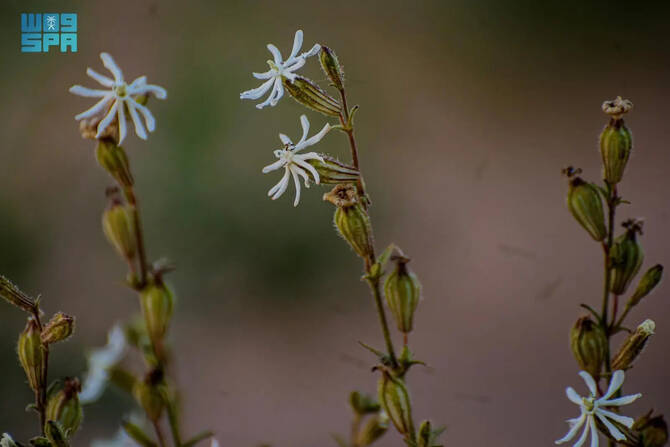

RIYADH: Following an unusually wet season, Saudi Arabia’s northern desert has erupted into a sea of wildflowers. Among the most striking sights is Silene arabica, a rare species once on the brink of extinction, now thriving thanks to a national commitment to conservation.
Part of the Caryophyllaceae family — commonly known as the “pink family” — Silene arabica is one of 3,000 species within the group, which also includes the sun-loving Dianthus and the delicate Gypsophila, better known as “baby’s-breath.”
What sets Silene arabica apart is its remarkable resilience. Unlike its thirstier relatives, this hardy desert dweller thrives in clayey soils and stores water internally, making it uniquely suited to Saudi Arabia’s arid northern border region.

Its natural range spans desert and semi-desert ecosystems stretching from North Africa to southern Iran, but this year’s extraordinary bloom has made it a poster child for Saudi Arabia’s expanding efforts to protect its native flora.
Beyond Silene arabica, countless other wild plants are enjoying a resurgence — the result not only of rainfall, but also of determined national efforts to rehabilitate and safeguard the Kingdom’s biodiversity.
One of the driving forces behind this green renaissance is the Saudi Arabia Botanical Society, co-founded by Munira Al-Hazani and Joshua van Alstine. Al-Hazani is the first woman in the world to found a national botanical society.
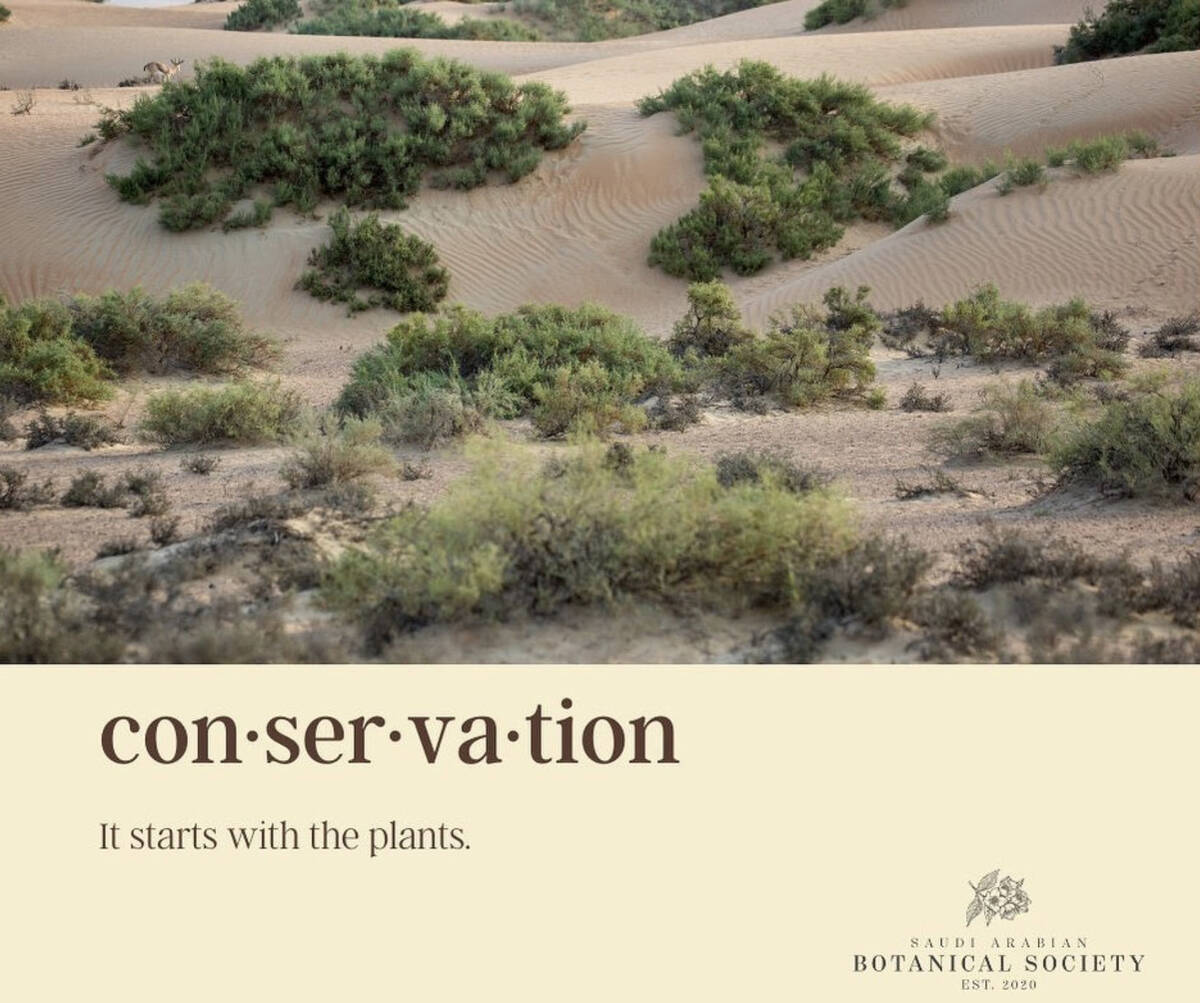
A campaign post of the Saudi Arabia Botanical Society, one of the driving forces behind the Kingdom's green renaissance. (Instagram: Saudi Botanical Society)
The organization’s goals include preserving native species, building a national botanical garden and institute and cultivating environmental awareness across the country.
“We are doing this as a service to human beings through nature,” Texas-born van Alstine told Arab News. “We are not doing this only to walk around and say, ‘we do plant research, we do plant conservation.’ We are doing this to make life better for humans.”
Opinion
This section contains relevant reference points, placed in (Opinion field)
A longtime admirer of Saudi Arabia, van Alstine said his passion for the Kingdom’s natural environment led him to become part of its sustainable development journey.
“I really want to make the biggest impact possible,” he said. “I thought, how can I do something, really, in the service of the Kingdom, and I thought of serving Saudi Arabia’s soil and plants. I really see Saudi Arabia becoming the world’s first fully green state.”
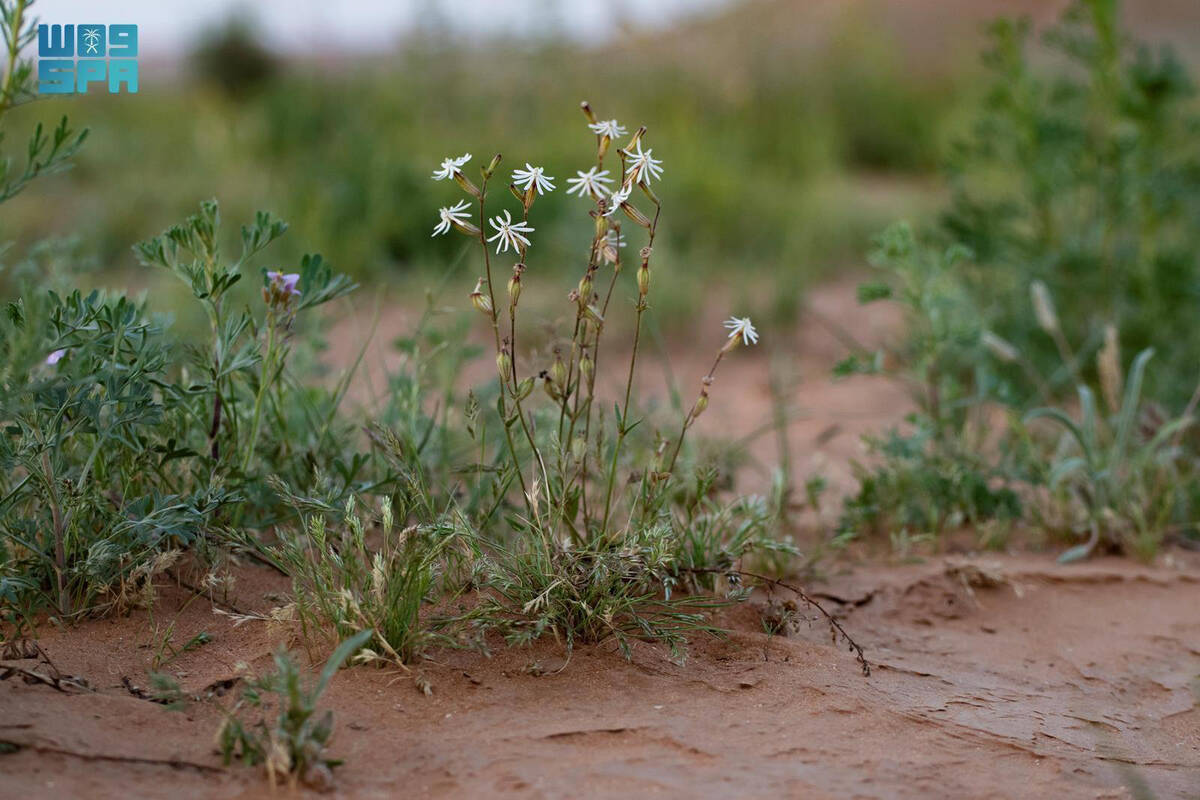
Silene arabica is found in desert and semi-desert ecosystems, such as the area stretching from north Africa, Saudi Arabia to southern Iran. (SPA photo)
Among the native species championed by the society is Horwoodia dicksoniae, commonly known as Saudi lavender. Yet protecting these desert-adapted plants requires an understanding of their unique survival strategies — and the fragile conditions that sustain them.
“What do plants need? Plants need carbon in their soil, they need minerals in their soil, and they also need to be in a place where water is going to be stored after it rains,” said van Alstine.

This is where the desert’s hidden geology plays a critical role. “We see native plants in a lower area, rocky areas, in the desert,” he said.
“No matter where you are in the desert, if you see native plants, there is most likely going to be rocks either under the sand or above the sand, but you will see these plants are kind of growing in areas that don’t get very much wind, in comparison to the rest of the desert … and they have some sort of shade from the rough desert conditions.”
These rocky pockets act like underground rain barrels, collecting water that can sustain plants through long dry periods. Native species like Silene arabica have evolved long, deep roots to reach these hidden reserves.
DID YOU KNOW?
• Silene arabica is typically found in areas that retain rainwater, such as valleys and clay soils.
• The native plant species flowers during the spring and after periods of heavy rainfall.
• Caryophyllaceae has 89 genera and 3,000 species found all over the world.
But resilience alone is not always enough. Over the years, Silene arabica has become increasingly scarce, in large part due to overgrazing. “That is what made them disappear. There is overgrazing,” said van Alstine.
Grazing animals, especially camels, are drawn to the flower’s grassy stems and white blooms. Their popularity among foragers has taken a toll on the population. In response, the National Center for Vegetation Cover has taken steps to limit grazing in sensitive areas, allowing native species the chance to recover.

Silene arabica's grassy stems and white blooms are a favorite of grazing animals, especially camels. (SPA)
The impact is already visible. From plains to rocky valleys, wild plants are reclaiming their place in the landscape — a transformation that is being noticed not just by scientists and conservationists but by residents and visitors alike.
Silene arabica may be one of the stars of this year’s desert bloom, but it is far from the only beneficiary. Thanks to coordinated efforts to curb destructive practices and promote responsible land stewardship, Saudi Arabia’s desert is alive once again with color and life.
And for those working to make it happen, this is just the beginning.


