

Sikh devotees from India arrive in Pakistan for spring harvest festival

Sikh pilgrims gesture as they queue up to board a bus leaving for Pakistan during 'Baisakhi' a spring harvest festival, in Amritsar, India, on April 10, 2025. (AFP)
Short Url
Updated 11 April 2025
Follow

Sikh devotees from India arrive in Pakistan for spring harvest festival

  • Pakistan has issued more than 6,500 visas to Indian Sikh pilgrims for the Baisakhi festival from April 10-19
  • Several Sikh holy sites ended up being in Pakistan after end of British rule, partition of Indian Subcontinent in 1947

ISLAMABAD: Sikh pilgrims from India began arriving in Pakistan this week via the Wagah border crossing to participate in celebrations of the Baisakhi spring festival which marks the beginning of the Sikh New Year and symbolizes spiritual rejuvenation.

Pakistan has issued more than 6,500 visas to Indian Sikh pilgrims for the Baisakhi festival from April 10-19, with celebrations centered around Gurdwara Panja Sahib in Hasan Abdal, some 45 kilometers northwest of Islamabad. Pilgrims will also visit Gurdwara Nankana Sahib and Gurdwara Kartarpur Sahib. 

Sikhs are a small minority based in the Punjab region that is divided between Muslim-majority Pakistan and Hindu-majority India, but several Sikh holy sites ended up being in Pakistan after the partition of the Indian Subcontinent in 1947. Many Sikhs see Pakistan as the place where their religion began. Its founder, Guru Nanak, was born in 1469 in a small village in Nankana Sahib near the eastern Pakistani city of Lahore.
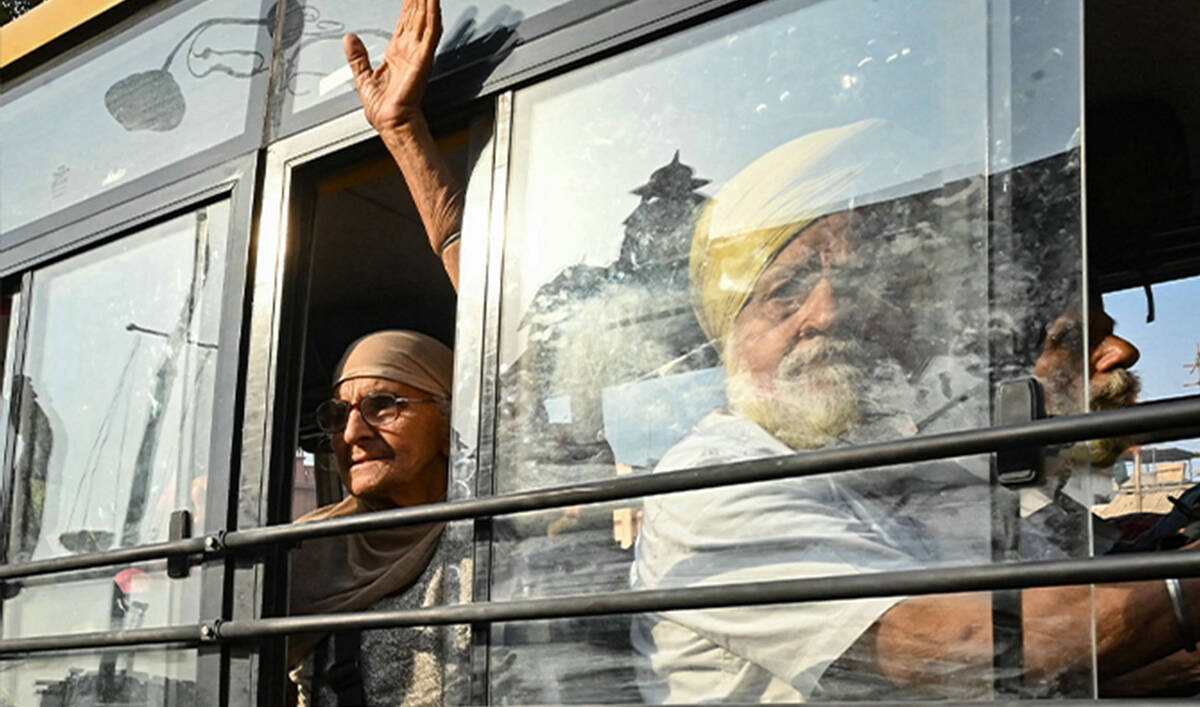


Sikh pilgrims gesture from inside a bus before leaving for Pakistan during 'Baisakhi,' a spring harvest festival, in Amritsar, India, on April 10, 2025. (AFP)

“ETPB has ensured comprehensive arrangements for accommodation, medical facilities, transport, and other necessary services for the Sikh pilgrims,” said Farid Iqbal, Secretary Evacuee Trust Property Board (ETPB), a key government department which administers evacuee properties, including educational, charitable or religious trusts left behind by Hindus and Sikhs who migrated to India after partition in 1947.

“Gurdwara Janam Asthan (Nankana Sahib), Gurdwara Panja Sahib, Gurdwara Darbar Sahib Kartarpur, and other holy sites have been beautifully decorated to enrich the spiritual experience of the pilgrims.”

The central ceremony of the Baisakhi Festival will be held on April 14 at Gurdwara Janam Asthan, Nankana Sahib. 
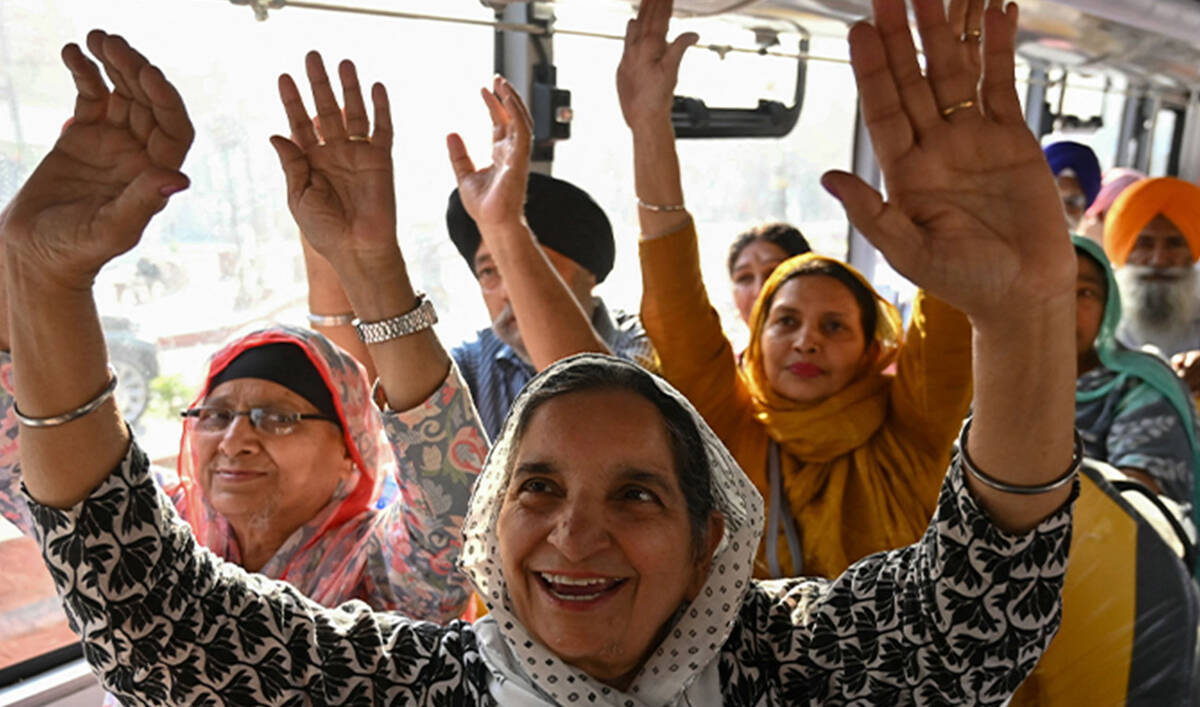


Sikh pilgrims gesture from inside a bus before leaving for Pakistan during 'Baisakhi' a spring harvest festival, in Amritsar, India, on April 10, 2025. (AFP)

The shrine in Hasan Abdal is one of Sikhism’s holiest sites and it is believed that the handprint of the founder of the religion, Guru Nanak, is imprinted on a boulder there.

Baisakhi is also meant to mark the day when Gobind Singh, the 10th and final guru of Sikhism, established the discipline of Khalsa, through which the faithful can aspire to the ultimate state of purity.

Every year, hundreds of pilgrims from India visit Pakistan to observe various religious festivals under the framework of the Pakistan-India Protocol on Visits to Religious Shrines of 1974.


Customs seize narcotics, smuggled goods, vehicles worth $4.9 million in southwest Pakistan

Updated 5 sec ago
Follow

Customs seize narcotics, smuggled goods, vehicles worth $4.9 million in southwest Pakistan

  • Customs seize 22.14 kg narcotics, consignments of smuggled betel nuts, Hino trucks, auto parts, says FBR
  • Smuggled goods enter Pakistan’s Balochistan province from neighboring countries Iran and Afghanistan

ISLAMABAD: Pakistan Customs seized narcotics, smuggled goods and vehicles worth a total of Rs1.38 billion [$4.92 million] in the southwestern Balochistan province on Tuesday, the Federal Board of Revenue (FBR) said in a statement. 

Customs Enforcement Quetta seized and recovered 22.14 kilograms of narcotics and consignments of smuggled goods comprising betel nuts, Indian medicines, Chinese salt, auto parts, a ROCO vehicle and three Hino trucks in two separate operations, the FBR said. All items cost an estimated Rs1.38 billion, it added. 

Smuggled items make their way into Pakistan through southwestern Balochistan province, which borders Iran and Afghanistan. 

“These operations are part of the collectorate’s intensified enforcement drive aimed at curbing smuggling and dismantling illegal trade networks,” the FBR said. 

“All the seized narcotics, goods and vehicles have been taken into custody, and legal proceedings under the Customs Act 1969 have been formally initiated.”

In the first operation, customs officials intercepted three containers during routine checking at FEU Zariat Cross (ZC) area. The containers were being transported from Quetta to Pakistan’s Punjab and Khyber Pakhtunkhwa provinces, the FBR said. 

The vehicles intercepted included three Hino trucks. Their detailed examination led to the recovery of the smuggled goods which were concealed in the containers.

In the second operation, the staff of the Collectorate of Enforcement Customs, Quetta, intercepted a ROCO vehicle at Zariat Cross area with the local police’s assistance. 

The driver was interrogated while the vehicle was searched, the FBR said. 

“During interrogation, it was disclosed that drugs were concealed inside the spare wheel at the bottom side of the vehicle,” it said. 

“Upon thorough checking, suspected narcotics believed to be heroin was recovered which was packed in 41 packets, each weighing 0.54 kilograms.”

The narcotics weighed a total of 22.14 kilograms, with an estimated value of Rs1.23 billion in the international market, the FBR concluded. 

“The Federal Board of Revenue has commended the Customs Enforcement Quetta team for their effective action and reiterated its firm resolve to combat smuggling, illicit trade and illegal economic activities across the country,” it said.