ISLAMABAD: A Pakistani delegation is expected to leave for the United States in the next two weeks to discuss the tariff imposed by President Donald Trump, a commerce ministry official said on Wednesday, adding the main focus will be on increasing US imports to address Washington concern of trade imbalance.
Trump announced to impose a 10 percent baseline tariff on all imports to the US and higher duties on dozens of other countries, including some of his country’s biggest trading partners, rattling global markets and bewildering American allies. He also imposed a 29 percent tariff on Pakistan, saying it was charging a 58 percent tariff on goods imported from the US.
Prime Minister Shehbaz Sharif chaired a meeting on Wednesday to discuss Pakistan’s response to the US tariff, with his office saying in a statement a high-level Pakistani delegation will go to the US to hold negotiations over the issue and work out a mutually beneficial course of action.
“The delegation will go to the US in the next two weeks as the final date will be decided after the prime minister’s visit to Belarus,” Naveed Kallu, the commerce ministry spokesperson, told Arab News.
He said deliberations were underway on various proposals.
“Three to four different proposals are being worked out, with the main focus on offering options to the United States to increase its exports to Pakistan in order to address their major issue of trade balance,” he continued.
The US trade deficit with Pakistan was $3 billion in 2024, a 5.2 percent increase over 2023, according to the Office of the US Trade Representative.
The Pakistani official said another option under consideration was the imposition of reciprocal tariffs on US imports, but the government was focused on finding an amicable solution that would be acceptable to both sides.
When asked about the possible impact of the new American tariff on Pakistani exports, Kallu said it was premature to assess the effects, but Pakistan would be the least impacted country compared to its competitors.
“We are still subject to the lowest tariffs compared to our competitors,” he noted. “Therefore, the impact on our exports will be minimal.”
He said business leaders’ and exporters’ suggestions were also taken into account while formulating the strategy, adding commerce minister had held consultations with them earlier this week to get their recommendations over the issue.
In 2024, Pakistan exported $5.12 billion to the US, with $3.93 billion, or 76.7 percent, coming from textiles and apparel.
The All Pakistan Textile Manufacturers Association (APTMA) maintained a limited yet strategic import substitution favoring the US could be pursued to support a more balanced trade relationship and ease tariff pressures.
“We have suggested that the government focus on reducing the trade gap and propose to the US that Pakistan could purchase more cotton and other items, including petroleum products, in exchange for a reconsideration of the new tariff,” Shahid Sattar, APTMA secretary-general, told Arab News.
He said Pakistan contributes just 0.25 percent to the overall US trade deficit, which is not a significant number.
“Given the limited economic impact of Pakistan’s surplus and its modest tariff regime, there is credible room for negotiation, especially if US market access concerns are addressed constructively,” he added.
Sattar said the US is the second-largest market for Pakistan’s textile exports after the European Union, accounting for about 25 percent of the sector’s annual exports. This, he maintained, makes the industry highly dependent on the US market and particularly vulnerable to any increase in tariffs.
“Even a 10 percent reduction in this sector’s exports would amount to around $350 million,” he said, adding despite the sector’s vulnerability higher tariffs on competitors offered some reassurance.
“Pakistan’s 29 percent reciprocal tariff is comparable to India’s 27 percent but lower than those imposed on Bangladesh [37 percent], China [34 percent] and Vietnam [46 percent],” he continued while pointing out these countries had stronger industrial bases, better logistics, favorable taxation regimes, lower energy costs and an overall better business environment.
Sattar said US cotton is already duty-free and could substitute imports from Brazil.
“Allowing direct imports of US Liquefied Natural Gas (LNG) by the textile sector would reduce energy costs and support US exports without harming Pakistan’s trade position,” he added.
Faisal Jahangir, Chairman of the Rice Exporters Association of Pakistan (REAP), the country’s second-largest export trade body after textiles, contributing over $2 billion to the national economy annually, said the tariff will have minimal impact on rice exports due to limited options in this sector for the US.
“The US imports rice from only two countries, Pakistan and India, due to the highest safety and compliance standards, and Pakistani rice meets these standards even better than India,” he told Arab News.
He said even Indian brands import rice from Pakistan to further export to other countries, especially the US.
“This tariff will affect US importers more, as they will still need to buy the rice but will now also have to factor in the added cost of the tariff,” he added.
Asked about his meeting with the commerce minister, Jahangir said REAP had suggested the government, along with other proposals, should consider imposing reciprocal tariffs on US food products.
“If our delegation fails to get any concession, we can respond to the [US] move by imposing reciprocal tariffs because we do have the option to import food products from many other countries,” he added.


Pakistan to propose more US imports as delegation set to visit Washington in two weeks
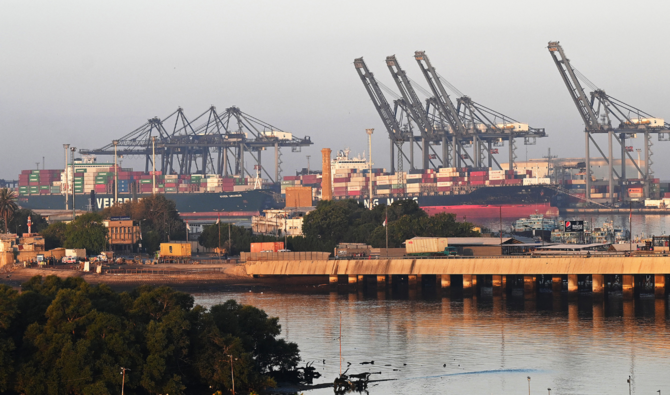
https://arab.news/cy3jq
Pakistan to propose more US imports as delegation set to visit Washington in two weeks

- President Donald Trump imposed a 29 percent tariff on Pakistan last week, saying Islamabad charges 58 percent duty on American goods
- Pakistani exporters propose importing US cotton, liquefied natural gas and petroleum products to address trade imbalance

Pakistan mulls 'Super App' for public services, document verification in major technology push
- Pakistan has been urging technology adoption in public, private sectors as it seeks to become a key tech player globally
- The country this month launched the Indus AI Week to harness technology for productivity, skills development and innovation
KARACHI: Pakistan is planning to launch a “Super App” to deliver public services and enable digital document verification, the country's information technology (IT) minister said on Sunday, amid a major push for technology adoption in public and private sectors.
Pakistan, a country of 240 million people, seeks to become a key participant in the global tech economy, amid growing interest from governments in the Global South to harness advanced technologies for productivity, skills development and innovation.
The country's information and communications technology (ICT) exports hit a record $437 million in Dec. last year, according to IT Minister Shaza Fatima Khawaja. This constituted a 23% increase month on month and a 26% increase year on year.
Pakistan's technology sector is also advancing in artificial intelligence (AI) and cloud computing, marked by the launch of Pakistan’s first sovereign AI cloud in November, designed to keep sensitive data domestic and support growth in the broader digital ecosystem.
“In developed countries, citizens can access all government services from a mobile phone,” Fatima said, announcing plans for the Super App at an event in Karachi where more than 7,000 students had gathered for an AI training entrance test as part of the ‘Indus AI Week.’
“We will strive to provide similar facilities in the coming years.”
Khawaja said the app will reduce the need for in-person visits to government offices such as the National Database and Registration Authority (NADRA) and the Higher Education Commission (HEC).
The Indus AI Week initiative, which ran from Feb. 9 till Feb. 15. was aimed at positioning Pakistan as a key future participant in the global AI revolution, according to the IT minister.
At the opening of the weeklong initiative, Prime Minister Shehbaz Sharif announced that Pakistan would invest $1 billion in AI by 2030 to modernize the South Asian nation’s digital economy.
“These initiatives aim to strengthen national AI infrastructure and make the best use of our human resource,” Khawaja said, urging young Pakistanis to become creators, inventors and innovators rather than just being the consumers of technology.


