

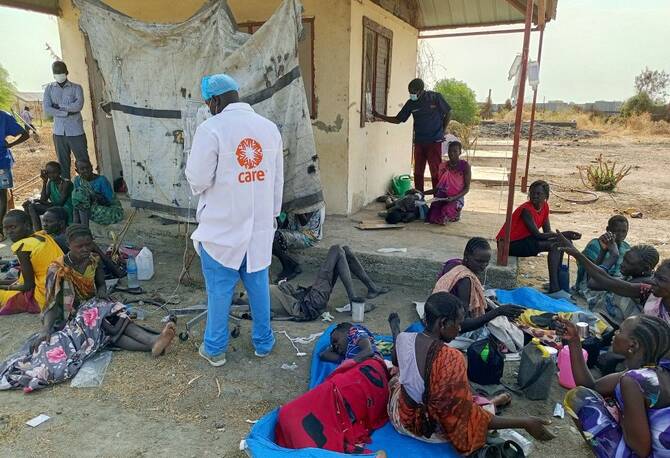

NEW YORK CITY: South Sudan is grappling with an unprecedented humanitarian crisis as escalating violence in the country, particularly in the conflict-ridden Greater Upper Nile region, exacerbates a dire situation of food insecurity, the UN’s food agency said on Wednesday.
The World Food Program warned that nearly 7.7 million people, more half of the country’s population, are currently facing crisis, emergency or catastrophic levels of hunger.
Mary-Ellen McGroarty, the WFP’s representative and country director for South Sudan, painted a grim picture of the deteriorating situation as she highlighted the compounded challenges the country faces as it enters its annual lean season, the time of year when hunger reaches its peak.
Tens of thousands of people have been displaced from their homes by the violence, political fragmentation and security instability, including more than 100,000 in the Upper Nile region alone.
“These are some of the most vulnerable and food-insecure areas of South Sudan, and the impact of conflict is only making matters worse,” McGroarty said.
More than 40 percent of the 7.7 million food-insecure people are concentrated in the Greater Upper Nile area, she added, where more than 60 percent of the population struggles to find a meal.
The worsening violence has also hindered humanitarian efforts, forcing the WFP to pause its operations in several regions. In total, more than 213,000 people in six counties are cut off from critical food aid. These areas, which lack roads or transportation infrastructure, rely on deliveries by river and air but active conflict means access is nearly impossible.
“The situation is catastrophic,” McGroarty said. “We’ve seen over 100 metric tons of food, including vital nutrition supplies for children, looted during recent clashes.
“These resources, which we cannot replace, were meant to feed children in a country where 17 percent of children are already malnourished.”
Beyond hunger, South Sudan is also grappling with a cholera outbreak that has compounded the public health crisis. The ongoing violence, coupled with mass displacement, is driving the spread of disease, further endangering the lives of vulnerable populations.
The war in neighboring Sudan adds an additional level of complexity. Since the conflict there began, more than 1.1 million refugees and South Sudanese returnees have fled across the border, many of them arriving with few or no possessions. McGroarty said that these individuals, who have endured harrowing journeys, add to the already immense pressure on resources and infrastructure in South Sudan.
“The economic toll of the Sudanese conflict is also being felt here,” she added. “Food prices in the border states have soared, with some rising by as much as 200 percent. Disrupted supply chains are forcing us to bring food from the south, significantly increasing costs.”
South Sudan’s vulnerability to climate change, manifested in both severe flooding and droughts, has further eroded the resilience of the country, leaving it ill-equipped to cope with escalating conflict.
“We are at a critical tipping point,” McGroarty warned. “The people of South Sudan, already trapped in the cycle of conflict and hunger, deserve freedom from these crises. They need our attention and support now more than ever.”
With humanitarian resources stretched thin and urgent needs continuing to rise, McGroarty told Arab News that the WFP needs $396 million in funding to enable it to reach 4.5 million people in need.
“That means, out of 7.7 million people, we will be leaving people behind,” she said.
Her organization needs to “preposition the food stocks as we approach the rainy season, so that communities that are food insecure have resources throughout (that) season,” she added.


