JUBA: Almost 7.7 million people in South Sudan face crisis levels of hunger, the United Nations said Wednesday, many located in the country’s restive northeast rocked by recent clashes.
The deeply impoverished nation has battled instability and insecurity since independence in 2011, with violence between forces allied to the president and his deputy further threatening to destabilize the country.
The UN’s World Food Programme (WFP) said in a statement Wednesday that 7.7 million people face the third-highest category of need – defined as “crisis, emergency, or catastrophic.”
“This is close to record highs,” the statement said.
Around 63,000 people were defined as of the highest need and 2.53 million the category below, most located in the northeastern Upper Nile State region, a spokesperson said.
That part of the country is enduring an uptick in violence as forces allied to President Salva Kiir and First Vice President Riek Machar clash.
Machar is currently under house arrest in capital Juba, leaving his party to appoint Stephen Par Kuol as interim leader.
The WFP said the Upper Nile region was the “most impacted by the escalation of conflict,” with one million people facing “high levels of hunger.”
“There is no shelter at all and there is scarcity of food,” Reath Yian Ulang, 32, said from Ulang county in Upper Nile State.
“We used to rely on food brought by traders from Ethiopia but because of the current crisis the traders have all fled back to Ethiopia in fear,” the father-of-four said by phone.
“People now drink water from the swamps.”
The agency also said efforts to get life-saving assistance to those in the direst need was being hampered by the violence.
“Insecurity has forced WFP to pause distributions in six counties in the region for the safety of our staff, partners and the people we serve,” it said.
Additionally, more than 1.1 million people have fled to South Sudan since the start of the two-year civil war in Sudan – most arriving in the Upper Nile region – and almost half are facing “catastrophic” levels of hunger, WFP added in the statement.
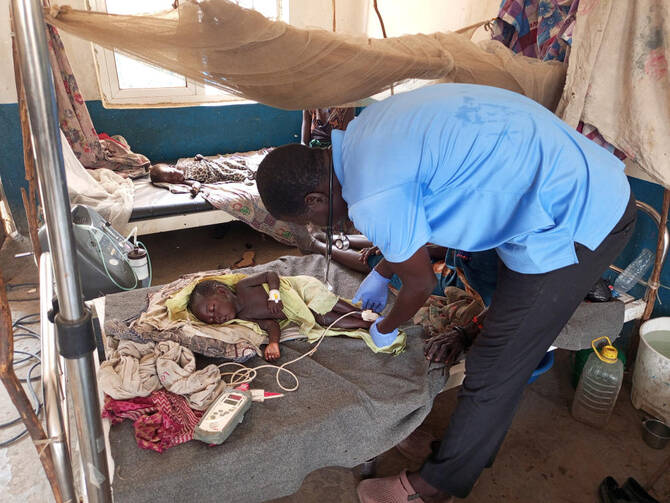
South Sudan is also grappling with a cholera outbreak, with UNICEF saying roughly 40,000 cases have been reported since September including almost 700 deaths – with children disproportionately affected.
The United States’ decision to slash international aid has also impacted the country, with humanitarian workers warning children were dying as a result of remote facilities being closed.


![]()

UN: Almost 7.7 million in South Sudan face ‘crisis’ hunger levels
Short Url
https://arab.news/pru4t
UN: Almost 7.7 million in South Sudan face ‘crisis’ hunger levels
- The deeply impoverished nation has battled instability and insecurity since independence in 2011
- Violence between forces allied to the president and his deputy further threatens to destabilize the country


Latest updates


© 2026 SAUDI RESEARCH & PUBLISHING COMPANY, All Rights Reserved And subject to Terms of Use Agreement.