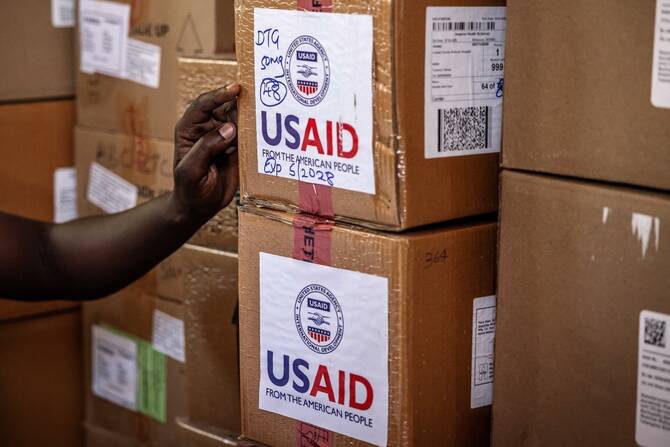
CAIRO: The Trump administration has reversed sweeping cuts in emergency food aid to several nations but maintained them in Afghanistan and Yemen, two of the world’s poorest and most war-ravaged countries, officials said Wednesday.
The United States had initially cut funding for projects in more than a dozen countries, part of a dramatic reduction of foreign aid led by billionaire Elon Musk’s Department of Government Efficiency. Aid officials warned the cuts would deny food to millions of people and end health programs for women and children.
The administration informed the World Food Program of its reversal on Tuesday, according to two UN officials. Two officials with the US Agency for International Development confirmed that Jeremy Lewin, the Musk associate overseeing the dismantling of USAID, ordered the reversal of some of his weekend contract terminations after The Associated Press reported them. The officials spoke on condition of anonymity because they were not authorized to brief media.
The WFP said Monday it had been notified that USAID was cutting funding to the UN agency’s emergency food program in 14 countries.
Funding has been restored for programs in Somalia, Syria, Lebanon, Jordan, Iraq and Ecuador, according to the USAID officials and one of the UN officials. The status of funding for six other unidentified countries was not immediately clear.
Cuts could still be disastrous
The USAID officials said Lewin sent a note internally expressing regret at what he described as a miscommunication. One of the UN officials said the decision to restore funding came after intense behind-the-scenes lobbying of members of Congress by senior UN officials.
US officials did not immediately respond to requests for comment. State Department spokeswoman Tammy Bruce acknowledged on Tuesday that some of the programs had been cut by mistake and said funding had been restored, without providing details.
“I don’t know how much they know about the system they are dismantling. I don’t know how much they care,” said Nathaniel Raymond, executive director of the Humanitarian Research Lab at the Yale School of Public Health.
“The damage they’ve already done is a potential extinction-level event for two generations of transformational improvements in how we prevent people from dying from a lack of food,” Raymond added.
The cuts could prove disastrous for millions in Afghanistan and Yemen, reeling from decades of war and US-led campaigns against militants.
The US had been the largest funder of the WFP, providing $4.5 billion of the $9.8 billion in donations to the world’s largest food aid provider last year. Previous administrations had viewed such aid as a way of alleviating conflict and combating poverty and extremism while curbing migration.
The Trump administration has accused USAID of advancing liberal causes, and has criticized foreign aid more broadly as a waste of resources.
Afghanistan is scarred by decades of war
More than half of Afghanistan’s population — some 23 million people — need humanitarian assistance. It’s a crisis caused by decades of conflict — including the 20-year US war with the Taliban — as well as entrenched poverty and climate shocks.
Last year, the United States provided 43 percent of all international humanitarian funding to Afghanistan.
Some $560 million in humanitarian aid has been cut, including for emergency food assistance, treatment of malnourished babies, medical care, safe drinking water and mental health treatment for survivors of sexual and physical violence, according to an assessment by current and former USAID officials and partner organizations. The figure has not been confirmed by the US government.
A separate WFP assessment obtained by the AP showed that food assistance to 2 million people in Afghanistan would be terminated later this year. More than 650,000 malnourished children, mothers and pregnant women would would lose nutritional support.
The United Nations Population Fund said the US had cut $100 million in support for maternal health services for millions of women, as well as gender-based violence services.
The International Rescue Committee said the cuts would affect nearly 1 million people. Its programs include nutritional assistance for tens of thousands of children under 5, as well as counseling services.
“Kids who have seen great violence, who benefit from social work and psychosocial care that we provide, will be cut off,” said Bob Kitchen, head of global emergencies for the aid group.
Some in Yemen have been at risk of famine
The poorest Arab country was plunged into civil war in 2014 when the Iranian-backed Houthis seized much of the north, including the capital, Sanaa. The US supported the Coalition to Restore Legitimacy in Yemen that intervened the following year on behalf of the government. The conflict has been at a stalemate in recent years.
The war has led to widespread hunger, and experts warned as recently as 2024 that parts of Yemen were at risk of famine.
The US cuts would end life-saving food assistance to 2.4 million people and halt nutritional care for 100,000 children, according to the WFP assessment.
The US is carrying out a campaign of airstrikes against the Houthis in retaliation for their attacks on international shipping linked to the war in the Gaza Strip.
The WFP had already suspended its programs in Houthi-ruled northern Yemen, where the militia has detained dozens of UN staffers as well as people associated with aid groups, civil society and the now-shuttered US Embassy.
The latest cuts would affect southern Yemen, where the internationally recognized government opposed to the Houthis is based. The WFP assessment warned that halting aid there “carries significant political and security implications and risks deepening the economic crisis and exacerbating instability.”
Last year, the WFP assisted 8.6 million people in Yemen, more than a quarter of its population, including more than 330,000 internally displaced people and 1.2 million with disabilities. Half were women and children.
Kitchen with the IRC said water, sanitation and health support for nearly 2 million people would end, and that while his group and others are seeking alternative sources of funding, there is no real substitute.
“I am fearful that we are going to turn around in months to come and just see the numbers of people who are perishing because there’s just not enough funding to keep them alive anymore,” he said.


![]()


US restores urgent food aid but not in Afghanistan and Yemen
Short Url
https://arab.news/9jak8
US restores urgent food aid but not in Afghanistan and Yemen
- Funding has been restored for programs in Somalia, Syria, Lebanon, Jordan, Iraq and Ecuador, according to the USAID officials and one of the UN officials
- WFP had already suspended its programs in Houthi-ruled northern Yemen


Congress taking first votes on Iran war as debate rages about US goals
- The US Senate is headed toward a vote on President Donald Trump’s decision to embark on a war against Iran
- It’s an extraordinary test in Congress for a conflict that has rapidly spread across the Middle East with no clear US exit strategy
WASHINGTON: The US Senate is headed toward a vote Wednesday on President Donald Trump’s decision to embark on a war against Iran, an extraordinary test in Congress for a conflict that has rapidly spread across the Middle East with no clear US exit strategy.
The legislation, known as a war powers resolution, gives lawmakers an opportunity to demand congressional approval before any further attacks are carried out. The Senate resolution and a similar bill being voted on in the House later this week face unlikely paths through the Republican-controlled Congress and would almost certainly be vetoed by Trump even if they were to pass.
Nonetheless, the votes marked a weighty moment for lawmakers. Their decisions on the five-day-old war — which Trump entered without congressional approval — could determine the fates of US military members, countless other lives and the future of the region.
“Wars without clear objectives do not remain small. They get bigger, bloodier, longer and more expensive,” said Senate Democratic leader Chuck Schumer at a news conference Tuesday. “This is not a necessary war. It’s a war of choice.”
Trump administration scrambles for congressional support
After launching a surprise attack against Iran on Saturday, Trump has scrambled to win support for a conflict that Americans of all political persuasions were already wary of entering. Trump administration officials have been a frequent presence on Capitol Hill this week as they try to reassure lawmakers that they have the situation under control.
“We are not going to put American troops in harm’s way,” Secretary of State Marco Rubio told reporters in a raucous news conference at the Capitol Tuesday.
But six US military members were killed over the weekend in a drone strike in Kuwait.
Trump has also not ruled out deploying US ground troops. He has said he is hoping to end the bombing campaign within a few weeks, but his goals for the war have shifted from regime change to stopping Iran from developing nuclear capabilities to crippling its navy and missile programs.
“I think they are achieving great success with what they’ve done so far,” Senate Majority Leader John Thune said Tuesday, adding that what happens next in the country will be “largely up to the Iranian people.”
Almost all Republican senators were readying to vote Wednesday against the war powers resolution to halt military action, but a number still expressed hesitation at the idea of deploying troops on the ground in Iran.
“I don’t think the American people want to see troops on the ground,” said Sen. Bill Cassidy, R-Louisiana, as he exited a classified briefing Tuesday. He added that Trump administration officials “left open that possibility,” but it wasn’t an option they were emphasizing.
Lawmakers to go on record
The votes in Congress this week represented potentially consequential markers of just where lawmakers stand on the war as they look ahead to midterm elections and the consequences of the conflict.
“Nobody gets to hide and give the president an easy pass or an end-run around the Constitution,” said Sen. Tim Kaine, the Virginia Democrat leading the war powers resolution. “Everybody’s got to declare whether they’re for this war or against it.”
Republican leaders have successfully, though narrowly, defeated a series of war powers resolutions pertaining to several other conflicts that Trump has entered or threatened to enter. This one, however, is different.
Unlike Trump’s military campaigns against alleged drug boats or even Venezuelan leader Nicolás Maduro, the attack on Iran represents an open-ended conflict that is already ricocheting across the region. For Republicans who are used to operating in a political party dominated by Trump and his promises of keeping the US out of foreign entanglements, the moment represented a bit of whiplash.
“War is ugly, it always has been ugly, but we’re taking out a regime that has been trying to attack us for quite some time,” said Sen. Markwayne Mullin, an Oklahoma Republican.
Meanwhile, Sen. Lindsey Graham, a South Carolina Republican who has long pushed Trump to engage overseas, argued that the widening conflict represented an opportunity for Arab and European countries to join in the fight against Iran and the militant groups it supports.
“I don’t mind people being on record as to whether or not they think this is a good idea,” he told reporters, but also argued that too much power over the military was ceded to Congress in the War Powers Act, which mandates that presidents must withdraw troops from a conflict within 90 days if there is no congressional authorization.
House vote looms
On the other side of the Capitol, House leaders were also readying for an intense debate over the war followed by a vote Thursday.
“I do believe we have the votes to defeat it, I certainly hope we do,” House Speaker Mike Johnson said after an all-member briefing on Tuesday night.
Meanwhile, House Democratic leader Hakeem Jeffries said he expected a strong showing from Democrats in favor of the war powers resolution.
As lawmakers emerged from a closed-door briefing Tuesday night, Rep. Gregory Meeks, the top Democrat on the House Foreign Affairs Committee, implored the Trump administration to “come to Congress” and speak directly to the American people about the rationale for the war.
His voice filled with emotion as he said, “Our young men and women’s lives are on the line.”
The legislation, known as a war powers resolution, gives lawmakers an opportunity to demand congressional approval before any further attacks are carried out. The Senate resolution and a similar bill being voted on in the House later this week face unlikely paths through the Republican-controlled Congress and would almost certainly be vetoed by Trump even if they were to pass.
Nonetheless, the votes marked a weighty moment for lawmakers. Their decisions on the five-day-old war — which Trump entered without congressional approval — could determine the fates of US military members, countless other lives and the future of the region.
“Wars without clear objectives do not remain small. They get bigger, bloodier, longer and more expensive,” said Senate Democratic leader Chuck Schumer at a news conference Tuesday. “This is not a necessary war. It’s a war of choice.”
Trump administration scrambles for congressional support
After launching a surprise attack against Iran on Saturday, Trump has scrambled to win support for a conflict that Americans of all political persuasions were already wary of entering. Trump administration officials have been a frequent presence on Capitol Hill this week as they try to reassure lawmakers that they have the situation under control.
“We are not going to put American troops in harm’s way,” Secretary of State Marco Rubio told reporters in a raucous news conference at the Capitol Tuesday.
But six US military members were killed over the weekend in a drone strike in Kuwait.
Trump has also not ruled out deploying US ground troops. He has said he is hoping to end the bombing campaign within a few weeks, but his goals for the war have shifted from regime change to stopping Iran from developing nuclear capabilities to crippling its navy and missile programs.
“I think they are achieving great success with what they’ve done so far,” Senate Majority Leader John Thune said Tuesday, adding that what happens next in the country will be “largely up to the Iranian people.”
Almost all Republican senators were readying to vote Wednesday against the war powers resolution to halt military action, but a number still expressed hesitation at the idea of deploying troops on the ground in Iran.
“I don’t think the American people want to see troops on the ground,” said Sen. Bill Cassidy, R-Louisiana, as he exited a classified briefing Tuesday. He added that Trump administration officials “left open that possibility,” but it wasn’t an option they were emphasizing.
Lawmakers to go on record
The votes in Congress this week represented potentially consequential markers of just where lawmakers stand on the war as they look ahead to midterm elections and the consequences of the conflict.
“Nobody gets to hide and give the president an easy pass or an end-run around the Constitution,” said Sen. Tim Kaine, the Virginia Democrat leading the war powers resolution. “Everybody’s got to declare whether they’re for this war or against it.”
Republican leaders have successfully, though narrowly, defeated a series of war powers resolutions pertaining to several other conflicts that Trump has entered or threatened to enter. This one, however, is different.
Unlike Trump’s military campaigns against alleged drug boats or even Venezuelan leader Nicolás Maduro, the attack on Iran represents an open-ended conflict that is already ricocheting across the region. For Republicans who are used to operating in a political party dominated by Trump and his promises of keeping the US out of foreign entanglements, the moment represented a bit of whiplash.
“War is ugly, it always has been ugly, but we’re taking out a regime that has been trying to attack us for quite some time,” said Sen. Markwayne Mullin, an Oklahoma Republican.
Meanwhile, Sen. Lindsey Graham, a South Carolina Republican who has long pushed Trump to engage overseas, argued that the widening conflict represented an opportunity for Arab and European countries to join in the fight against Iran and the militant groups it supports.
“I don’t mind people being on record as to whether or not they think this is a good idea,” he told reporters, but also argued that too much power over the military was ceded to Congress in the War Powers Act, which mandates that presidents must withdraw troops from a conflict within 90 days if there is no congressional authorization.
House vote looms
On the other side of the Capitol, House leaders were also readying for an intense debate over the war followed by a vote Thursday.
“I do believe we have the votes to defeat it, I certainly hope we do,” House Speaker Mike Johnson said after an all-member briefing on Tuesday night.
Meanwhile, House Democratic leader Hakeem Jeffries said he expected a strong showing from Democrats in favor of the war powers resolution.
As lawmakers emerged from a closed-door briefing Tuesday night, Rep. Gregory Meeks, the top Democrat on the House Foreign Affairs Committee, implored the Trump administration to “come to Congress” and speak directly to the American people about the rationale for the war.
His voice filled with emotion as he said, “Our young men and women’s lives are on the line.”
Latest updates


© 2026 SAUDI RESEARCH & PUBLISHING COMPANY, All Rights Reserved And subject to Terms of Use Agreement.