How AI technology is changing the beauty industry

1 / 2
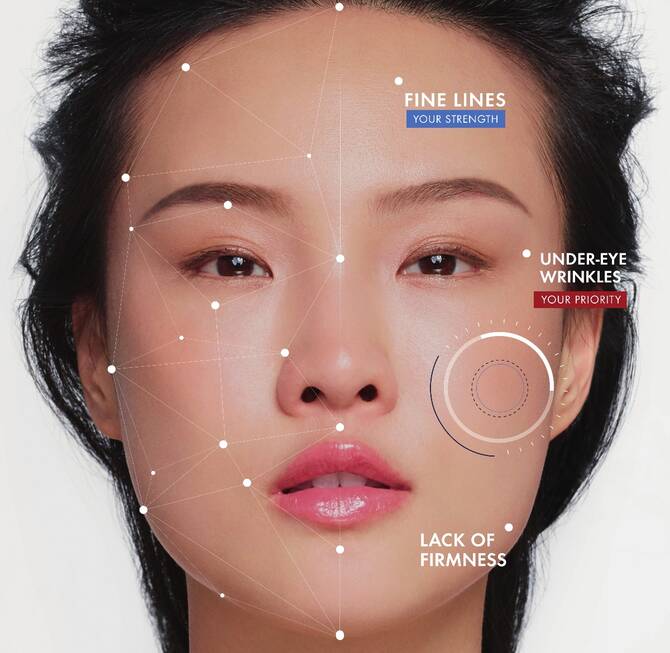
L’Oreal technology measures skin aging and offers personalized skincare regimens. (Supplied)
2 / 2
Vismay Sharma, President of L’Oreal South Asia Pacific, Middle East, and North Africa (SAPMENA). (Supplied)
Short Url
Updated 05 April 2025
Follow

How AI technology is changing the beauty industry

  • Algorithms are used to recommend salons to customers in Saudi Arabia
  • Millions of gigabytes of data on hair and skin is being fed into AI engines

RIYADH: Artificial intelligence is increasingly being used in the beauty industry, both in Saudi Arabia and internationally.

Mohamed Hassan, CEO of Saudi-based Glamera, spoke to Arab News about how the company uses AI to recommend services to customers.

“The system analyzes user behavior and preferences to offer personalized service suggestions,” he said.

Founded in Egypt in 2020, where it still covers Cairo and Alexandria, Glamera then relocated to Saudi Arabia, where it covers Riyadh, Jeddah, Dammam, Taif, Qassim, and Madinah.

Another technology implemented by some beauty companies is augmented reality, which allows users to ‘try out’ beauty products using their smartphones. 

L’Oreal uses AI technology for a wide range of features including analyzing customer reviews and evaluating product formulas, Vismay Sharma, president of L’Oreal South Asia Pacific, Middle East, and North Africa, told Arab News.

The company’s Beauty Genius, which provides users with analysis, product recommendations and personalized routines for hair and makeup, is powered by generative AI.

L’Oreal has also created SkinConsultAI, which “measures skin aging” and offers personalized skincare regimens.

Sharma said that the company has collected a vast amount of data on hair and skin — more than 11 million gigabytes — which is fed into the AI engine.

“We have by far the highest amount of data … that is what we are now feeding into all of our AI engines such as LLMs (large language models), which is allowing us to do significant exploration of formula evaluation,” Sharma said.

Stressing how important it is to use technology responsibly, Sharma added that L’Oreal has been transparent about its commitment to not using computer-generated photos of results. 

“We never use GenAI on our models, because that, in a way, is faking results,” he said. “There are very clear ethical rules that we put around the use of technology and I very strongly believe that if technology is in the hands of responsible people, using it responsibly can significantly enhance the quality of experience, the beauty journey of consumers, and the overall efficiency of an organization.”


Pioneering electric bus service takes to the road in Makkah

Updated 19 December 2025
Follow

Pioneering electric bus service takes to the road in Makkah

  • The bus rapid transit project, a system designed to have higher capacity and reliability than conventional bus services, is said to be the first of its kind in the Kingdom
  • The vehicles operate in dedicated bus lanes within a network that includes two main bus stations and 11 stops along the route connecting them

MAKKAH: A pioneering electric bus service took to the road in Makkah this week.

Electromin, the developer and operator of the service in partnership with Umm Al-Qura for Development and Construction, said it is expected to serve more than 125 million passengers over the next 15 years, while cutting carbon dioxide emissions by more than 31,500 tonnes compared with traditional vehicles.

The bus rapid transit project, a system designed to have higher capacity and reliability than conventional bus services, is said to be one of the first of its kind in the Kingdom. It was inaugurated on Wednesday by Amr Al-Dabbagh, chairperson of Al-Dabbagh Group; Samir Nawar, managing director of Petromin; and Yasser Abu Ateeq, CEO of Umm Al-Qura.

The bus rapid transit project is designed to have higher capacity and reliability than conventional bus services. (Supplied)

Electromin, a subsidiary of Petromin specializing in energy and mobility solutions, said the new service, which forms part of the Masar Destination mixed-use real estate development project in Makkah, is one the first transport networks of its kind in the country, and represents a significant shift toward a cleaner, more efficient urban transport model.

It operates in dedicated bus lanes, connecting key hubs within Masar and providing safe, reliable and environmentally friendly transportation for residents and visitors, the company added. The network includes two main bus stations and 11 stops along the route connecting them. It has been designed to serve more than 5 million visitors and pilgrims annually, and to be easily accessible to all users.

Operators say the service is designed as a foundation for Makkah’s future transportation system, through its integration with the broader Masar project, which includes pedestrian walkways, more than 5,000 parking spaces, metro services and other urban infrastructure.