

How AI technology is changing the beauty industry

1 / 2
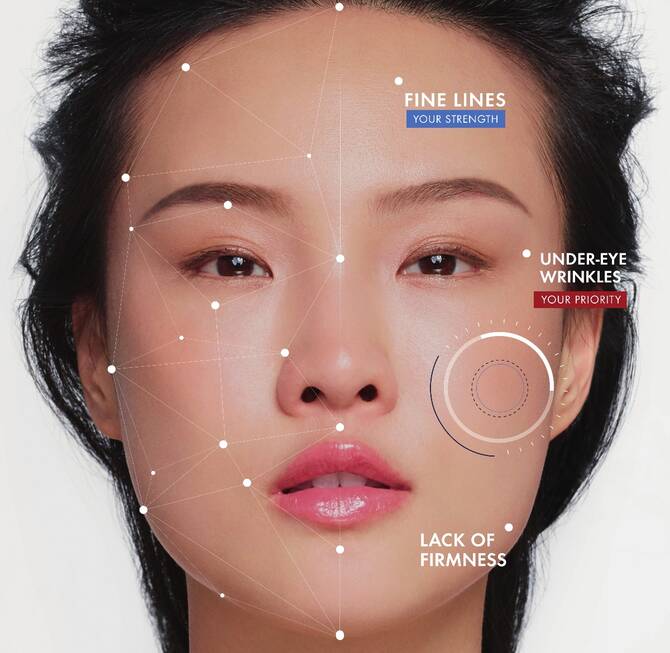
L’Oreal technology measures skin aging and offers personalized skincare regimens. (Supplied)
2 / 2
Vismay Sharma, President of L’Oreal South Asia Pacific, Middle East, and North Africa (SAPMENA). (Supplied)
Short Url
Updated 05 April 2025
Follow

How AI technology is changing the beauty industry

  • Algorithms are used to recommend salons to customers in Saudi Arabia
  • Millions of gigabytes of data on hair and skin is being fed into AI engines

RIYADH: Artificial intelligence is increasingly being used in the beauty industry, both in Saudi Arabia and internationally.

Mohamed Hassan, CEO of Saudi-based Glamera, spoke to Arab News about how the company uses AI to recommend services to customers.

“The system analyzes user behavior and preferences to offer personalized service suggestions,” he said.

Founded in Egypt in 2020, where it still covers Cairo and Alexandria, Glamera then relocated to Saudi Arabia, where it covers Riyadh, Jeddah, Dammam, Taif, Qassim, and Madinah.

Another technology implemented by some beauty companies is augmented reality, which allows users to ‘try out’ beauty products using their smartphones. 

L’Oreal uses AI technology for a wide range of features including analyzing customer reviews and evaluating product formulas, Vismay Sharma, president of L’Oreal South Asia Pacific, Middle East, and North Africa, told Arab News.

The company’s Beauty Genius, which provides users with analysis, product recommendations and personalized routines for hair and makeup, is powered by generative AI.

L’Oreal has also created SkinConsultAI, which “measures skin aging” and offers personalized skincare regimens.

Sharma said that the company has collected a vast amount of data on hair and skin — more than 11 million gigabytes — which is fed into the AI engine.

“We have by far the highest amount of data … that is what we are now feeding into all of our AI engines such as LLMs (large language models), which is allowing us to do significant exploration of formula evaluation,” Sharma said.

Stressing how important it is to use technology responsibly, Sharma added that L’Oreal has been transparent about its commitment to not using computer-generated photos of results. 

“We never use GenAI on our models, because that, in a way, is faking results,” he said. “There are very clear ethical rules that we put around the use of technology and I very strongly believe that if technology is in the hands of responsible people, using it responsibly can significantly enhance the quality of experience, the beauty journey of consumers, and the overall efficiency of an organization.”


China expresses support for developing and strengthening Saudi-Iranian relations

Updated 5 sec ago
Follow

China expresses support for developing and strengthening Saudi-Iranian relations

  • Wang and Prince Faisal signed an agreement on the mutual exemption from visa requirements for holders of diplomatic, special, and service passports

RIYADH: China’s Foreign Minister Wang Yi expressed his country’s support for developing and strengthening Saudi-Iranian relations on Sunday, the Saudi Press Agency reported.

He also appreciated the Kingdom’s efforts to achieve regional and international security and stability, SPA added.

Wang visited the Kingdom on Sunday in response to an invitation from his Saudi counterpart Prince Faisal bin Farhan. He also met with Crown Prince Mohammed bin Salman.

Prince Faisal and Wang held talks during which they reviewed the comprehensive strategic partnership between their countries.

They commended the level of Saudi-Chinese relations in all fields, including the economic, trade, investment, and energy sectors.

They noted that Wang’s visit coincided with the 35th anniversary of the establishment of diplomatic relations between their countries, which have witnessed significant development and a convergence of visions, SPA said.

The two ministers held the fifth session of the political committee emanating from the Saudi-Chinese High-Level Joint Committee. During the meeting, they discussed ways to enhance cooperation between the two countries in all fields.

Both sides affirmed their commitment to exchanging support on issues related to the vital interests of both countries, and their support for everything that achieves security, stability, development, and prosperity in the two nations.

Saudi Arabia also reiterated its commitment to the One China policy, stating that the Chinese government is the only legitimate government representing China as a whole, and that Taiwan is an integral part of Chinese territory.

Wang praised the economic developments taking place in the Kingdom within the framework of Vision 2030 and expressed China’s readiness to participate in Expo 2030 which will be hosted by Riyadh.

Views were exchanged on regional and international issues of common interest, and both sides expressed their readiness to enhance communication and coordination on these matters, SPA added.

Both foreign ministers affirmed their support for efforts aimed at finding a comprehensive and just solution to the Palestinian question and establishing an independent Palestinian state within 1967 borders, with East Jerusalem as its capital, in accordance with the two-state solution, relevant UN resolutions, and the Arab Peace Initiative.

They also signed an agreement on the mutual exemption from visa requirements for holders of diplomatic, special, and service passports.