

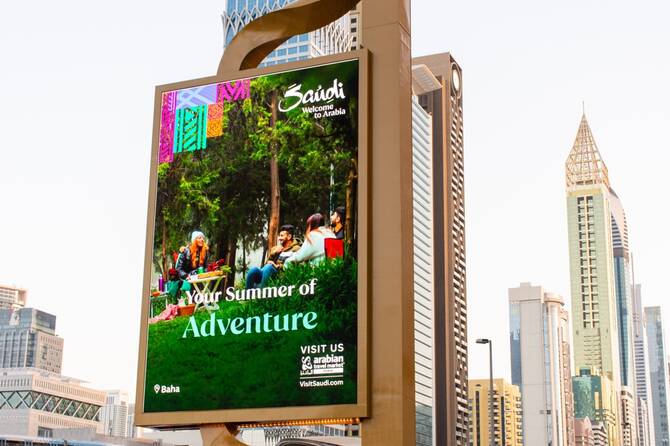

RIYADH: Inbound tourism spending in Saudi Arabia surged to a record SR153.61 billion ($40.95 billion) in 2024, marking a 13.82 percent annual increase, according to data from the Saudi Central Bank.
The rise also pushed the Kingdom’s travel balance surplus to its highest annual level yet — SR49.78 billion — up 7.81 percent from the previous year. Outbound spending by Saudi residents rose 16.94 percent year on year, reaching SR103.84 billion.
In January, the Saudi Press Agency reported that the Kingdom welcomed 30 million international visitors in 2024, a 9.5 percent increase from the previous year. This influx of travelers is not merely transient, as they play a pivotal role in reshaping Saudi Arabia’s economy and global image.
According to the latest Ministry of Tourism report, which covered the third quarter of 2024, non-religious tourism now accounts for the majority of international travel, signaling a broader appeal and longer stays as visitors explore the nation’s cultural, entertainment, and business offerings.
Tourism’s direct and indirect contributions — spanning sectors from transport to hospitality — brought the Kingdom’s total economic impact from travel and tourism to SR498 billion in 2024, according to the World Travel and Tourism Council. This represents 12.45 percent of gross domestic product, up from 11.5 percent the preceding year.
As part of Vision 2030, Saudi Arabia is undergoing a rapid transformation that places tourism and international investment at the heart of its future.
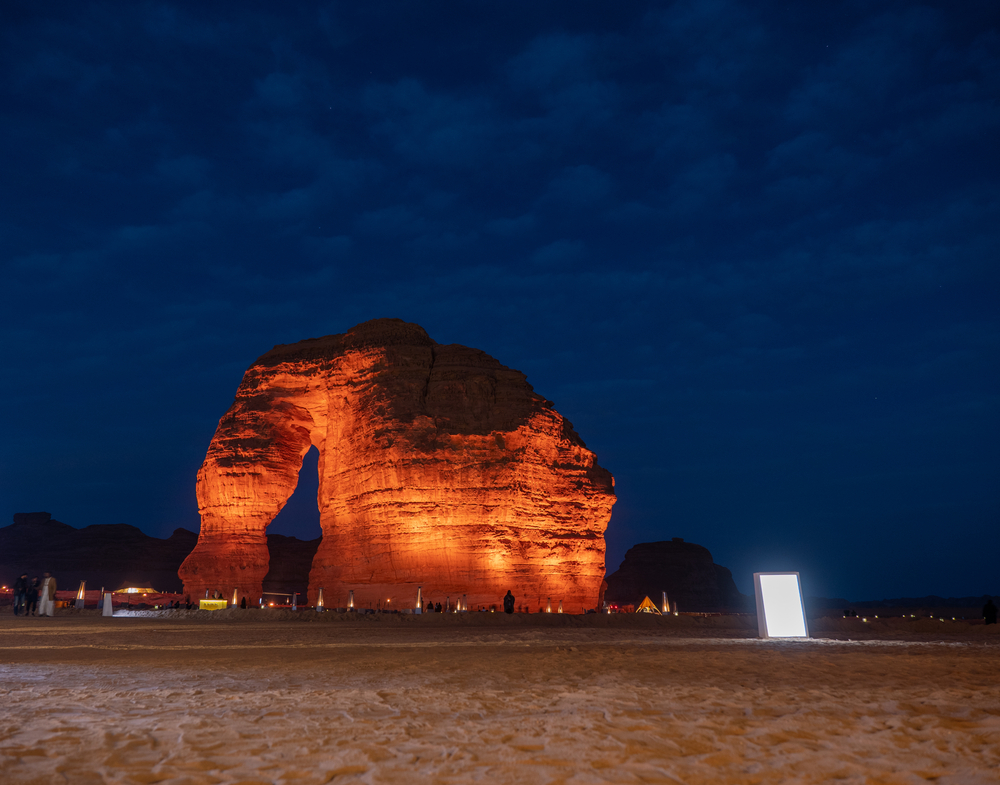
Tourists gather at the Elephant Rock geological site near AlUla, Saudi Arabia. Shutterstock
Sweeping reforms, including 100 percent foreign ownership in key sectors, a streamlined investment law, and special economic zones, have made the Kingdom one of the most attractive destinations for global investors and travelers.
The Saudi government is not only making it easier to visit the Kingdom but is also actively promoting a wide range of offerings in the tourism sector.
Billions of dollars are being invested in a new era of high-end, culturally rich, and environmentally conscious destinations. Among them are the Red Sea Project, a luxury archipelago of sustainable resorts; NEOM’s Trojena, the Gulf’s first outdoor ski destination; and Diriyah, a historical landmark just outside Riyadh set to welcome 27 million visitors annually by 2030.
Cultural pillars such as AlUla, with its 200,000 years of history, and Jeddah’s Al-Balad Historic District, which is currently undergoing a major restoration, are also attracting global attention.
Mega-projects including Qiddiya, AMAALA, and Sindalah promise to deliver experiences ranging from world-class entertainment to luxury yachting.
Supporting this tourism boom is a rapid expansion in infrastructure. The Kingdom now boasts over 426,000 licensed hotel rooms, with an international hospitality chain presence that is expected to grow from 47 percent to 65 percent, according to Knight Frank. Brands including Accor, Hilton, and Marriott are all ramping up investments.
Accessibility is no longer a barrier, with Saudi Arabia’s eVisa platform allowing travelers from 66 countries — including the US, UK, and Germany, as well as Japan, Australia, and China — to apply for a one-year, multiple-entry permit.
According to a recent report by the ministry, tourists can stay up to 90 days per visit, with access granted for leisure, Umrah, business events such as the Interenational Meetings, Incentives, Conferences, and Exhibitions Summit, and visiting friends and family. Hajj remains under a separate, seasonal visa system due to religious considerations.
Additionally, the Kingdom’s strategic geographic location— within six hours’ flight time of 40 percent of the world’s population— along with its emphasis on sustainable, high-end tourism, positions the nation as an increasingly significant and rapidly growing destination in the global travel landscape.
Leisure and business travel take center stage
Saudi Arabia now offers over 426,000 licensed hotel rooms. Shutterstock
Saudi Arabia’s tourism sector is undergoing a noticeable transformation, with leisure and business travel now fueling much of the Kingdom’s inbound growth. While religious tourism continues to play a key role, the latest data shows that a broader, more diversified visitor profile is emerging.
By the third quarter of 2024, the Ministry of Tourism reported a clear shift in travel purposes: religious pilgrimages still accounted for 41 percent of inbound visits, but non-religious travel is gaining momentum.
Leisure tourism represented 24 percent of the total, followed by visits to friends and relatives at 22 percent, while business, education, and healthcare-related trips comprised the remainder.
This growing appetite for Saudi Arabia’s tourism experiences is drawing in travelers and unlocking billions in investment.
Private sector funding in the Kingdom’s tourism industry climbed to SR14.2 billion in 2024, up from SR12 billion the previous year, according to Tourism Minister Ahmed Al-Khateeb as reported by Bloomberg in January.
Roughly 40 percent of that capital came from foreign investors, signaling rising global confidence in Saudi Arabia’s ambitious tourism agenda.
Al-Khateeb highlighted that international investors are increasingly focusing on the Kingdom, particularly as other regions experience stagnation or slower growth. He explained that investors see Saudi Arabia’s ambitious tourism plans as a way to unlock long-untapped potential in a sector that had been largely inaccessible for decades.
The surge in investment aligns with the Kingdom’s broader push to become a global travel hub.
To support this ambition, Saudi Arabia aims to generate $80 billion in private investment by the start of the next decade, helping fuel Crown Prince Mohammed bin Salman’s Vision 2030 strategy to diversify the Kingdom’s economy beyond oil.
While Europe and the US currently lead the wave of foreign investment, Al-Khateeb noted that active discussions are underway with Asian partners as well — including China, South Korea, and Malaysia — who are exploring opportunities in areas such as hospitality, retail, and real estate.


