

Tabuk camel riders celebrate Eid to the rhythms of Al-Hijini

1 / 9
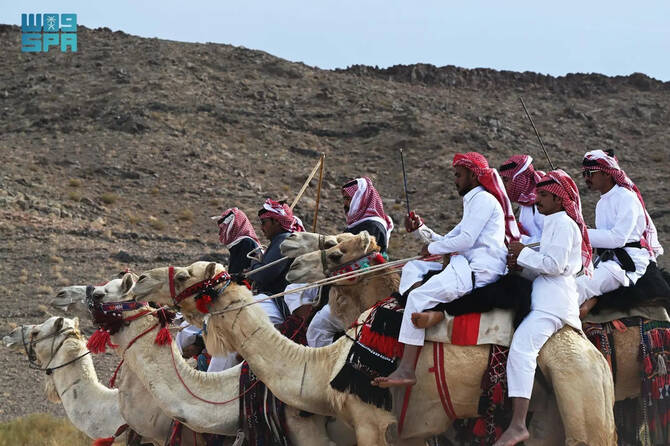
Noted for its simple melodies and brisk tempo, Al-Hijini naturally accompanies travelers and desert caravans. (SPA)
2 / 9
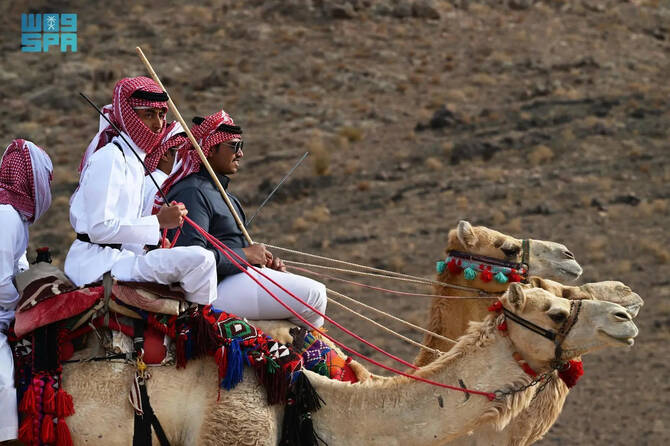
Al-Hijini is deeply tied to Bedouin culture, serving as a medium for expressing emotions. (SPA)
3 / 9
Al-Hijini is deeply tied to Bedouin culture, serving as a medium for expressing emotions. (SPA)
4 / 9
Noted for its simple melodies and brisk tempo, Al-Hijini naturally accompanies travelers and desert caravans. (SPA)
5 / 9
Noted for its simple melodies and brisk tempo, Al-Hijini naturally accompanies travelers and desert caravans. (SPA)
6 / 9
Noted for its simple melodies and brisk tempo, Al-Hijini naturally accompanies travelers and desert caravans. (SPA)
7 / 9
Noted for its simple melodies and brisk tempo, Al-Hijini naturally accompanies travelers and desert caravans. (SPA)
8 / 9
Noted for its simple melodies and brisk tempo, Al-Hijini naturally accompanies travelers and desert caravans. (SPA)
9 / 9
Noted for its simple melodies and brisk tempo, Al-Hijini naturally accompanies travelers and desert caravans. (SPA)
Short Url
Updated 02 April 2025
Follow

Tabuk camel riders celebrate Eid to the rhythms of Al-Hijini

  • The tempo of the verses aligns with the camels’ steady strides, creating a harmonious blend of words and motion
  • Traditionally performed solo, Al-Hijini often becomes a communal chant during celebrations

TABUK: In Tabuk’s vast, Eid is a radiant celebration infused with the scent of the land, the memory of ancestors and deeply rooted traditions passed down with pride across generations.

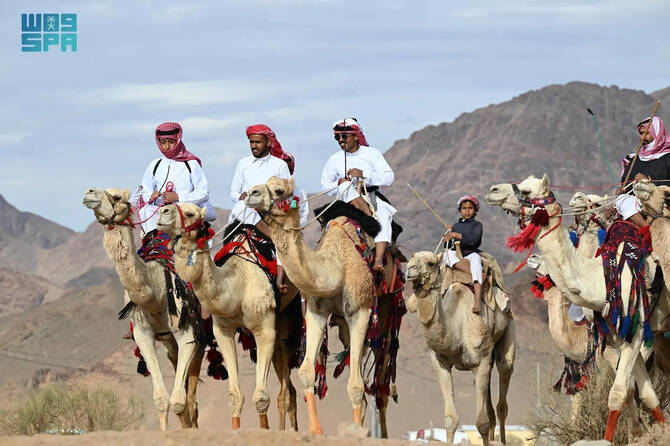
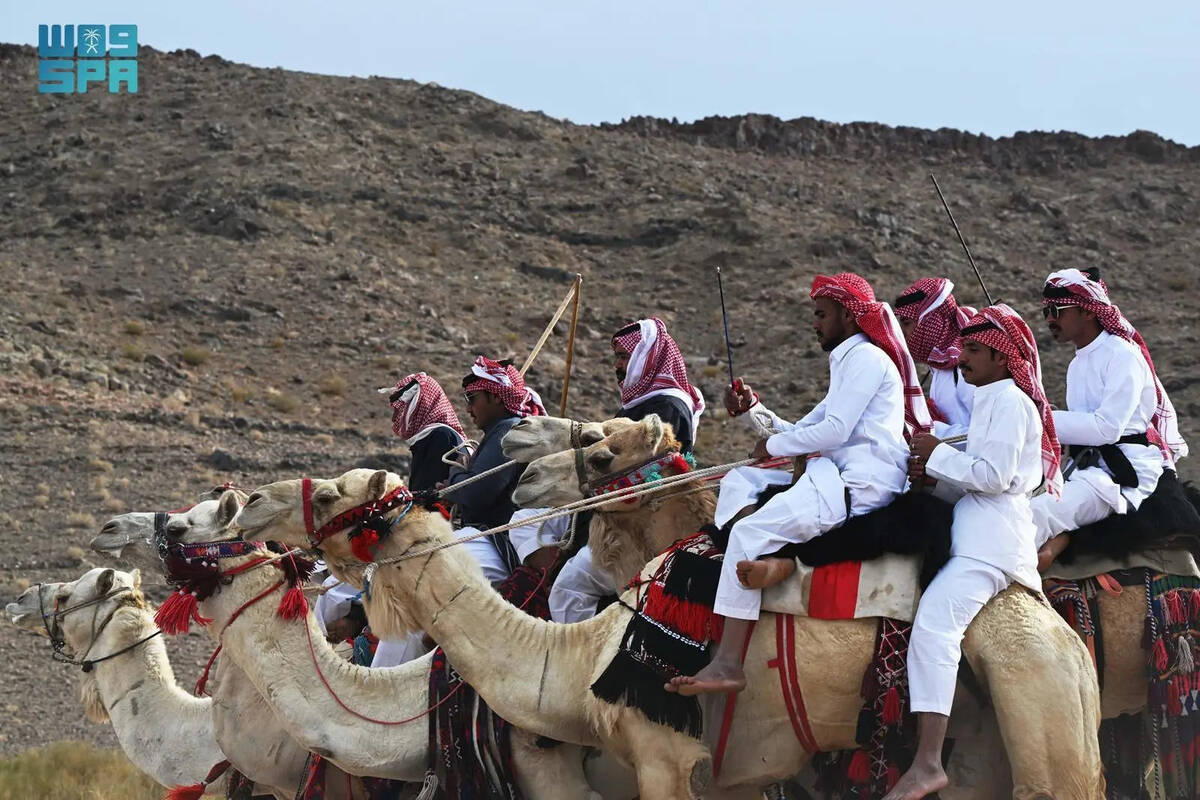
Here, where the sands stretch endlessly, camel riders known as hajjanah form majestic processions, offering greetings to locals while chanting Al-Hijini, poetry that stirs the heart tales of pride, love and loyalty, preserving the soul of the desert.
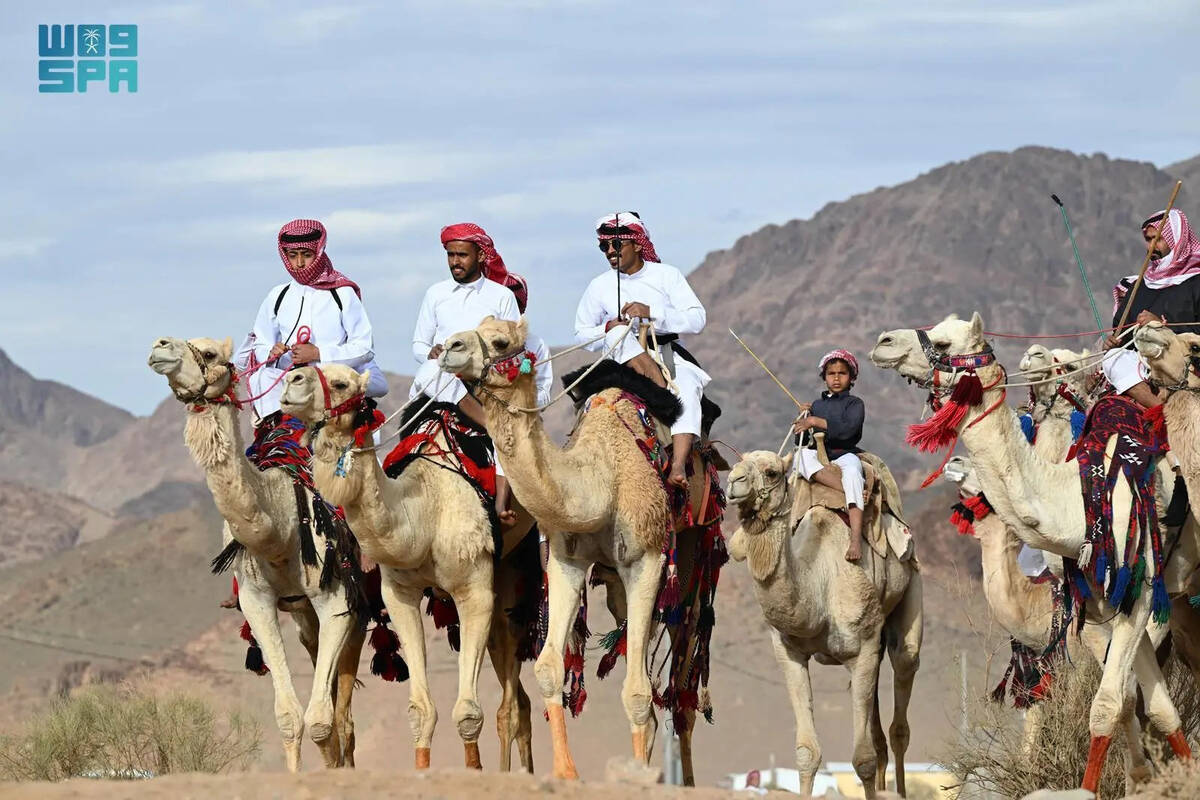


Al-Hijini is deeply tied to Bedouin culture, serving as a medium for expressing emotions. (SPA)

Among the people of Tabuk, customs steeped in authenticity and dignity come to life during vibrant Eid celebrations.

They are a blend of heritage and contemporary life, rooted in the nomadic rhythm of the desert. Camels, specially adorned for the occasion, play a central role in the festivities as riders set out across the sands, joyfully chanting traditional verses.

Al-Hijini poetry derives its name from the well-trained camels used for riding and racing. The riders recite lyrical verses that encompass various themes of life, often focusing on patriotism and romance. The rhythm matches the camels’ steady strides, creating a harmonious blend of words and motion.


Caption

Noted for its simple melodies and brisk tempo, Al-Hijini uplifts the spirits and eases the solitude of travelers and desert caravans. It is deeply tied to Bedouin culture, serving as a medium for expressing emotions, recording daily experiences, relaying wisdom and preserving ancestral proverbs.

Traditionally performed solo, Al-Hijini often becomes a communal chant during celebrations such as Eid, with collective recitation reflecting the unity and solidarity of Tabuk’s desert communities.
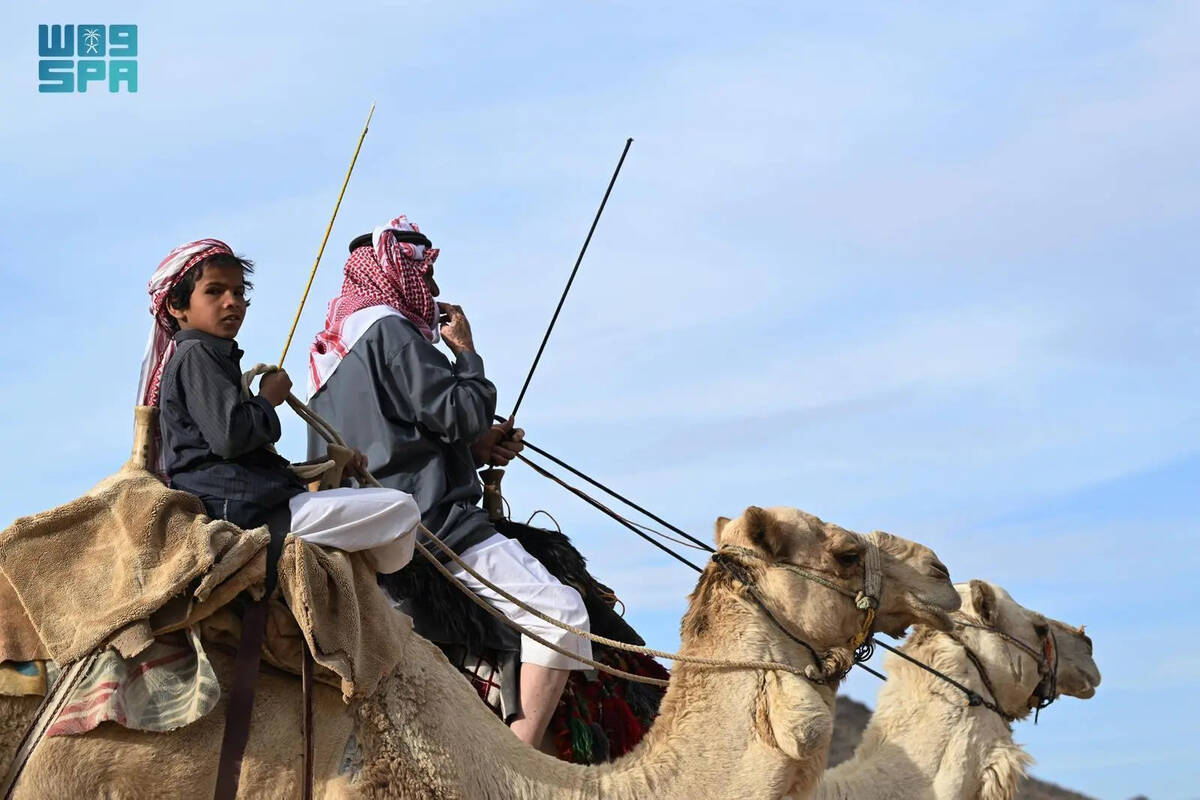


Noted for its simple melodies and brisk tempo, Al-Hijini naturally accompanies travelers and desert caravans. (SPA)


Saudi researchers develop AI system for camel herders

Updated 14 November 2025
Follow

Saudi researchers develop AI system for camel herders

  • AI-powered drone system can recognize and track camels from the air 
  • Prof. Basem Shihada and his team at KAUST developed the low-cost system

RIYADH: A research team at King Abdullah University of Science and Technology has created a low-cost, AI-powered drone system that can recognize and track camels from the air.

The system promises an affordable option for camel herders to continue one of Saudi Arabia’s oldest labors and for scientists to learn more about camel migration patterns and habits, according to a KAUST press release.

Created by Professor Basem Shihada and his labmates, the system uses inexpensive commercial drones and cameras to enable camel herders to track their camels in real time without relying on expensive GPS collars or satellite connections.

The team used a single drone-mounted camera to capture aerial footage of small camel herds in Saudi Arabia, then trained their AI model using machine learning. The model revealed new insights into the animals’ behaviors.

“We found their migration patterns were not random but showed identifiable patterns,” said KAUST scientist Chun Pong Lau, who was also involved in the project.

The release added that camels, especially elders, showed coordinated grazing migration, covering long distances throughout the day, but always returned to their herder by sunset. They also showed high sensitivity to the drone’s sound, which is why the KAUST scientists kept the drone at least 120 meters above the ground.

For centuries, camels have been central to Arabian life by providing transport, food and a cultural link to the desert. Today, they contribute more than SR2 billion ($534 million) annually to the Saudi economy through industries such as food, textiles and tourism.

However, herding remains a challenge, with camels roaming up to 50 km a day across isolated terrain. This mobility often leads to road accidents, overgrazing and loss of livestock.

As a next step, Shihada and his colleagues plan to collect video of larger camel herds of more heterogeneous sizes and colors to train their AI system for higher performance.