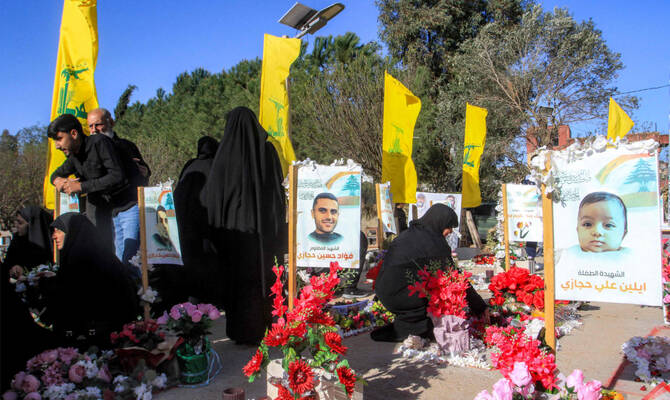
AÏTAROUN, Lebanon: In the war-devastated southern Lebanese village of Aitaroun on Monday, residents marked the Muslim holiday of Eid Al-Fitr among their dead.
Relatives crowded the village’s cemeteries to pray for the more than 100 residents, including fighters from Hezbollah, killed during the war between the militant group and Israel that ended with a fragile ceasefire in November.
“We defied the entire world by being here in Aitaroun to celebrate Eid with our martyrs,” Siham Ftouni said near the grave of her son, a rescuer with an Islamic health organization affiliated with Hezbollah.
“Their blood permitted us to come back to our village,” she said.
During the war, Lebanese state media reported that Israeli troops used explosives in Aitaroun and two nearby villages to blow up houses. The town square is heavily damaged.
Few people have returned to live or to reopen businesses.
The story is the same in other villages in southern Lebanon.
In Aitaroun, more than 90 of the village’s dead — including some who died from natural causes — were buried only a month ago when Israeli troops pulled out.
Under the ceasefire, Israel had 60 days to withdraw its troops from southern Lebanon, but it did not pull most of them back until February 18 after the initial deadline was extended.
On Monday, beneath yellow Hezbollah flags, Ftouni and other women clad in black let their grief pour out.
A young girl sat near the grave of a woman, holding her photo surrounded by flowers.
Other pictures, of infants and young men in military uniform, lay on top of graves, and the sound of funeral orations triggered tears.
Some visitors handed out sweets and other foods to mourners who came from further away.
“This year, Eid is different from the years before,” said Salim Sayyed, 60, a farmer originally from Aitaroun. “Aitaroun, which lost more than 120 martyrs including many women and children, is living a sad Eid.”
He added: “The will to live will remain stronger than death.”
The war saw the killing of Hezbollah’s leader Hassan Nasrallah and other commanders, and the group’s military infrastructure was devastated. Yet it continues to proclaim victory after more than a year of conflict that escalated to full-blown war and killed more than 4,000 people in Lebanon.
Despite the ceasefire deal, Israeli troops remain inside Lebanon at five points it deems strategic.
Both Hezbollah and Israel have accused each other of truce violations.
Israel has regularly carried out often-deadly air raids in south and east Lebanon since the ceasefire, striking what it says are Hezbollah military targets that violated the agreement.
On Friday Israel bombed southern Beirut for the first time since the truce after rockets were fired toward its territory.
Imad Hijazi, 55, a taxi driver, said the security uncertainty was no deterrent to those wanting to spend Eid beside the graves of their loved ones.
“The sadness was immense. Everyone was shaken by the loss of loved ones. I lost 23 members of my family in an Israeli strike,” Hijazi said.
“I was ashamed to convey Eid greetings to my relatives or my friends.”


![]()

Devastated Lebanon village marks Eid among its dead
Short Url
https://arab.news/zafvm
Devastated Lebanon village marks Eid among its dead
- Israel has regularly carried out often-deadly air raids in south and east Lebanon since the ceasefire, striking what it says are Hezbollah military targets that violated the agreement


Latest updates


Recommended


© 2026 SAUDI RESEARCH & PUBLISHING COMPANY, All Rights Reserved And subject to Terms of Use Agreement.