

Oman’s Islamic banking assets surge 17% to $22.3bn in 2024 

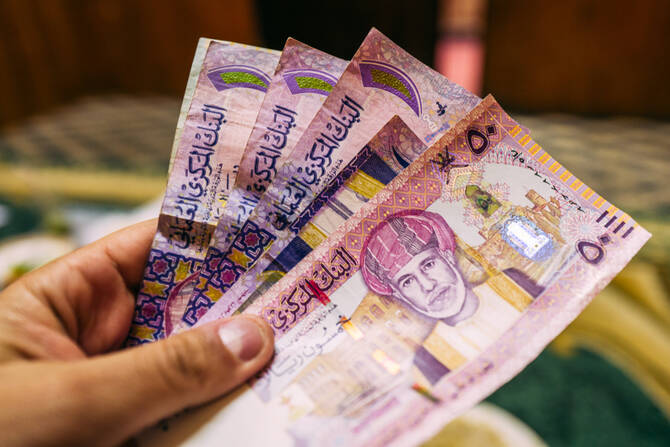
The steady growth of Oman’s Islamic banking sector reflects the rising demand for Shariah-compliant financial services and its expanding contribution to the country’s banking industry. Shutterstock
Short Url
Updated 30 March 2025
Follow

Oman’s Islamic banking assets surge 17% to $22.3bn in 2024 

RIYADH: Islamic banking in Oman continued its rapid expansion in 2024, with total assets reaching 8.6 billion Omani rials ($22.3 billion) by December — marking a 16.6 percent increase from the previous year, official data showed. 

The segment now accounts for 19.2 percent of Oman’s total banking assets, according to data released by the Central Bank of Oman. 

Financing extended by Islamic financial institutions grew by 14.2 percent to approximately 7 billion rials. Additionally, deposits at Islamic banks and windows jumped 21.3 percent, reaching nearly 6.7 billion rials by the end of December. 

The steady growth of Oman’s Islamic banking sector reflects the rising demand for Shariah-compliant financial services and its expanding contribution to the country’s banking industry, CBO added. 

Oman’s banking system comprises both conventional and Islamic banking services. Islamic banking is offered through standalone financial institutions and dedicated windows within conventional banks, which can be local or foreign entities licensed in Oman. 

In May 2011, the CBO issued preliminary licensing guidelines to introduce Islamic banking in the Sultanate. This framework enabled full-fledged Islamic banks and Islamic windows to operate alongside conventional financial institutions. 

The initiative was formally established in December 2012 through a Royal Decree that amended the Banking Law, mandating Islamic banks and windows to form their own Shariah supervisory boards. It also authorized the CBO to create a central High Shariah Supervisory Authority. 

Following these developments, the CBO introduced the Islamic Banking Regulatory Framework in December 2012, alongside regulations governing the Hawala Settlement and Safeguard Account. 

This initiative aligned with Oman’s broader economic strategy, promoting financial inclusion, economic diversification, and responsible financial practices. 

Since its inception, Islamic banking in Oman has played a key role in advancing the objectives of Oman Vision 2040. 

“This sector has played a vital role in augmenting national savings and investment, contributing to the development of a more diversified investment base and availability of wider range of financial products and services for consumers and businesses,” CBO said. 

In November, Fitch Ratings forecasted continued growth in Oman’s Islamic finance sector, driven by increasing consumer demand, expanding distribution networks, greater use of sukuk for public funding, and ongoing regulatory advancements. 

A key development in October was the CBO’s introduction of the Bank Deposit Protection Law, extending deposit protection to Islamic financial institutions — an essential step in bolstering confidence in the sector. 

The agency added that strong economic conditions, improved asset quality, stable profitability, and solid capitalization position Islamic banks to withstand moderate financial shocks, despite regional geopolitical risks. 


Saudi Arabia set to attract $500bn in private investment, Al-Falih tells conference

Updated 09 December 2025
Follow

Saudi Arabia set to attract $500bn in private investment, Al-Falih tells conference

RIYADH: Sustainability, technology, and financial models were among the core topics discussed by financial leaders during the first day of the Momentum 2025 Development Finance Conference in Riyadh.

The three-day event features more than 100 speakers and over 20 exhibitors, with the central theme revolving around how development financial institutions can propel economic growth.

Speaking during a panel titled “The Sustainable Investment Opportunity,” Saudi Investment Minister Khalid Al-Falih elaborated on the significant investment progress made in the Kingdom.

“We estimate in the midterm of 2030 or maybe a couple of years more or so, about $1 trillion of infrastructure investment,” he said, adding: “We estimate, as a minimum, 40 percent of this infrastructure is going to be financed by the private sector, so we’re talking in the next few years $400 (billion) to $500 billion.”

The minister drew a correlation between the scale of investment needs and rising global energy demand, especially as artificial intelligence continues to evolve within data processing and digital infrastructure in global spheres.

“The world demand of energy is continuing to grow and is going to grow faster with the advent of the AI processing requirements (…) so our target of the electricity sector is 50 percent from renewables, and 50 percent from gas,” he added.

Al-Falih underscored the importance of AI as a key sector within Saudi Arabia’s development and investment strategy. He made note of the scale of capital expected to go into the sector in coming years, saying: “We have set a very aggressive, but we believe an achievable target, for AI, and we estimate in the short term about $30 billion immediately of investments.”

This emphasis on long-term investment and sustainability targets was echoed across panels at Momentum 2025, during which discussions on essential partnerships between public and private sectors were highlighted.

The shared ambition of translating the Kingdom’s goals into tangible outcomes was particularly essential within the banking sector, as it plays a central role in facilitating both projects and partnerships.

During the “Champions of Sectoral Transformation: Development Funds and Their Ecosystems” panel, Saudi National Bank CEO Tareq Al-Sadhan shed light on the importance of partnerships facilitated via financial institutions.

He explained how they help manage risk while supporting the Kingdom’s ambitions.

“We have different models that we are working on with development funds. We co-financed in certain projects where we see the risk is higher in terms of going alone as a bank to support a certain project,” the CEO said.

Al-Sadhan referred to the role of development funds as an enabler for banks to expand their participation and support for projects without assuming major risk.

“The role of the development fund definitely is to give more comfort to the banking sector to also extend the support … we don’t compete with each other; we always complement each other” he added.