

Oman’s Islamic banking assets surge 17% to $22.3bn in 2024 

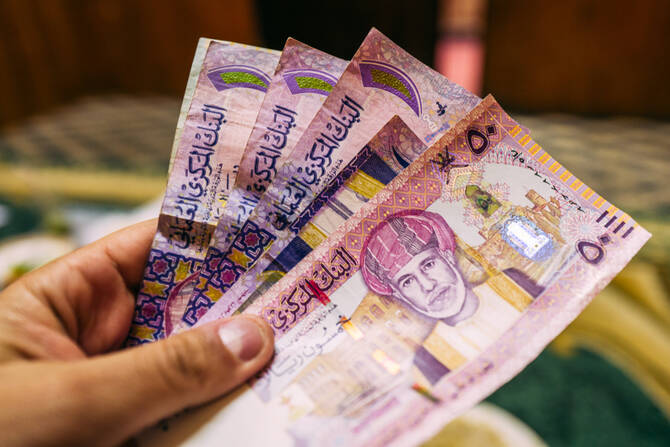
The steady growth of Oman’s Islamic banking sector reflects the rising demand for Shariah-compliant financial services and its expanding contribution to the country’s banking industry. Shutterstock
Short Url
Updated 30 March 2025
Follow

Oman’s Islamic banking assets surge 17% to $22.3bn in 2024 

RIYADH: Islamic banking in Oman continued its rapid expansion in 2024, with total assets reaching 8.6 billion Omani rials ($22.3 billion) by December — marking a 16.6 percent increase from the previous year, official data showed. 

The segment now accounts for 19.2 percent of Oman’s total banking assets, according to data released by the Central Bank of Oman. 

Financing extended by Islamic financial institutions grew by 14.2 percent to approximately 7 billion rials. Additionally, deposits at Islamic banks and windows jumped 21.3 percent, reaching nearly 6.7 billion rials by the end of December. 

The steady growth of Oman’s Islamic banking sector reflects the rising demand for Shariah-compliant financial services and its expanding contribution to the country’s banking industry, CBO added. 

Oman’s banking system comprises both conventional and Islamic banking services. Islamic banking is offered through standalone financial institutions and dedicated windows within conventional banks, which can be local or foreign entities licensed in Oman. 

In May 2011, the CBO issued preliminary licensing guidelines to introduce Islamic banking in the Sultanate. This framework enabled full-fledged Islamic banks and Islamic windows to operate alongside conventional financial institutions. 

The initiative was formally established in December 2012 through a Royal Decree that amended the Banking Law, mandating Islamic banks and windows to form their own Shariah supervisory boards. It also authorized the CBO to create a central High Shariah Supervisory Authority. 

Following these developments, the CBO introduced the Islamic Banking Regulatory Framework in December 2012, alongside regulations governing the Hawala Settlement and Safeguard Account. 

This initiative aligned with Oman’s broader economic strategy, promoting financial inclusion, economic diversification, and responsible financial practices. 

Since its inception, Islamic banking in Oman has played a key role in advancing the objectives of Oman Vision 2040. 

“This sector has played a vital role in augmenting national savings and investment, contributing to the development of a more diversified investment base and availability of wider range of financial products and services for consumers and businesses,” CBO said. 

In November, Fitch Ratings forecasted continued growth in Oman’s Islamic finance sector, driven by increasing consumer demand, expanding distribution networks, greater use of sukuk for public funding, and ongoing regulatory advancements. 

A key development in October was the CBO’s introduction of the Bank Deposit Protection Law, extending deposit protection to Islamic financial institutions — an essential step in bolstering confidence in the sector. 

The agency added that strong economic conditions, improved asset quality, stable profitability, and solid capitalization position Islamic banks to withstand moderate financial shocks, despite regional geopolitical risks. 


New Murabba seeks contractors for Mukaab Towers fit-outs: MEED

Updated 28 January 2026
Follow

New Murabba seeks contractors for Mukaab Towers fit-outs: MEED

RIYADH: Saudi Arabia’s New Murabba Development Co., a wholly owned subsidiary of the Public Investment Fund, has issued a request for information to gauge the market for modular and offsite fit-out solutions for its flagship Mukaab development, MEED reported on Wednesday.

The RFI was released on Jan. 26, with submissions due by Feb. 11. NMDC has also scheduled a market engagement meeting during the first week of February to discuss potential solutions with prospective contractors.

Sources close to the project told MEED that NMDC is “seeking experienced suppliers and contractors to advise on the feasibility, constraints, and execution strategy for using non-load-bearing modular systems for the four corner towers framing the Mukaab structure.” The feedback gathered from these discussions will be incorporated into later design and procurement decisions.

The four towers — two residential (North and South) and two mixed-use (East and West) — are integral to the Mukaab’s architectural layout. Each tower is expected to rise approximately 375 meters and span over 80 stories. Key modular elements under consideration include bathroom pods, kitchen pods, dressing room modules, panelized steel partition systems, and other offsite-manufactured fit-out solutions.

Early works on the Mukaab were completed last year, with NMDC preparing to award the estimated $1 billion contract for the main raft works. This was highlighted in a presentation by NMDC’s chief project delivery officer on Sept. 9, 2025, during the Future Projects Forum in Riyadh.

Earlier this month, US-based Parsons Corp. was awarded a contract by NMDC to provide design and construction technical support. Parsons will act as the lead design consultant for infrastructure, delivering services covering public buildings, infrastructure, landscaping, and the public realm at New Murabba. The firm will also support the development of the project’s downtown experience, which spans 14 million sq. meters of residential, workplace, and entertainment space.

The Parsons contract follows NMDC’s October 2025 agreements with three other US-based engineering firms for design work across the development. New York-headquartered Kohn Pedersen Fox was appointed to lead early design for the first residential community, while Aecom and Jacobs were selected as lead design consultants for the Mukaab district.

In August 2025, NMDC signed a memorandum of understanding with Falcons Creative Group, another US-based firm, to develop the creative vision and immersive experiences for the Mukaab project. Meanwhile, Beijing-based China Harbour Engineering Co. completed the excavation works for the Mukaab, and UAE-headquartered HSSG Foundation Contracting executed the foundation works.