- Alamgir Welfare Trust expects up to 10 percent increase in donations as it aims to expand services
- Pakistan’s largest charity Edhi Foundation says donations have only marginally improved
KARACHI: Two main charities in Pakistan’s largest city of Karachi have reported a modest recovery in the collection of donations this Ramadan despite easing inflation, top officials at the organizations said this week, as the annual inflation rate slowed to 1.5 percent in February, the lowest in nearly a decade.
Major welfare organizations such as the Edhi Foundation, Pakistan’s largest charity known for its extensive network of ambulances and shelters, and the Alamgir Welfare Trust (AWT), another main social welfare body, said they expected either stable or slightly higher contributions this year compared to the last two years when high inflation rates had curtailed donations.
Pakistan’s inflation peaked at 38 percent in May 2023 before gradually easing, with the government expecting it to remain within 1–3 percent in the coming months.
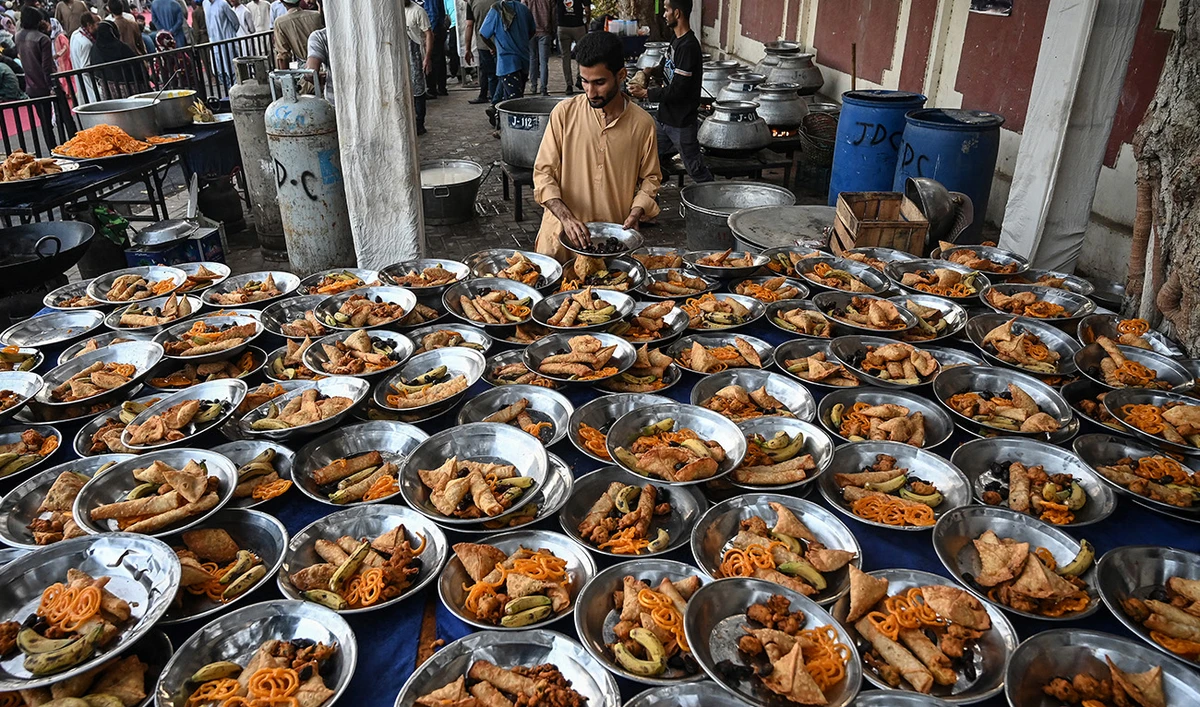
Every year, Edhi and AWT collectively gather and spend as much as Rs4 billion ($14.4 million) on initiatives like sheltering orphans, burying unclaimed dead bodies and providing free food, health and education facilities to thousands of vulnerable families across Pakistan.
“This year we will hopefully see 10 percent extra donations toward our annual budget of Rs3 billion,” Chohdry Nisar Ahmed, the chairman of AWT, told Arab News.
Headquartered in the Bahadurabad neighborhood of Karachi, the organization operates on a daily budget of around Rs10 million ($36,000).
Ahmed said inflation had adversely affected the charity’s work in recent years, though the situation was now beginning to improve.
“Earlier, the effect of inflation was significant. Now that impact has reduced a bit,” he said “But as the gold price has increased now, so people are bound to pay more Zakat. We did experience a little up and down in donations but not much.”
Zakat is a mandatory form of almsgiving in Islam, calculated as a percentage of one’s wealth, including gold holdings. This means the higher the price of gold, the greater the amount eligible individuals are required to pay.
The AWT chief said he wanted to expand his network of services by constructing a 14-story building in Karachi, the commercial capital of Pakistan. To start the construction work on acquired land, he said, AWT needed at least Rs1.5 billion ($5.4 million). The organization also wants to enroll at least 50,000 children in schools in addition to the 40,000 it is already educating.
The chairman of the Edhi Foundation, which runs the world’s largest volunteer ambulance service, also reported a modest hike in donations this year.
“Charity in the first twenty days of Ramadan is almost the same as compared to last year,” Faisal Edhi told Arab News. “The increase [this year] is very little, not much. We cannot call it a substantial increase.”
Edhi Foundation is preparing to expand its 2,000-vehicle ambulance fleet amid growing demand for emergency response services across Pakistan. It already runs a shelter home that houses 5,000 homeless people, including women and children.
“Our annual budget ranges from Rs3-4 billion that we cover from donations,” Edhi said, adding that a part of the donations came from the Pakistani community living in Britain and the United States, but most came from Pakistani donors belonging to the middle or working classes.
“Seeing the inflation, it seems like the [total] charity will be same as last year and our last year was not very promising either,” Edhi said. “The group that gives us charity, they belong to middle and lower-middle classes or the working class and the working class has been affected the most [by inflation] at the moment.”