



ISLAMABAD: Eshal Arooj, 23, regularly visits shelter homes in Islamabad as part of her job at Karandaaz, a not-for-profit aimed at promoting sustainable development in Pakistan, which often makes her aware of the hardships faced by the poor and underprivileged in Pakistan.
This Ramadan, Arooj decided to team up with two of her friends from the university days, Amna Wasim and Yahya Shahid, to arrange iftar meals for the needy in the Pakistani capital, fostering a culture of unity and compassion by bringing smiles to their faces.
The three friends, who used to pool together their pocket money for similar causes during their studies, this time decided to take a structured approach by dedicating a portion of their incomes to fund iftar meals on every weekend.
“The idea of food or iftar drives came to me when I visited various shelters. It made me realize how much of a bubble I was living in and how I needed to step out of it to give back to society. Whenever I saw people, especially children, it sparked a deep feeling inside me to help them,” Arooj told Arab News, describing it as the true “spirit of Ramadan.”
“One thing that resonates deeply with me is how children or elders in orphanages often lose their sense of identity and suffer from emotional disconnect. When we sit, eat and talk with them, it helps bridge that gap and brings them comfort.”
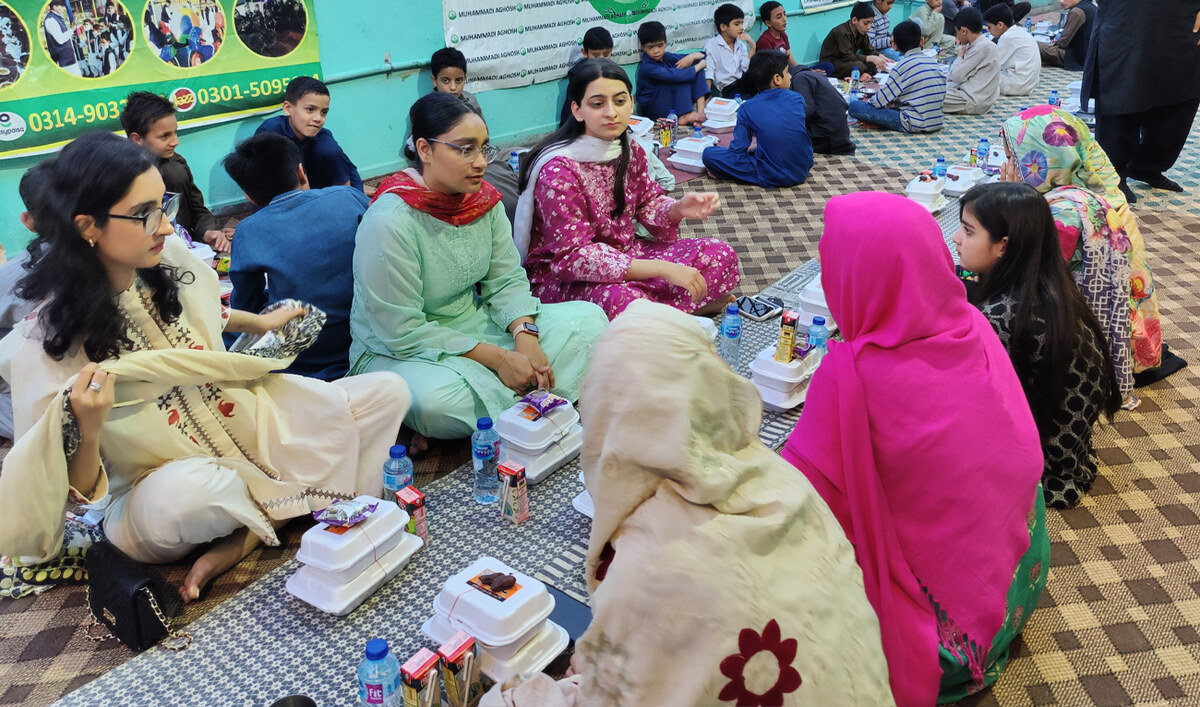
Amna Wasim (left) and Eshal Arooj (second left) wait for Iftar, the fast-breaking meal, at the Mohammadi Agosh orphanage during the holy month of Ramadan, in Islamabad, Pakistan, on March 23, 2025. (AN Photo)
Charity, encompassing both obligatory ‘zakat’ and voluntary giving, is highly valued among Muslims during the holy month of Ramadan. It symbolizes generosity, compassion and purification of wealth and soul, with rewards believed to be multiplied.
For Wasim, a 24-year-old employee of the Pakistani planning ministry, Ramadan is a time that strengthens bonds between people.
“I’ve always been involved with the community, something I inherited from my parents, who were always giving. Growing up in such an environment instilled in me a deep sense of responsibility. I wouldn’t be who I am today without the support of my community,” she said.
She believes it is the little things that matter the most, but are often overlooked in the society.
“When you gather to break your fast with people from different backgrounds, there’s a beautiful sense of community and oneness,” she said. “It’s the little things, seeing someone smile, sharing a moment, that truly matter.”
Shahid, who works for Bondh E Shams that strives to provide clean drinking water in Pakistan and other countries, believes a simple iftar meal brings some moments of relief to those who are struggling and makes them happy.
“There are countless struggles people face that we may never know. Food, though simple, has the power to bring joy to anyone,” the 23-year-old said.
“That’s why we do this work, to bring moments of happiness to those who are struggling.”
COMPASSION, COMMUNITY SPIRIT
The food drives organized by the three youngsters have not only been providing meals to the poor, but also raising awareness about underserved segments of the society.
Fayyaz Ahmed, the founding chairman of the Mohammadi Agosh orphanage in Islamabad, said Ramadan reminded them that even small acts of kindness could leave a lasting impact on people’s lives and these youngsters were the living embodiment of the “spirit of Ramadan.”
“When people from outside come here and donate to the children, our budget is saved,” he said. “We spend that budget on the education of the children, on the clothes of the children, on the medical care of the children and on all basic necessities of life.”
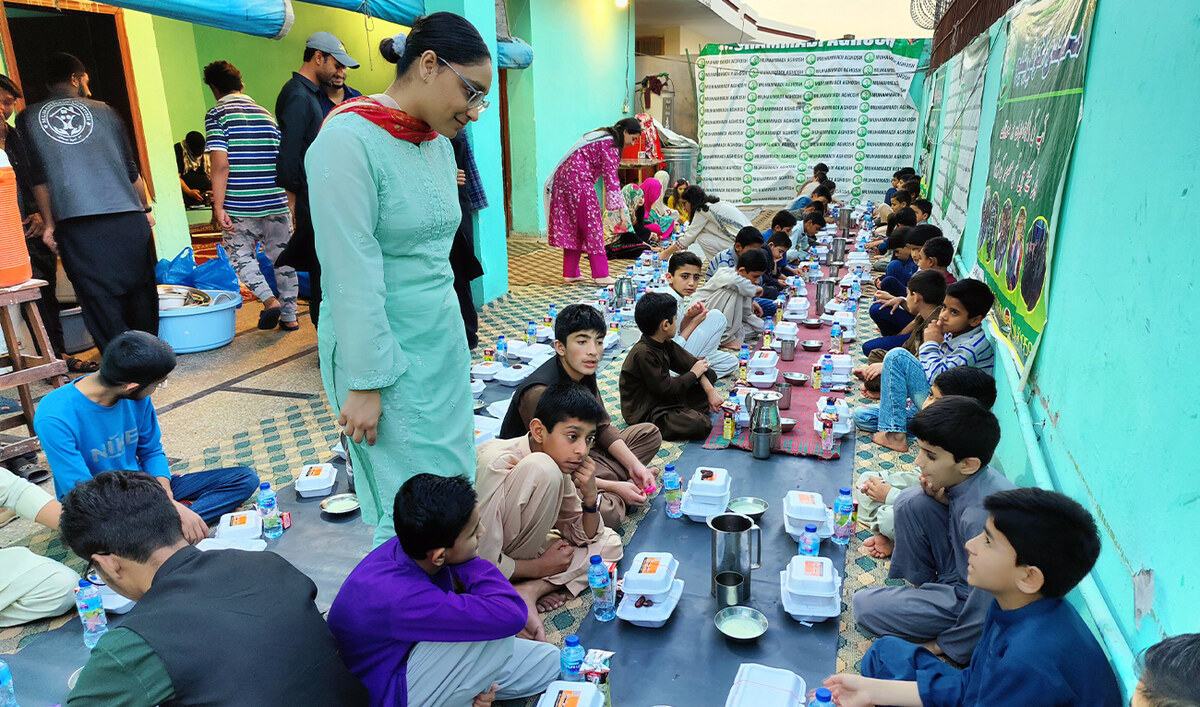
Eshal Arooj (left) speaks with children at the Mohammadi Agosh orphanage as they wait for Iftar meal in Islamabad, Pakistan, on March 23, 2025. (AN Photo)
Ahmed said it meant a great deal for the children at his orphanage to see visitors who genuinely cared about them, adding that these young professionals served as a “shining example” of compassion, commitment and community spirit.
“We want more people to come and spend time with these kids. It lifts their spirits, and we hope thousands will follow this example,” he added.
Arooj says everyone can inspire a change in the society in their own humble capacity, and Ramadan is the best time for such deeds.
“No matter how small your income [is] or how limited your resources [are], you can still bring change to someone’s life,” she said.
“You might not change the whole world, but you could change the world for just one person.”


