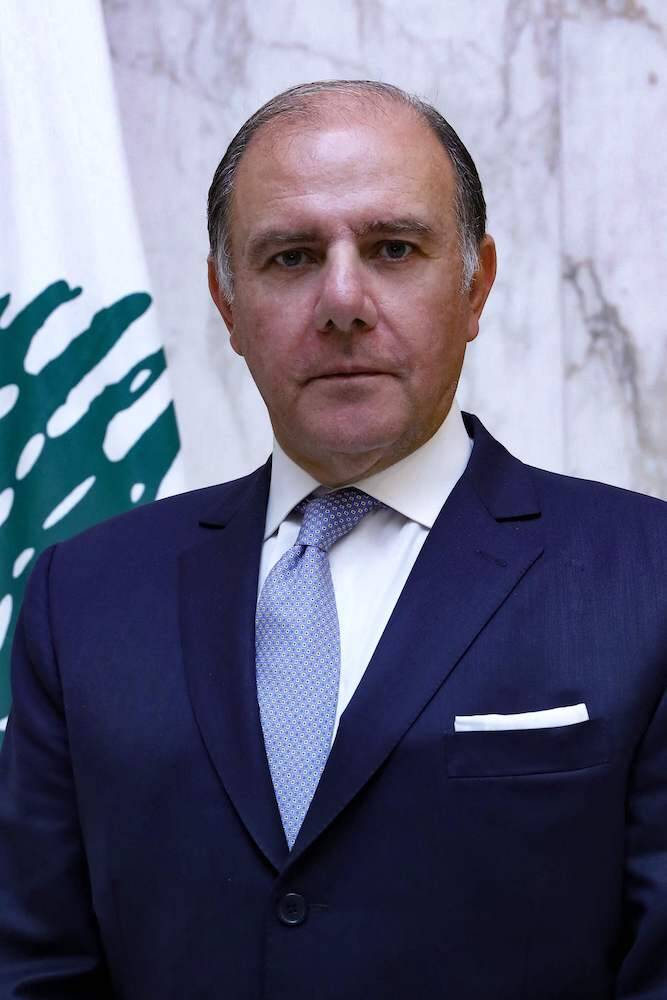
BEIRUT: Lebanon’s cabinet on Thursday named asset manager Karim Souaid as central bank governor, official media reported, a post crucial to implementing economic reforms demanded by the international community.
He was appointed despite reservations of new reformist prime minister Nawaf Salam, who called on Souaid to commit to the government’s reform agenda in a country enduring a five-year economic collapse widely blamed on official mismanagement and corruption.
“The cabinet appointed Karim Souaid as central bank governor,” the official National News Agency said.
Born in 1964, Souaid officially takes over after embattled former chief Riad Salameh’s term expired in July 2023 with no designated successor.
Divided politicians had since failed to agree on a permanent replacement for Salameh, who has been accused at home and abroad of financial crimes.
First vice-governor Wassim Manssouri had been acting head of the central bank, a post that is traditionally reserved for a Maronite Christian in Lebanon’s sectarian power-sharing system of governorship.
Souaid is the founder and managing partner at Gulf-based Growthgate, according to his biography on the private investment firm’s website.
It says he previously worked at financial establishments including HSBC Bank and has been involved in privatization initiatives in a number of Arab countries.
Some local media have reported that Souaid is close to the banking sector and members of Lebanon’s entrenched ruling class.
Salam said he had “reservations” about Souaid’s appointment but did not give specifics except to cite his “desire to protect depositors’ rights and preserve the state’s assets.”
He said Souaid “must adhere, from today, to the financial policy of our reformist government... on negotiating a new program with the International Monetary Fund, restructuring the banks, and presenting a comprehensive plan” to preserve depositors’ rights.
Lebanon’s new authorities need to carry out reforms demanded by the international community to unlock bailout funds.
The economic crash since 2019 has seen the local currency lose most of its value against the dollar and pushed much of the population into poverty, with people locked out of their savings.
Salam also said the cabinet approved Thursday “a draft law aiming to modify legislation on banking secrecy.”
In April 2022, Lebanon and the IMF reached conditional agreement on a $3-billion-dollar loan package, but painful reforms that the 46-month financing program would require have not been undertaken.
Earlier this month, the IMF welcomed the new Lebanese government’s request for support in addressing the country’s severe economic challenges.
In February, it said it was open to a new loan agreement with the country following discussions with its recently appointed finance minister.
Beirut-based think tank the Policy Initiative in a statement Wednesday said that the nomination of central bank chief would “test the new government’s commitment to genuine reform.”
“The next governor will shape Lebanon’s urgent reform agenda, serve as the main counterpart to the International Monetary Fund, and directly engage in sovereign debt restructuring negotiations” alongside the finance ministry, it said.
Souaid studied law at Lebanon’s St. Joseph University and at Harvard Law School in the United States, according to his biography.
He has also worked as a corporate finance attorney in New York, and is a member of the New York State Bar Association, it says.
The central bank governor in Lebanon is named by cabinet decree for a six-year mandate that can be renewed multiple times, based on the finance minister’s recommendation.


![]()

Lebanon cabinet appoints wealth manager central bank governor: official media
Short Url
https://arab.news/4k6tk
Lebanon cabinet appoints wealth manager central bank governor: official media
- Souaid officially takes over after embattled former chief Riad Salameh’s term expired in July 2023 with no designated successor


Latest updates


© 2026 SAUDI RESEARCH & PUBLISHING COMPANY, All Rights Reserved And subject to Terms of Use Agreement.