

It was bacteria — not a miracle — on a communion wafer in US church

1 / 2
A view of St. Anthony of Padua Church, where a communion wafer with red marks was discovered, in Morris, Indiana. (WKRC-TV via AP)
2 / 2
An interior view of St. Anthony of Padua Church, where a communion wafer with red marks was discovered, in Morris, Indiana. (WKRC-TV via AP)
Short Url
Updated 27 March 2025
Follow

It was bacteria — not a miracle — on a communion wafer in US church

  • The host, or bread, with red marks had fallen out of a Mass kit at St. Anthony Church in Morris, Indiana
  • A biochemical analysis revealed only “fungus and three different species of bacteria, all of which are commonly found on human hands”

MORRIS, Indiana: A laboratory analysis turned up nothing miraculous about red marks found on a Communion wafer at a Catholic church in Indiana.
The discovery at St. Anthony of Padua Catholic Church in Morris was unusual enough for a formal inspection, the Archdiocese of Indianapolis said.
But a biochemical analysis revealed only “fungus and three different species of bacteria, all of which are commonly found on human hands,” the archdiocese said Monday, adding that no blood was found.
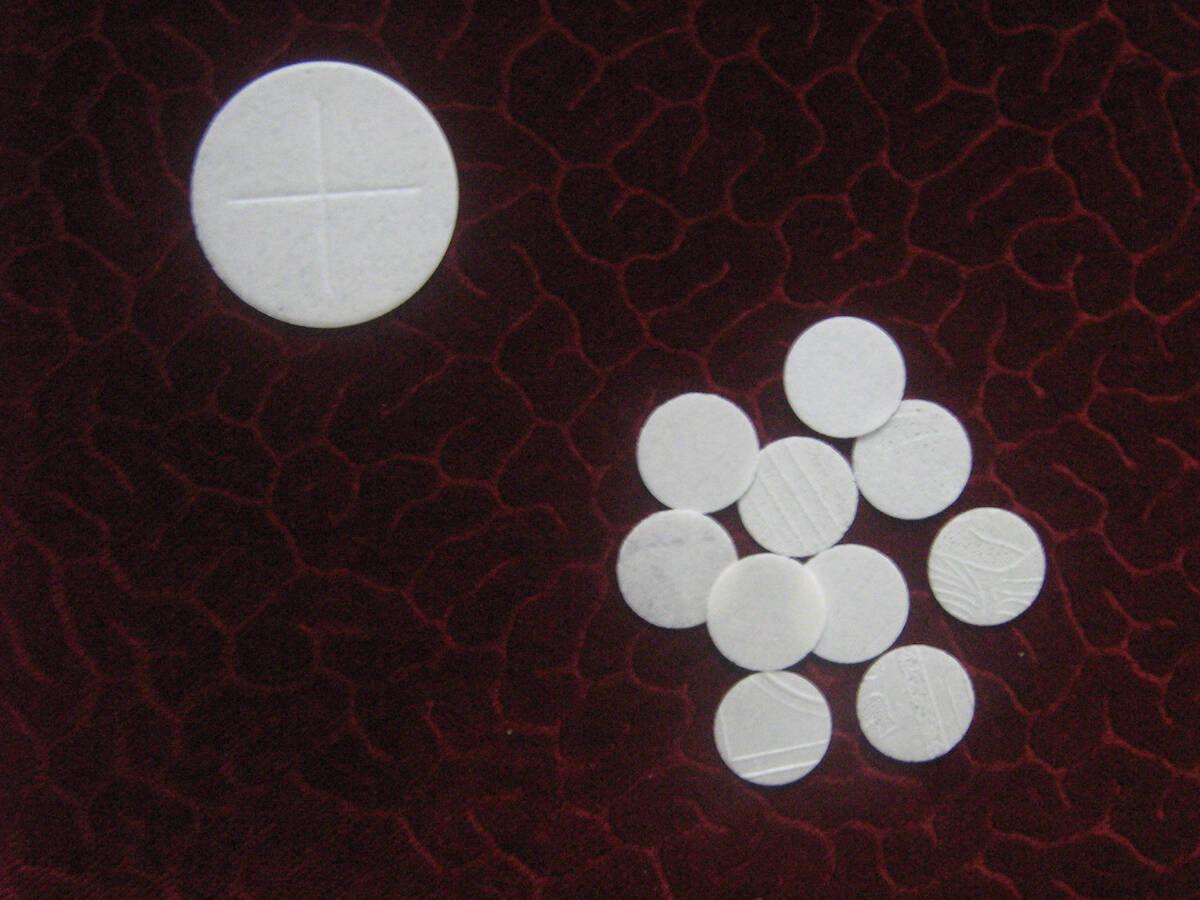


Samples of the Catholic sacramental bread. (Wikimedia Commons: Patnac)

The Catholic faith teaches that wine and a bread wafer signify the body and blood of Jesus Christ. Typically, they’re consecrated by a priest at Mass.
The host, or bread, with red marks had fallen out of a Mass kit at St. Anthony Church.
“Throughout the history of the Catholic Church, there have been well-documented miracles and apparitions, and each has been thoroughly and carefully reviewed,” the archdiocese said.
Before the analysis, some members of St. Anthony Church were excited about what might be found.
“We have such a little town. You can drive through and blink and you’re through it,” Shari Strassell, a church member, told WKRC-TV. “It means the world, it does, and I think there is something special about our church up here.”


Makkah museum displays world’s largest Qur’an

Updated 04 February 2026
Follow

Makkah museum displays world’s largest Qur’an

MAKKAH: The Holy Qur’an Museum at the Hira Cultural District in Makkah is showcasing a monumental handwritten copy of the Holy Qur’an, recognized as the largest Qur’an of its kind in the world.

The manuscript measures 312 cm by 220 cm and comprises 700 pages, earning the museum recognition from Guinness World Records for displaying the world’s largest Qur’an, the Saudi Press Agency reported.

The manuscript is a magnified reproduction of a historic Qur’an dating back to the 16th century, the SPA stated.

The original copy measures 45 cm by 30 cm, with the chapters written primarily in Thuluth script, while Surah Al-Fatiha was penned in Naskh, reflecting the refined artistic choices and calligraphic diversity of the era.

The Qur’an is a unique example of Arabic calligraphy, gilding and bookbinding, showcasing Islamic art through intricate decorations, sun-shaped motifs on the opening folio, and elaborately designed frontispiece and title pages that reflect a high level of artistic mastery.

The manuscript was endowed as a waqf in 1883. Its original version is currently preserved at the King Abdulaziz Complex for Endowment Libraries, serving as a lasting testament to Muslims’ enduring reverence for the Qur’an and the richness of Islamic arts across the centuries.