

Is US pressure on Iraq over reliance on Iranian electricity a blessing in disguise?

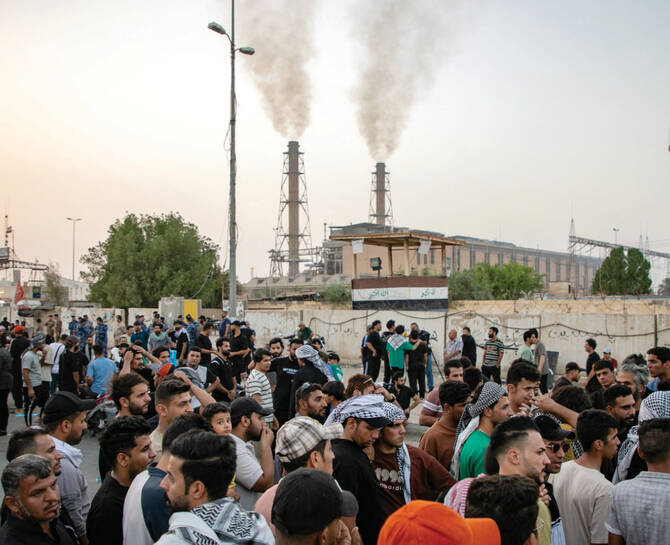
Power outages are commonplace in Iraq, which had become highly dependent on Iranian gas and electricity supply. (AFP)
Short Url
Updated 27 March 2025
Follow

Is US pressure on Iraq over reliance on Iranian electricity a blessing in disguise?

  • The US has ended a key sanctions waiver, increasing pressure on Iraq to reduce its reliance on Iranian gas and electricity
  • Baghdad is trying to integrate with the GCC power grid to enhance energy security, much to the chagrin of Iran-backed factions

DUBAI/LONDON: Iraq has long had to balance its relationships between competing regional powers, particularly Iran and the Gulf states. Now, with renewed US harrying of Iraq to stop buying gas and electricity from Iran, Baghdad could be drawn further into the Arab orbit.

On March 8, the US State Department said it was not renewing a sanctions waiver that had allowed Iraq to import Iranian electricity. The waiver, initially introduced in 2018 after the US withdrew from the Iran nuclear deal, has been a lifeline for Iraq’s struggling power grid.

Despite its vast oil and gas wealth, years of conflict, corruption, and underinvestment have left Iraq highly dependent on Iranian gas and direct electricity imports to meet its energy needs. Power outages are commonplace, especially in the scorching summer months.
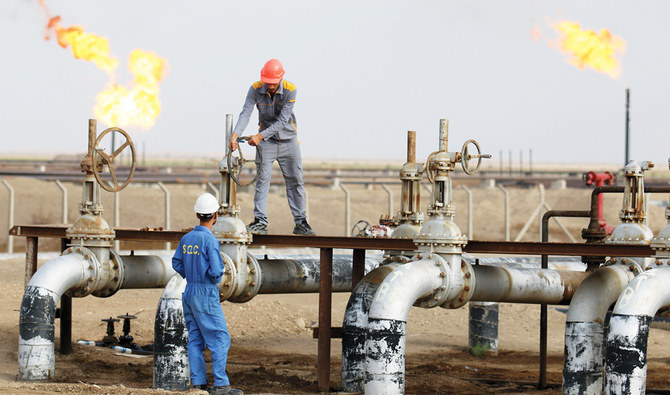


Iraqi laborers work at an oil refinery in the southern town Nassiriya. (AFP/File)

The US decision came as part of President Donald Trump’s “maximum pressure” campaign on Iran, which is “designed to end Iran’s nuclear threat, curtail its ballistic missile program and stop it from supporting terrorist groups,” according to a statement from the US Embassy in Baghdad.

“We urge the Iraqi government to eliminate its dependence on Iranian sources of energy as soon as possible, and welcome the Iraqi prime minister’s commitment to achieve energy independence,” the statement added.

In a call with Prime Minister Mohammed Shia’ Al-Sudani on March 9, US National Security Adviser Mike Waltz encouraged Baghdad to welcome more Western and US energy companies into Iraq’s oil and gas sectors.

According to a readout from that call, Waltz also urged the Iraqi government to work with the semi-autonomous Kurdistan Regional Government of northern Iraq to address remaining contract disputes over energy and to pay arrears owed to US energy companies.
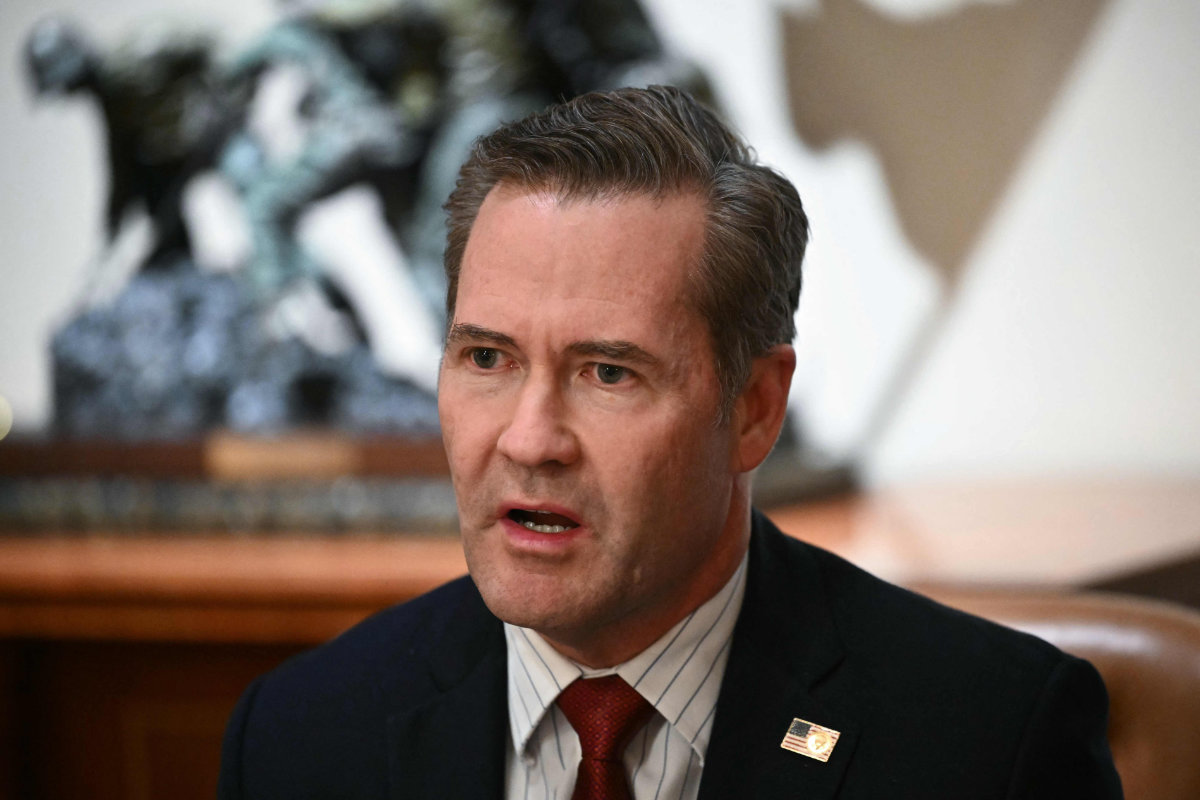


US National Security Adbviser Michael Waltz. (AFP)

Iranian Foreign Minister Abbas Araghchi took to social media on March 10 to criticize the US move, saying it targeted the people of Iraq by attempting to deprive them of access to basic services such as electricity, particularly ahead of the approaching summer months.

With the waiver rescinded, it remains unclear whether Iraq will be permitted to continue importing gas from Iran to feed its power plants. Indeed, some 43 percent of the country’s electricity is generated from Iranian gas.

On March 12, Farhad Alaaeldin, the Iraqi prime minister’s foreign affairs adviser, told a local TV channel that the waiver guaranteed by the US on the import of gas was still in effect — and that only the exemption on imported power has been canceled.

Alaaeldin said the US was, for now at least, merely encouraging Iraq to secure gas from other sources. “The American administration says … diversify your import sources. Go to other countries,” he said.

The US Embassy statement asserted that electricity imports from Iran represent only 4 percent of electricity consumption in Iraq.

But a spokesperson for Iraq’s Ministry of Electricity, Ahmad Moussa, told the Associated Press that should gas imports also be forbidden, it “would cause Iraq to lose more than 30 percent of its electricity energy.”
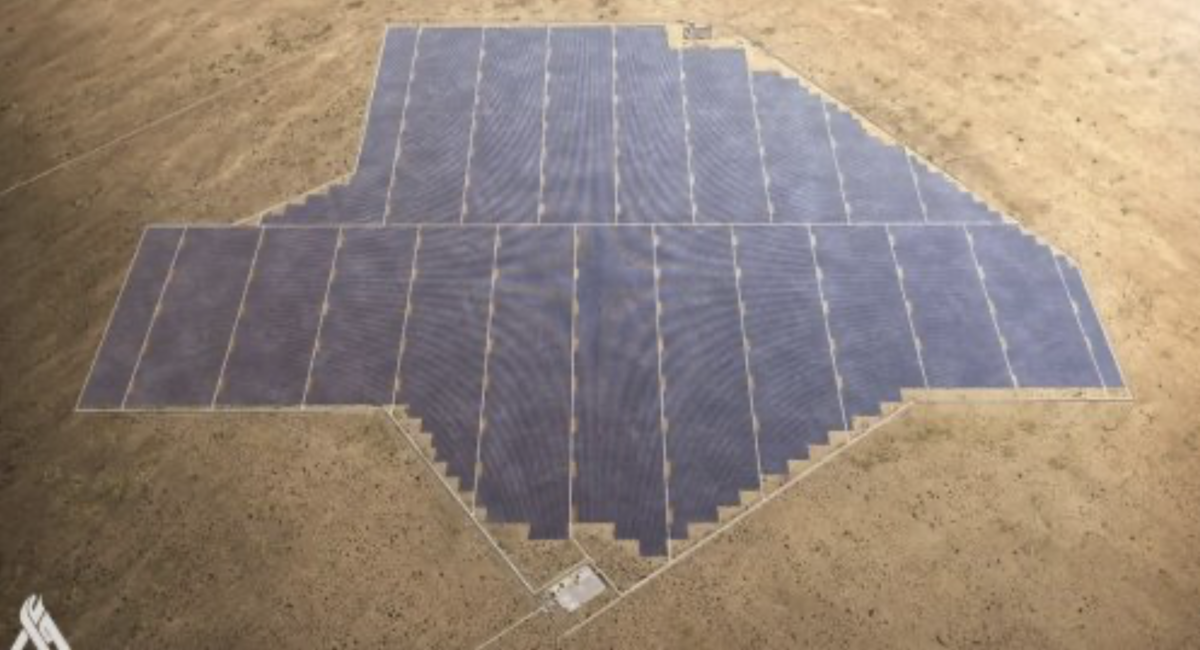


On March 6, 2025, Iraq's Ministry of Electricity launched Shams Basra, the country's largest solar energy project, in cooperation with Total Energies. (Iraqi News Agency photo)

Although this renewed pressure on Baghdad has officials scrambling to find alternatives, it arguably presents an opportunity for Iraq to pivot toward the Gulf states, integrate into the Arab fold, and thereby reduce its reliance on Tehran.

The question now is whether the Iraqi government will seize the moment to achieve energy independence or remain tethered to Iran’s energy infrastructure.

Achieving true energy independence will not be easy.

In 2022, Iran exported 3.5 terawatt hours of electricity to Iraq through four transmission lines. Iraq also imports up to 50 million cubic meters of gas per day from Iran. The neighbors signed a five-year extension to their gas export agreement in March 2024.

Talks on Iranian gas exports to Iraq began in the second half of 2010, shortly after the US military withdrawal following the 2003 invasion, leading to the signing of a supply agreement for Baghdad in July 2013. A contract for gas exports to Basra was signed in November 2015.

Iraq spends about $4 billion annually on Iranian energy, but US sanctions have delayed the country’s ability to make timely payments, leading to substantial debt accumulation, estimated at $11 billion.

To settle this debt, Iraq proposed an oil-for-gas deal in 2023, allowing it to repay Iran with crude. However it chooses to make these repayments, this significant debt burden poses a further challenge to severing links.

According to Iraq’s Parliamentary Oil, Gas and Natural Resources Committee, securing alternative sources of energy has proven difficult, with past diversification efforts delayed by bureaucracy and political resistance from Iran-backed factions in Baghdad.

Despite the challenges, Iraq has begun taking concrete steps toward integrating with the Gulf Cooperation Council’s energy network. An Oct. 9, 2024, agreement to connect Iraq to the GCC Interconnection Authority marked a significant milestone.
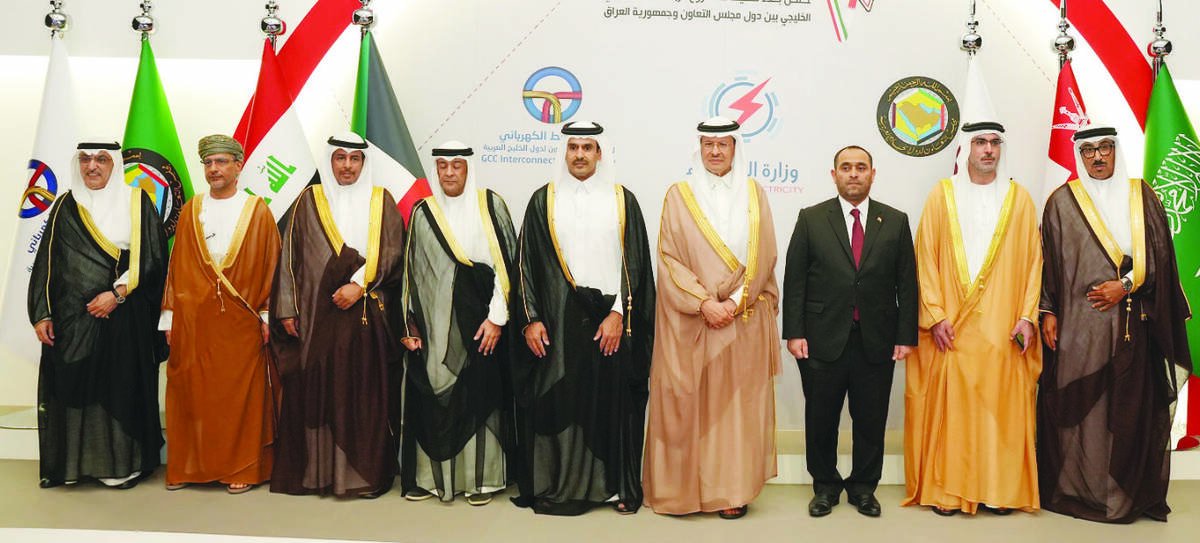


Iraq’s inclusion in the GCC Interconnection Authority would not only reduce its reliance on Iran but enhance regional energy cooperation. (Supplied)

The GCCIA was originally established to link the power grids of Bahrain, Kuwait, Oman, Qatar, Saudi Arabia, and the UAE. Iraq’s inclusion in this grid would not only reduce its reliance on Iranian gas but also enhance regional energy cooperation.

Under the agreement, Iraq will receive 500 megawatts of electricity through transmission lines from Kuwait’s Al-Wafra station to Al-Faw in Basra. A separate deal with Saudi Arabia is expected to add another 1,000 megawatts to Iraq’s power supply.

Given its own significant domestic energy challenges, including infrastructure problems and environmental factors such as droughts that have reduced its hydroelectric output, there is even a case to be made for Iran benefitting from integration into the broader GCCIA grid.

Elsewhere, Iraq has partnered with Saudi Arabia’s ACWA Power, the UAE’s Masdar, and France’s TotalEnergies to develop solar power plants, although these projects are still years away from completion.
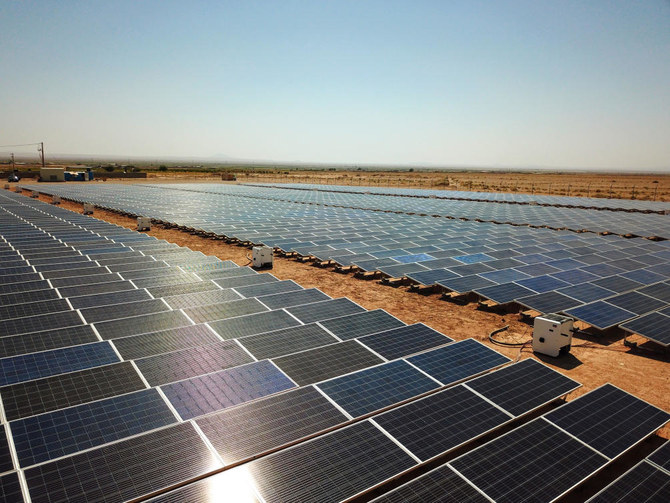


Iraq's solar power projects are still years away from completion. ((Shutterstock/file)

Beyond the Gulf grid, Iraq is pursuing additional measures to reduce its dependence on Iranian energy, including an agreement with Turkmenistan in October 2023 to import 20 million cubic meters of gas per day.

Meanwhile, a 115-km transmission line with Turkiye now supplies 300 megawatts of electricity to northern Iraq. Iraq is also building a liquefied natural gas terminal in Al-Faw with a storage capacity of 300,000 cubic meters.

Despite these efforts, Iraq’s transition away from Iranian energy still faces major hurdles.

“The current production of domestic gas cannot replace Iranian imports at this stage, as achieving self-sufficiency requires several years of development and investment,” Iraqi economic analyst Nabil Al-Marsoumi said in a recent social media post.

Even as Iraq moves toward energy diversification, Iran is unlikely to relinquish its grip without resistance.

Tehran exerts significant political influence in Baghdad through Iran-backed militias and Shiite political factions. These groups view stronger GCC ties as a threat to their dominance and have historically opposed efforts to reduce Iraqi dependence on Iranian energy.
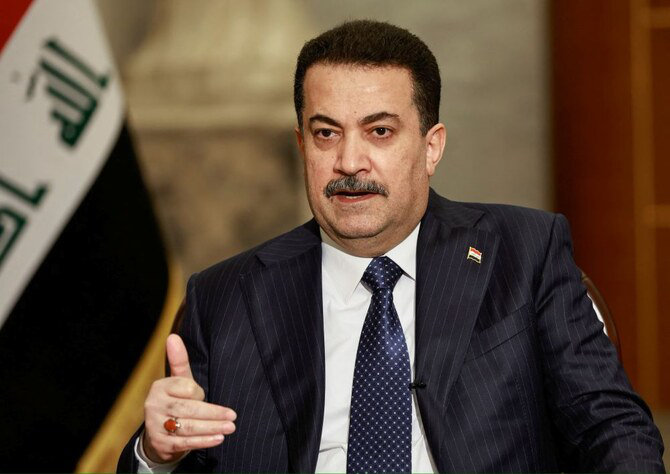


Iraq's Prime Minister Mohammed Shia’ Al-Sudani. (AFP)

Prime Minister Al-Sudani initially sought a waiver extension until 2028, arguing that Iraq needed more time to secure alternative energy sources. However, under US pressure, he ultimately relented and announced Iraq’s compliance with sanctions.

His decision sparked criticism from pro-Iranian factions within Iraq, further illustrating the political tightrope he must walk.

Ordinary Iraqis, meanwhile, remain skeptical. Many citizens believe their leaders are beholden to Iran’s interests rather than prioritizing national energy security.

“As long as those in power remain loyal to Iran, they will do whatever it takes to keep us reliant on it,” Modhar, a Baghdad-based driver, told Arab News.

For Gulf states, deepening energy ties with Iraq presents both opportunities and risks. A more integrated Iraq could serve as a bridge between the Arab world and Iran, facilitating broader regional cooperation.

Additionally, stronger economic ties with Baghdad could help Gulf economies diversify their own economies beyond oil exports.

However, Gulf countries must also navigate Iraq’s internal political landscape carefully. Any overt effort to pull Iraq away from Iran risks provoking retaliation from Iran-backed militias, which have launched attacks on US and Gulf interests in the past.
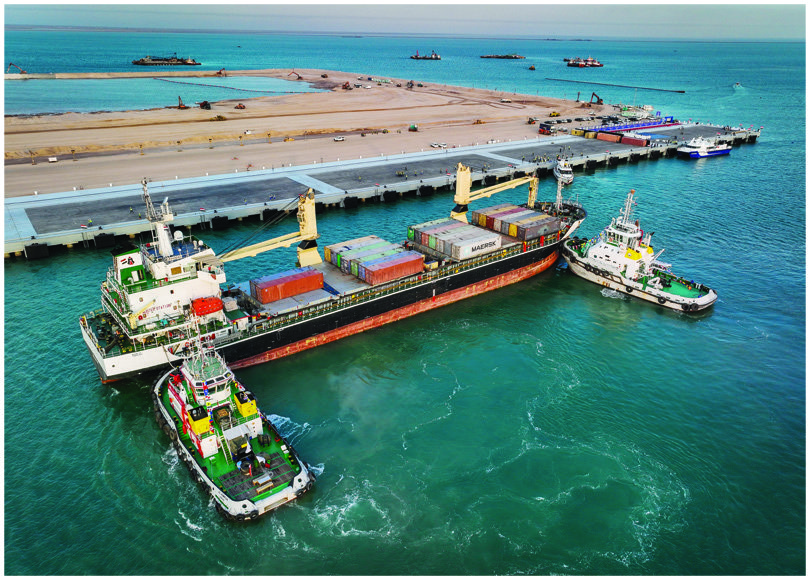


Iraq's new LNG terminal at Al-Faw. (Getty Images)

That said, energy interdependence has the potential to be a stabilizing factor. As regional energy demand grows, a Gulf-wide electricity grid that includes Iraq could provide a reliable supply and reduce dependence on volatile suppliers like Iran.

With the GCC currently producing 272 gigawatts of electricity, a fully integrated power grid could transform Iraq’s economy and cement its position within the Arab fold. How Iraq responds in the coming months will define its future for years to come.

The suspension of the US sanctions waiver has forced Baghdad to confront its reliance on Iranian energy. While the road to energy independence is fraught with challenges, Iraq’s deepening ties with the GCC present a viable alternative.

Whether Iraq can successfully integrate into the GCC’s energy network while balancing its relationship with Iran remains to be seen. However, if Baghdad seizes this historic opportunity, it could finally achieve the energy security and regional influence it has long sought.

As Al-Marsoumi warned: “Key energy projects remain years away from completion.” But the long-term potential of Iraq’s pivot to the GCC is undeniable.

The coming months will determine whether Iraq charts a new course toward the Arab world — or remains in Iran’s shadow.


How Israeli land grabs are redrawing the map of Palestine’s Jordan Valley

Updated 18 December 2025
Follow

How Israeli land grabs are redrawing the map of Palestine’s Jordan Valley

  • A major incursion in Tubas caused damage and displacement, but residents say a planned 22-km barrier poses bigger threat
  • Israel calls the “Scarlet Thread” wall a security measure; activists say it’s a land grab severing the Jordan Valley

LONDON: Israeli raids are not new to Tubas, a Palestinian governorate in the northern West Bank’s western Jordan Valley. But fears of de-facto annexation have intensified since November, after land confiscation orders were issued for a planned barrier dubbed the “Scarlet Thread.”

On Nov. 26, Israeli security forces, backed by a helicopter that reportedly opened fire, sealed off the governorate and raided Tubas City and nearby towns, including Tammun, Aqqaba, Tayasir and Wadi Al-Fara — home to more than 58,000 people.

The operation involved drones, aircraft, bulldozers and curfews, according to the UN Office for the Coordination of Humanitarian Affairs, OCHA.

At least 160 Palestinians were injured, OCHA said, while homes and infrastructure sustained extensive damage. The raids also displaced residents and disrupted essential services, including water supplies.

A man stands okn the ruins of a Palestinian building destroyed on the day of an Israeli raid in Tammoun, near Tubas, in the Israeli-occupied West Bank, on May 15, 2025. (REUTERS)

In Al-Fara refugee camp, OCHA noted, Israeli forces seized at least 10 residential buildings, forcing at least 20 families to flee, and detained and interrogated dozens of Palestinians before withdrawing.

The Palestinian Detainees’ Affairs Society said 29 young men were detained in the camp and later released, with the exception of one.

Israeli military and internal security officials described the operation as part of a broad “counterterrorism” campaign.

Locally, however, concerns have grown not only over the scale of the assault but also its timing, which coincided with new land confiscation orders in the Jordan Valley.

Ahmed Al-Asaad, the Tubas governor, said the Israeli military has issued nine land confiscation orders to carve out a 22-kilometer settlement road that would isolate large areas of the Jordan Valley and extend to within 12 kilometers of the Jordanian border.

Israeli soldiers take part in an operation in Tubas, in the Israeli-occupied West Bank, on November 26, 2025. (REUTERS/Mohamad Torokman)

Although the orders were signed in August, Al-Asaad told Arab News that Palestinian landowners were not notified until Nov. 21, nearly three months later, and were given insufficient time to appeal.

An Arabic-language notice obtained by Arab News via WhatsApp from Mutaz Bisharat, a Palestinian official overseeing Jordan Valley affairs in Tubas, stated that the Israeli military ordered the confiscation of Palestinian land “for military purposes.”

Signed by Avi Bluth, head of the Israeli military in the West Bank, on Aug. 28, the order took effect “on the date of its signing” and remains in force until Dec. 31, 2027.

It instructed those “in possession of the lands” to remove all equipment and vegetation within seven days. It also said objections could be filed within seven days of the notice’s publication date through Israeli liaison offices.

Al-Asaad said landowners were given “only one week” to file objections, noting that two days fell on a weekend, while four days coincided with curfews during the first raid and two more during a second large-scale incursion.

“As a result, residents were unable to prepare land ownership documents,” he said.

Opinion

This section contains relevant reference points, placed in (Opinion field)

Palestinian landowners were invited on Dec. 3 to tour the land earmarked for confiscation. The seven-day appeal window, Al-Asaad said, was counted from the day of that tour.

But on Dec. 1, Israeli forces launched another large-scale operation, a day after withdrawing from the nearby Tammun. The three-day raid imposed an open-ended curfew on Tubas City and surrounding towns, according to OCHA.

During the operation, forces blocked five main roads with earth mounds, three in Tubas City and two in Aqqaba, as well as several secondary roads, severely restricting movement for about 30,000 Palestinians.

At least eight residential buildings were converted into military posts, forcibly displacing at least 11 families, OCHA said in a Dec. 4 situation update.

The land earmarked for confiscation under the “Scarlet Thread” project covers about 1,160 dunams, 85 percent of which is privately owned by residents of Tubas and Tammun, The Times of Israel reported, citing an X post by Israeli civil rights activist Dror Etkes.

Dunam is a unit of land area equal to 1,000 square meters or 0.1 hectares.

The Israeli military told the newspaper that the project was introduced based on a “clear military need” to prevent arms smuggling and “terror attacks.”

Etkes rejected that justification, saying the real aim was to “ethnically cleanse” the land between the proposed barrier and what Israel calls the Allon Road to the east, an area of about 45,000 dunams, with residents ultimately forced out.

On Dec. 1, the Israeli newspaper Haaretz reported that the army was preparing to build a new separation wall deep inside the occupied West Bank, in the heart of the Jordan Valley. The wall would stretch 22 kilometers and span 50 meters in width, cutting Palestinians off from tens of thousands of dunams of land.

According to the report, the project would require demolishing homes, agricultural buildings, wells, water lines and trees along the route.

It would also encircle the herding community of Khirbet Yarza, isolating about 70 residents who depend on several thousand sheep for their livelihood, and separate agricultural and pastoral communities from their lands, similar to what the separation barrier in the western West Bank has done.

Palestinians say the plan, if implemented, amounts to annexation of the northern West Bank.

“New notices have been issued, pursuant to the military orders, for the seizure of citizens’ lands in the areas of Tubas and Tammun, for the purpose of removing homes and agricultural projects, including greenhouses, sheds, and sheep pens,” Bisharat told Arab News.

He said authorities also ordered the removal of a 5-kilometer water pipeline.

“This decision will effectively end the Palestinian presence and agriculture on more than 22,000 dunams of cultivated land and lead to the displacement of more than 60 families,” he added.

While the Israeli military says the land is being seized for a road and barrier, Bisharat argues the true objective is annexation.

“These notices are issued under the pretext of opening a road and constructing the separation wall in Buqeia and the Jordan Valley,” he said. “But through these notices, the (Israeli) occupation is waging a war against the Palestinian presence in all residential communities, and against all farmers and agricultural projects.”

He added that Israel’s plan involves a “50-meter-wide corridor, along with a wall, gates and an earthen trench,” measures he described as “a new border demarcation” that would separate the Jordan Valley from the rest of the governorate.

“This is an annexation process,” he said. “As a result, we will be left without borders, without water, and without Palestine’s food basket, and will lose approximately 190,000 dunams of land.”

Al-Asaad echoed those warnings, saying Israel’s plans amount to de-facto annexation.

“The new settlement plan, under which the occupation forces intend to establish an apartheid separation wall, will separate the Jordan Valley from Tubas governorate and confiscate areas estimated at hundreds of thousands of dunams,” he said. “This constitutes a plan to annex the Jordan Valley.”

He warned the project would inflict severe political, economic and agricultural losses, undermine prospects for a Palestinian state and isolate Tubas from its eastern border with Jordan under 12 km of Israeli control.

By Dec. 12, around 1,000 dunams of Palestinian land have been reportedly confiscated. The UN Human Rights Office described Israel’s military road project as “another step towards the progressive fragmentation of the West Bank.”

“This is the most fertile land in the West Bank and the road is likely going to separate Palestinian communities from each other and the Palestinian farmers in Tubas from … land they own on the other side of the planned barrier,” said Ajith Sunghay, head of the OHCHR’s office in the Occupied Palestinian Territory.

Immediately after the seizure orders were issued, Al-Asaad said, local authorities submitted an initial objection through the Northern Jordan Valley file and the Colonization and Wall Resistance Commission, collected powers of attorney and land deeds, and coordinated with land departments to document ownership.

“We continue to work on submitting objections through attorney Tawfiq Jabarin,” he added, reiterating that curfews and military operations severely limited their ability to complete the legal file.

Etkes, however, dismissed the objection process as meaningless, saying Israel’s judiciary would reject the appeals.

Still, Tubas residents say they will continue to resist. Al-Asaad said officials plan to internationalize the issue, urging the Palestinian Foreign Ministry to organize tours for diplomats and raise the case in international forums.

“We will mobilize local and international media to expose the danger of a plan that would seize half the governorate’s land and destroy the two-state solution,” he said.

IN NUMBERS:

188 Palestinians killed in occupation-related violence in the West Bank since January 2025.

45 Children accounted for nearly a quarter of the above-mentioned victims.

(Source: UNRWA)

Jabarin, a Palestinian lawyer and human rights activist representing landowners, submitted an initial objection in late November, according to the Al-Quds Al-Arabi newspaper.

He argued that Jordan already shares a secure border with the Jordan Valley and that an internal wall would not prevent arms smuggling.

He said Palestinian communities are the ones who need protection from repeated settler attacks.

The developments in Tubas come amid a broader West Bank escalation following the Hamas-led Oct. 7, 2023, attack on southern Israel from Gaza and the devastating Israeli military retaliation.

Israel has sharply restricted movement, erecting new checkpoints and sealing off communities.

Since January, Israeli forces have intensified operations, killing dozens and displacing tens of thousands. The campaign began in Jenin refugee camp on Jan. 21, dubbed “Operation Iron Wall,” and expanded to Tulkarem and Nur Shams, displacing at least 32,000 people in January and February alone, according to UN figures.

Human Rights Watch said on Nov. 20 that Israel’s forced expulsions in West Bank refugee camps amount to war crimes and crimes against humanity — allegations Israel denies.

The UN says large-scale operations in Jenin and Tubas governorates affected more than 95,000 Palestinians between Nov. 25 and Dec. 1.

All of this has unfolded alongside accelerated settlement expansion and rising settler violence.

So far this year, OCHA has documented 1,680 settler attacks across more than 270 communities — an average of five per day — with the olive harvest season marked by widespread assaults on farmers, trees, and agricultural infrastructure.

In a landmark decision in July 2024, the International Court of Justice ruled that Israel’s occupation of the Palestinian territories is unlawful.

The Court also ruled that Israel must “immediately and completely cease all new settlement activities, evacuate all settlers, stop the forcible transfer of the Palestinian population, and prevent and punish attacks by its security forces and settlers.”

UN experts in 2025 referred to this advisory opinion to criticize ongoing settlement expansions and military operations as violations of international law.